What to Do When Snake Plant Leaves Keep Drooping, Turning Yellow and Rotting
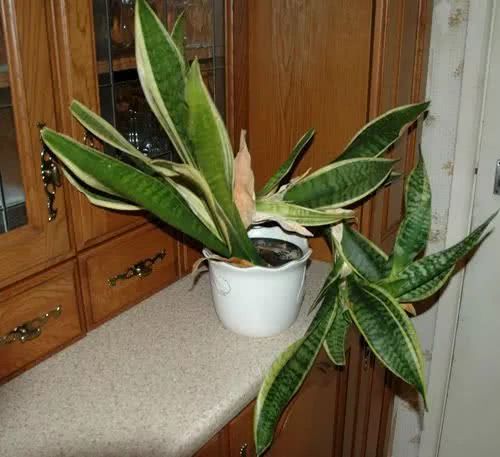
The snake plant (Sansevieria) is characterized by upright, stiff leaves with tiger-skin-like markings, and some varieties even have yellow patterns along the leaf edges, making them very attractive to look at. In fact, there are more than 140 varieties of snake plants, with 15 being commonly seen, and their care methods are all pretty much the same.
Snake plants and cacti have similar care methods. They do not need frequent attention in daily care; just occasional watering and maintaining a warm, slightly dry environment year-round is enough for them to grow well.
These are all the conditions for keeping a snake plant growing healthily. If you notice its leaves starting to droop, or mushy or yellow leaves appearing, then you need to rescue your snake plant as soon as possible.
Step 1: Control Watering or Improve the Environment
If the snake plant is grown outdoors, the soil drains well, and the leaves start drooping, it is very likely due to excessive fertilizer. You need to dilute the fertilizer in time; you can flush the soil with clean water to dilute the fertilizer, and also make sure to dry out the soil as soon as possible to avoid water accumulation.
Step 2: Maintain a Suitable Environment
If it has been damaged by frost, promptly cut off the diseased leaves and move it to a warm place in time. However, the temperature difference in the environment should not be too large, and the cut wounds must not get wet.
The minimum temperature for caring for a snake plant should be kept above 5°C. If the temperature is too low, it is prone to frost damage, and the leaves will slowly droop.
The image above shows frost damage resembling water-soaked rot caused by excessive water combined with relatively low temperatures. The affected parts need to be cut off promptly and the plant moved to a warm place in time.
Step 3: Repotting
When leaves droop, rot or turn yellow, besides promptly cutting off the diseased leaves, you also need to repot in time to avoid the soil becoming overly wet, and control watering appropriately.
The snake plant in the image below has rotten leaves caused by frequent watering. At this point, you must repot it, otherwise the entire plant will rot away.
First dig it up and cut off the rotten leaves. If you find that the roots have rotted, cut those off promptly too. After soaking in potassium permanganate solution, replant it, and it will be able to maintain healthy growth.
Step 4: Yellowing Leaves
When a snake plant's leaves turn yellow indoors, it is usually due to overwatering. You need to control watering in time; do not give water until the soil has dried out completely. A newly repotted snake plant can be watered after three to five days, while a snake plant grown outdoors can be watered thoroughly.
The image above shows a snake plant with yellow leaves kept in an office, where water from drinking and tea is routinely poured into it. It would be a wonder if the leaves did not turn yellow.
If the yellowing of the snake plant's leaves is caused by prolonged drought, be sure to cut off the yellow leaves promptly. These withered leaves cannot recover their growth.
The pot above is a snake plant that has been neglected for a long time, showing withered leaves and a wilting plant. You need to promptly cut off the yellow leaves, repot in time, cut off the withered roots, water thoroughly, and place it in a ventilated spot with bright light.
The snake plant above is suffering from prolonged damp soil. Its leaves have started to droop. Although it looks healthy, its roots have actually begun to rot, and the leaves are starting to rot as well. If it is not repotted and its roots pruned in time, the entire snake plant can easily be done for.
When caring for a potted snake plant, besides giving it loose, well-draining sandy soil and maintaining a warm, slightly dry environment year-round, you should also water thoroughly only after the potting soil has dried out. It can be placed in a spot with appropriate indirect light, and avoid keeping it in an enclosed space. Although snake plants have fairly good shade tolerance, you should still avoid keeping them in dark places for long periods, and keep the minimum care temperature above 5°C.