This wild delicacy is in season right now. It is famous for being ugly, turns green at the slightest touch, and is commonly known as the prince of mushrooms.
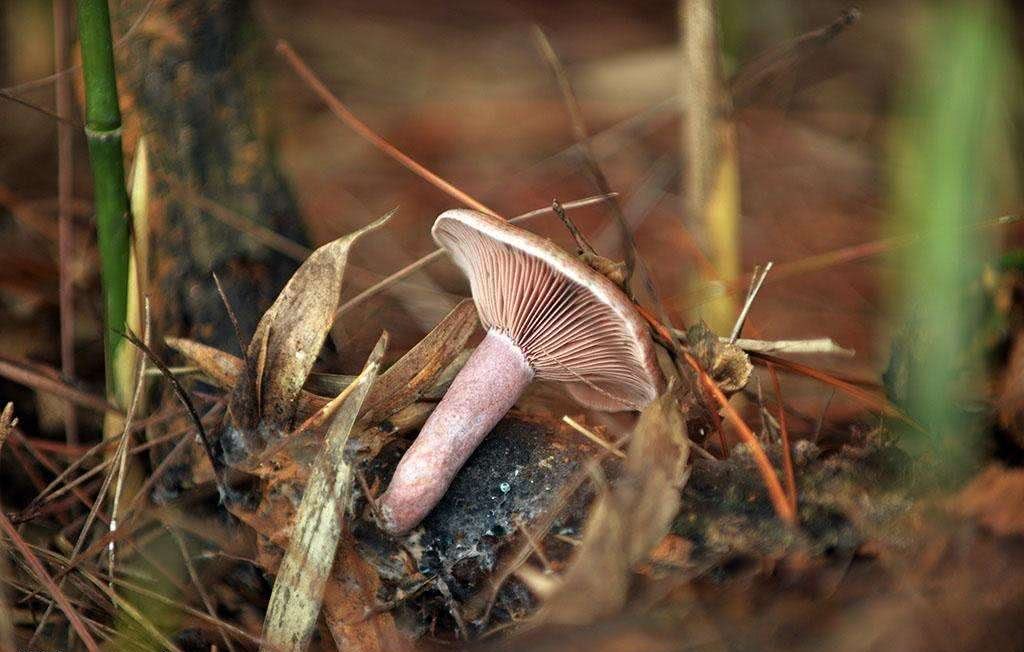
In the mountains of rural China, many delicious wild delicacies are hidden. Especially when the seasons change, there is a lot of rainy weather, and after a rain, many delicious wild mushrooms grow in the mountains. Now it is the turn of spring and summer, and the wild delicacy season in the mountains has begun again. Many farmers, when they are not busy, carry baskets and ride motorcycles into the mountains to pick mushrooms. In this season in southern China, there are several kinds of tasty mushrooms, and the most productive among them is the mushroom that grows under pine trees.
The mushrooms commonly seen under pine trees fall into two types: one is the orange pine mushroom, and the other is the brown thatch mushroom. Both are very fresh and tasty and are well suited to making soup, but the pine mushroom has a rougher texture and is not as good as the thatch mushroom. The thatch mushroom is also called yan'e fungus or yanlai xun. It became popular a couple of years ago after appearing in "A Bite of China 2," and because it looks so dark and ugly, many people remembered its name. In the program at that time, farmers braised an old duck with yanlai xun, and that fragrance seemed to spill out of the screen, making people's mouths water.
The name yan'e fungus is related to wild geese, because it is at its plumpest when the wild geese fly south, and many people think it only grows in late autumn. In fact, yan'e fungus also grows at the turn of spring and summer, though its taste is a little inferior, yet it is still a rare delicacy in the current season. Yan'e fungus likes to grow under thick pine needles and thatch, and the damp weather after rain is extremely favorable for its growth. But the picking process is not so pleasant. Not only do you have to endure bites from mosquitoes, insects, rats, and ants in the mountains, but you also have to protect it carefully, because it is really too delicate.
If it is accidentally broken while being picked, its broken edge will quickly turn green. Its cap also cannot be touched easily; even slight pressure will damage it, and then it turns green. This is a sign of oxidation. People who do not know may think this mushroom is poisonous, but in fact there is nothing wrong with it; only its appearance is greatly reduced. So when picking yan'e fungus, be as careful as possible and keep it intact if you can. The yan'e fungus on the market in this season is very expensive. Many farmers sell it after picking it and can earn a decent income.
Because it has a strong, distinctive fragrance when cooked, yan'e fungus has been a favorite wild delicacy since ancient times. After eating yan'e fungus in Jiangnan, the great Northern Song writer Su Dongpo praised it highly and called it "excellent" several times. Yan'e fungus has thick flesh and a refreshing taste, a rich aroma, and can be cooked with meat or vegetables. It can also be made into yan'e fungus sauce and eaten in all four seasons. People therefore call it the "prince of mushrooms." Have you ever eaten it?