When is the best time to repot a clivia?
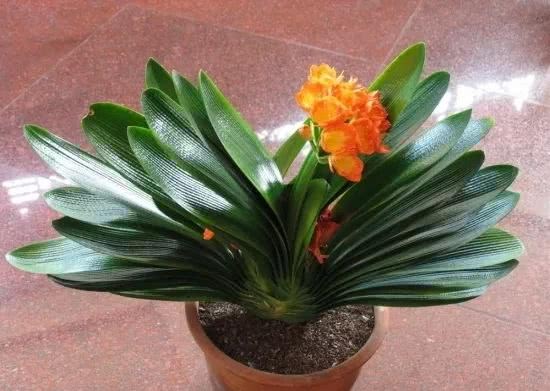
Clivias are no longer a rare houseplant; almost every flower lover who enjoys growing plants has one. Recently, the editor has also received many questions from friends about when to repot clivias, so today I will share when it is suitable to repot a clivia.
The best time to repot a clivia is in spring and autumn, but because the climate varies from place to place, the repotting time is not exactly the same either. Flower lovers can decide the repotting time according to the local climate. When the weather turns cool and the temperature is around 20 degrees, it is most suitable. The clivia's dormancy has ended and it is gradually entering its growing period. Every year at this time, it is time to repot the clivia.
When repotting, be sure to pay attention: do not just change the pot alone, but also replace the soil along with it. The time for changing the soil is also chosen in spring and autumn.
The reason the soil-changing time is chosen in spring and autumn is that the clivia grows vigorously then, so changing the soil will not affect the plant's growth. Take the clivia out of the pot, cut off the rotten roots and the old roots that have no ability to absorb, and remove the spent soil.
Cover the drainage hole of the flower pot with a piece of broken pot, fill in 2-5 cm of nutrient soil, grab a handful of soil and pack it firmly inside the roots, then place the plant in the pot. When the nutrient soil filled into the pot reaches half the height of the pot, gently press down along the edge of the pot with your hand, so that the roots all stand upright in the pot and are not easily bent.
There is also one most important point: the roots must be packed firmly with soil. Otherwise, if there is no soil around the roots, water and nutrients cannot reach the roots, which easily causes root rot and "stuck arrow" (failure to bloom). After changing the nutrient soil, just water thoroughly.