How to Grow Cymbidium faberi? A Detailed Guide to Care Techniques and Key Cultivation Points
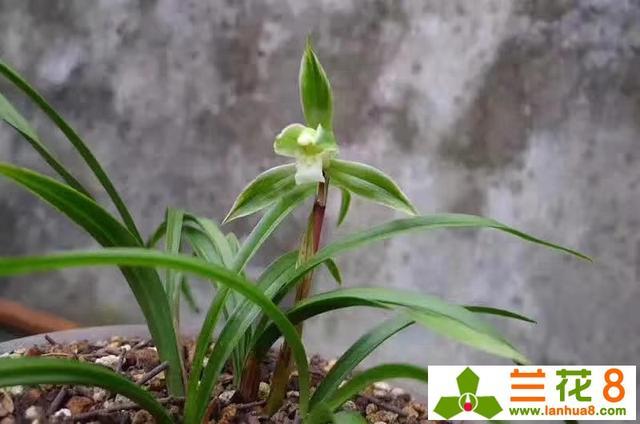
Cymbidium faberi, also known as Jiuhua Orchid, Jiuzi Orchid, Jiujie Orchid, Xia Orchid, Bamao Orchid, Huoshao Orchid, Xing Orchid, and others, blooms from March to May. Its pseudobulbs are inconspicuous, its root system is thick and long, and its plant form is tall. Its leaves are just a little broader and larger than those of Cymbidium goeringii, relatively rough, with serrated edges. One stem bears multiple flowers, with large flowers rising above the leaves, usually 5-15 blooms. The floral fragrance is rich. It is cold-tolerant and drought-tolerant, has a long cultivation history in China, and is deeply loved by Chinese people. Growing it is also very simple; usually you only need to pay attention to the following points.
1. The environment for growing Cymbidium faberi must be ventilated and have sufficient light, while avoiding direct sunlight or coverage by snow and ice. In nature, Cymbidium faberi mostly grows on south-facing or southeast-facing mountain slopes at relatively high altitude, with ample sunlight and good ventilation. It is the most light-tolerant, drought-tolerant, and cold-tolerant orchid among Chinese orchids. Therefore, for light when growing Cymbidium faberi, if you are using an enclosed balcony, you should install windows that can be opened and closed freely to facilitate ventilation and air exchange, and you must also add fans and cooling equipment. If it faces the sun directly, in the hot summer you must provide shading, with a shading rate of about 75; in other seasons you can strengthen the light, but you should avoid sun scorching. If you are using an open balcony, courtyard, or outdoor space to grow Cymbidium faberi, since the orchids are mostly exposed to sunlight, in summer, early autumn, and late spring you must provide appropriate shading, and you must also prevent and control pests and diseases by regularly spraying fungicides and insecticides.
2. The growing medium should be one with good air permeability, rich nutrients, fast drainage, and stable granular properties. Cymbidium faberi has many leaves and many flowers, small pseudobulbs, and limited nutrient storage of its own, so it needs more nutrients than other orchids. Therefore, it is very important for the growing medium to be nutrient-rich and rich in organic matter. Beginners can mix Songli Wang and Zhijinshi at 1:1, while experienced growers can use Songli Wang growing medium entirely. This growing medium combines the advantages of air permeability, drainage, and nutrition, requires no fertilization, and saves you from worrying about fertilizer burn. The orchids grown are many in shoots and strong in seedlings, with an average sprouting rate of over 200%, and generally the leaf buds can all grow into strong plants in the same year.
3. Plant in a relatively large pot, and do not water too much. Cymbidium faberi has a well-developed root system and strong water-absorbing capacity, so the pot can be slightly larger. Choose a pot based on the standard that the root system can spread freely. Water according to the actual condition of the growing medium: do not water if it is not dry, and when watering, water thoroughly. Tap water, rainwater, river water, and so on are all acceptable, but dirty water must not be used; choose naturally clean water. Never give half-water, where the surface is wet but the inside is still dry. You must water thoroughly. In addition, it is recommended not to spray water on the leaves, because if leaf-surface water is not managed well, the leaves are prone to black spots. In spring and winter, generally water in the morning, which can prevent water from freezing. In summer and autumn, generally water in the evening, which can avoid conflicting with the transpiration of the orchid plant and causing wilting of the orchid leaves.
4. Full vernalization generally refers to the phenomenon that the orchid plant must experience a period of sustained low temperature before it can shift from the vegetative growth stage to the reproductive growth stage. Vernalization is ideal between 4-10°C, lasting about 20-30 days. Practice has shown that only after full development will Cymbidium faberi flower with the proper quality the following year. Areas that generally need vernalization are the south or northern indoor heated areas; other areas generally do not need deliberate vernalization.
5. Avoid dividing the plants too frequently. Cymbidium faberi has small rhizome heads and stores few nutrients, so a single seedling is very difficult to keep alive. Compared with Cymbidium goeringii, it should not be divided frequently, except for large starts with natural "horse roads" and a good root system; otherwise, things will turn out contrary to one's wishes. Even if a single plant survives cultivation, the shoots it produces are often weak, and the loss outweighs the gain, so orchid friends should be cautious. Author: Huang Xinlin, written on August 5, 2018; I publish orchid knowledge and pictures every day, taking you to understand orchids in depth and teaching you to grow orchids easily. If there is anything you do not understand about orchids, you can ask me at any time or leave a message below. If my knowledge has helped you, I hope you can give me a like or share it to help more people!