Growing flowers in summer easily breeds small flying insects; garlic and vinegar alone can cure it completely
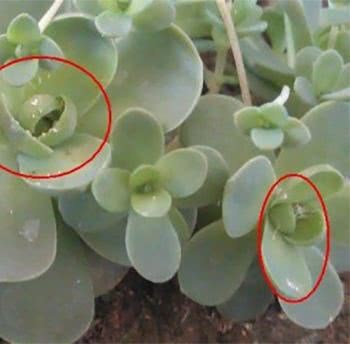
It's very simple, just treat it! There are many methods, and the fastest and most effective ones, let's take a look together
If your plants don't have many bugs, you can just pick them off directly, or you can use homemade insecticides for spraying.
For example: crush garlic, onion, chili peppers and other pungent things, mix with water and spray; mix laundry detergent or dish soap with water and spray; mix vinegar or orange peel with water and spray. When there aren't many bugs, these methods are all effective.
So what if there are too many bugs? The only option is to spray pesticide. When we grow flowers in an apartment building, we're definitely unfamiliar with pesticides. Today let's introduce them.
1. Aphids
Aphids, which is what we usually call dense bugs. This is the most common pest on plants, and they reproduce very quickly. If you find them and don't treat them in time, before long your plants will be densely covered into a ball, completely blanketed by them. At this point the plants will stop growing and will also become stunted, with leaves curling up into a clump, sitting there half-dead.
Prevention and treatment methods
You can spray with the pesticides Dulang (imidacloprid) and acetamiprid; Dulang has the most obvious effect. Find a small spray bottle, fill it with water, add just three to five drops of the pesticide, then spray the plants and it works immediately. Acetamiprid is a bagged powder; one spray bottle of water to about one-fourth to one-fifth of the packet is enough. This is how my family treats it, and it cures it completely!
Because purchased pesticides may vary, it's best to read the instructions when using them. A lower dose is fine, but a higher dose can easily burn the plants.
2. Red spider mites
Red spider mites are also called red sand bugs. There is also a white type, similar to them, which is the white spider mite, also called white sand bug, and the harm to plants is the same. Plants infested by red sand bugs develop white spots on the leaves; in severe cases the white spots merge into one patch, the leaves turn yellow and dry, fall off, and finally the plant dies.
Prevention and treatment methods
To treat red spider mites, you can spray with the pesticides Hongbaimanke and abamectin. Hongbaimanke has the best effect and can cure it completely in one go. Again, find a spray bottle, fill it with water, add three to four drops of the pesticide, and be sure to control the dose well, then spray, and you can get rid of the bugs.
3. Scale insects
These scale insects are relatively hard to treat, because they have a waxy shell, and they reproduce very quickly, with eggs all in the soil. If we find them, when there are few we can wipe them off ourselves with a cotton swab dipped in a little alcohol. If there are many, then we can only use pesticide. You can spray with acetamiprid, and one treatment can stop them. However, all pesticides have a strong odor, so we should do a good job of prevention. You can put it in a more open place, spray the pesticide, then bring it back, and that's fine.
You should choose the suitable method according to your own situation, achieve early detection and early complete cure, and give your plants a worry-free summer.