How to grow baby's breath? These cultivation tips you need to master
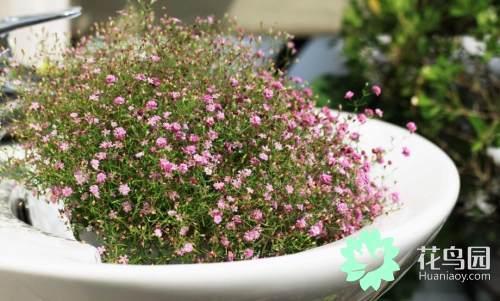
Baby's breathflowers have relatively small petals in large numbers, looking just like stars in the sky, which is how it got its name. The baby's breath commonly seen in daily life is generally dried flowers; in fact, those are all processed baby's breath. When growing it, it is the same as ordinary flowers. Today we will talk about cultivation tips for baby's breath.
How to grow baby's breath
1. Sufficient light: Light has a profound effect on whether baby's breath blooms, and this is especially obvious in winter. If baby's breath in summer is given 80-24Klux illuminance, then all plants can bloom; the difference is that the less illuminance the plants receive, the correspondingly fewer flowers they produce. In winter, plants given 58Klux can all bloom; while those given 24Klux cannot bloom even if a 24-hour full-light period is continuously provided.
2. Loose soil is best.Baby's breathcultivation has low requirements for soil; generally, well-drained slightly alkaline calcareous soil or gravelly loam is sufficient.
3. Water must be controlled. The growth of baby's breath has relatively high water requirements. After pinching, water and fertilizer still need to be replenished in time. To put it more professionally, only when these are sufficient will the plant shift from the vegetative growth stage to the reproductive growth stage. Until small flowers appear, a sufficient water supply must be ensured. After the petals grow out, water should be slightly reduced to prevent a decline in cut flower quality and water uptake, and also to promote neat blooming of all flowers. Especially in hot and humid seasons, water control must be appropriate; this is the key to determining whether baby's breath cultivation succeeds.
4. Temperature must not be too high. Baby's breath grows best at a daytime temperature of 25°C. If it exceeds 30°C, it is very easy to cause deformed flowers. The nighttime temperature is best at 10-15°C. If it is below 10°C for a long time, plus the short days of autumn and winter, it is very easy to cause the plant to enter dormancy or become clustered.
5. Fertilize regularly. Baby's breath likes fertilizer but dislikes water. After planting, topdressing should be done regularly. In the early stage, mainly nitrogen fertilizer is used, and in the later stage, phosphorus and potassium fertilizer is gradually increased. Of course, fertilization should match watering; improper control of water and fertilizer can easily cause excessive vegetative growth. When the plant grows to 30 cm, watering should be controlled, especially during the bud stage, and it should be even drier during the flowering period.
Precautions for growing baby's breath
1. Supplemental light and warmth in winter: Baby's breath is a plant that likes sunlight. If we grow it in winter, we need to supplement sunlight for baby's breath. We must not only maintain the necessary daytime light for baby's breath, but also supplement light at night through lighting. Only in this way can the flowering period be advanced. Also, when the temperature is relatively low in winter, we should pay attention to keeping baby's breath warm. Otherwise, under low temperature, baby's breath will go dormant and will not bloom.
2. Escape the heat and cool down in summer: Although baby's breath likes sunlight, excessively strong sunlight and excessively high temperatures are also not suitable forbaby's breathgrowth, so in summer when sunlight is too strong and the temperature is too high, we should place baby's breath plants in a place where sunlight is not so strong and the temperature is suitable, and always pay attention to watering it to maintain sufficient moisture.
Cutting propagation method for baby's breath
1. The first thing to do is prune branches. In spring, cut about 10 cm from the new branches of the plant. Cut 3-4 of the same kind and place them in a sand bed, spray water to keep them moist, and roots can grow in about 15 days. Then carry out cultivation, and after about 20 days they can be transplanted into soil. At the same time, if it is the plum rain season, we can choose relatively tender branches for cuttings, and they will also take root in the following 2-3 weeks.
2. However, the rooting rate of cuttings is not very high, so we should choose cuttings with 4-5 pairs of leaves. In addition, to promote rooting, rooting powder or other auxins can be used for treatment. It is not limited by season, but the best periods are mid-to-late March to early July and late September to early November. When the temperature is above 15°C, roots can develop after waiting about 20 days.