Ping-pong chrysanthemums bloom into round, plump balls; learn these few tricks and you can grow them well
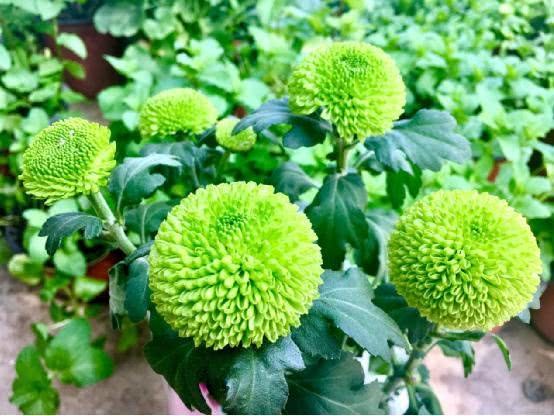
As succulents gradually became internet celebrities, many growers also began to fall in love with this kind of "cute-style" plant, and when it comes to cuteness, we have to mention the ping-pong chrysanthemum, whose flower shape resembles a small ball. It not only has extremely high ornamental value, but also, because it carries the meaning of "completeness," is often paired with roses to represent everlasting love. So can ping-pong chrysanthemums be grown at home? And what aspects do we need to consider? Today I have prepared some practical tips to answer all your questions at once!
As the saying goes, "to grow flowers, first choose the soil." Choosing a special growing medium according to the plant's habits is the first step in growing plants and growing them well. For ping-pong chrysanthemums, the requirements for soil acidity and alkalinity are not high; they can grow normally in soil ranging from slightly acidic to slightly alkaline, which gives us more room to choose soil. However, note here that no matter which soil you choose, you need to ensure it is loose, fertile and has excellent drainage.
Ping-pong chrysanthemums are short-day plants. The plant itself prefers a cool climate, and the optimum growth temperature is 18-21°C. The biggest challenge in the entire cultivation process is the need to ensure at least twelve hours of darkness treatment every day, as well as maintain a nighttime temperature of ten degrees. Only in this way can the normal development of flower buds be ensured. We can use methods such as moving the flowerpot at night and using a fan to regulate temperature to meet this condition. Although it is a bit more troublesome than plants such as pothos, please rest assured that when the flowers appear, you will definitely feel that all of this was worth it.
After solving the problems of light and temperature, we also need to understand the feeding characteristics of ping-pong chrysanthemums. Therefore, during their growth cycle, some organic fertilizer water can often be applied, so that ping-pong chrysanthemums can grow thick branches and strong leaves and bloom more. Topdressing should mainly be nitrogen fertilizer, and some phosphorus, potassium and trace element fertilizers can also be applied. As for watering, because the rhizomes under the soil of ping-pong chrysanthemums are drought-tolerant and most afraid of waterlogging, watering should follow the principle of "rather dry than wet," and it is best to water when dry and stop when wet.
If the air humidity in your environment is relatively high, light is insufficient, or ventilation is poor, then the already relatively weak ping-pong chrysanthemum is very likely to show pests and diseases. Generally speaking, ping-pong chrysanthemums are prone to powdery mildew, brown spot disease, aphids, mites and other pests and diseases. Pay attention to reasonably controlling air humidity, moisture and temperature, and when necessary use agents such as carbendazim and thiophanate-methyl for prevention and control.
The key to whether a single ping-pong chrysanthemum can bloom abundantly still lies in "pruning." The best time to prune is in April and May each year. Remove the top part, that is, pinch out the growing tip. This can promote ping-pong chrysanthemums to grow more branches and side branches, and the flowers will also bloom more brilliantly and densely.
Actually, overall, the environmental requirements for growing ping-pong chrysanthemums at home are not too difficult to meet. The key lies in how much time and energy you are willing to spend on this plant. It is not the kind of plant that you can just leave alone and it will fill the balcony with flowers. Every stage of its growth requires our careful care, so if you truly love growing plants, you might as well try ping-pong chrysanthemums. They will not disappoint you.