Lycopodium clavatum styling and care tips: this is the more sensible way to grow it
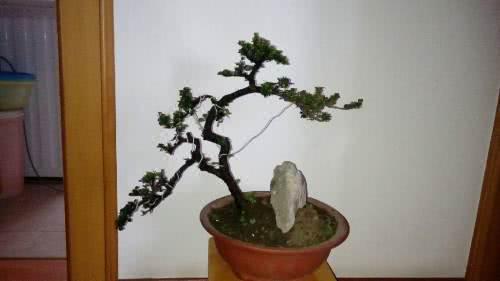
Lycopodium clavatum is a relatively easy plant to grow, and its requirements for soil are not very high, making it well suited to growing in sandy loam with good permeability. It is also drought tolerant, and during its growing period, if it is not especially dry, it basically needs no watering and can survive on rainfall alone. Because Lycopodium clavatum is highly adaptable and also highly ornamental, many people use styling techniques to make it into bonsai. So, with these Lycopodium clavatum styling techniques, caring for it this way is more sensible!
Lycopodium clavatum styling techniques
Lycopodium clavatum is relatively suitable for medium and small bonsai. When digging it out, protect the fibrous roots and bring as many fibrous roots as possible, then cut off the main root, prune away the branches and leaves, keep the framework, and you may also leave a very small number of fine branches and leaves. During the production process, to make the shape of Lycopodium clavatum look better, you can use metal wire to bind the branches and trunk so as to set their form. For the shape of the roots, natural exposure is the most attractive, while the shape of the branches is pruned according to their natural form; they can be trained into a weeping-branch style or a vine style.
After it has taken shape, Lycopodium clavatum also needs timely pruning. Crossing branches and leggy branches should all be cut off, so the shape will be fuller. As for the young shoots growing from the stump, if their position is not good, they should be removed.
How do you care for Lycopodium clavatum?
Because Lycopodium clavatum is relatively adaptable, it does not need much worry when it comes to care.
Placement: normally just place it in a ventilated spot with light; in summer put it in a shade shed to avoid direct sun exposure, and in winter just move it indoors.
Watering: the principle for watering Lycopodium clavatum is to keep it dry rather than wet; if the soil is not dry, there is no need to water. Water only after it has dried out, and when watering it is best to use the soaking method, soaking the whole pot in water until it is thoroughly soaked, so that compaction will not occur. In summer, be sure to spray a little water on the leaf surface.
Fertilizing: it is suitable to fertilize during the spring and summer growing period, and fertilizing should be done frequently, once every 10 days, but do not apply too much each time; phosphorus fertilizer and potassium fertilizer should be the main types. Fertilizing is also best done by the pot-soaking method.
Pruning: because Lycopodium clavatum has very strong sprouting ability, pruning is needed to maintain its shape. During the dormant period, you can prune those branches that are too long and too dense, and then remove all the dead branches, diseased branches and relatively thin and weak branches. At ordinary times, to keep the shape attractive, you also need to cut off those newly grown branches that are not needed.
Repotting: if it is not repotted for many years, it may lead to the death of the whole plant, so repotting should be carried out; generally it needs repotting once every 2 or 3 years, removing some old soil and old roots, and adding some organic fertilizer at the bottom of the pot.
Pest and disease treatment: Lycopodium clavatum relatively rarely suffers from pests and diseases.