Cause Analysis and Control Measures of Diseases in White-fleshed Loquat
Cause Analysis and Countermeasures of Diseases in White-fleshed Loquat
Jiangsu Province has a long history of loquat cultivation, with more than 40 loquat cultivars and obvious advantages in germplasm resources. In 2016, the loquat area in the province was more than 28,000 mu, of which 23,000 mu was in Dongting Mountain, Suzhou, accounting for 82% of the province's area. Historically, it has been one of the four major loquat production areas in the country. The main cultivars are Baiyu, Qingzhong, Guanyu, etc. The cultivars are excellent and the fruit growers are experienced.
Loquat is evergreen in all four seasons and blooms in winter. The flowering period lasts as long as three months. The fruit matures and comes to market in late spring and early summer, right during the off-season for fresh fruit, making it a fruit tree with distinctive characteristics in leisure agriculture. In recent years, through the adjustment of the fruit industry structure in Wuzhong District, Suzhou City, loquat has become the largest fruit crop in Wuzhong District, with industry benefits continuously rising, the industrialization process markedly accelerating, and industry functions continuously expanding.
However, in the past two years, along with the rapid development of loquat, there has been scattered death of entire mature old trees, and diseases have also become increasingly serious. Through in-depth research by the author, the causes are now analyzed and control countermeasures are proposed.
1 Invasion of Severe Weather
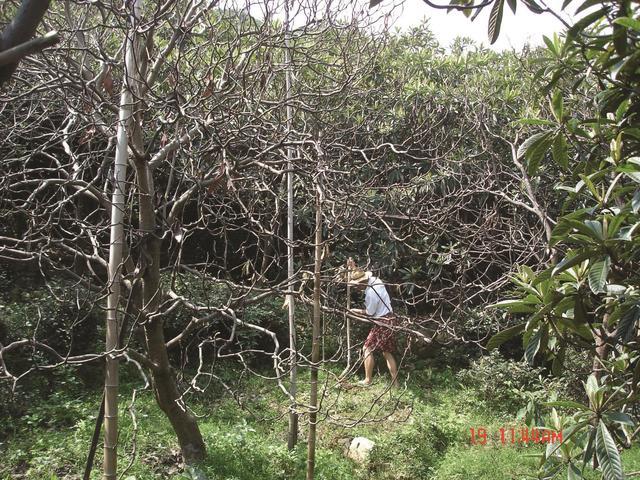
First, from January 24 to 26, 2016, an extreme low temperature of -.6°C occurred. According to meteorological data, this low temperature was the lowest in nearly 30 years (the lowest temperature recorded meteorologically was -8.7°C in 1969), dealing a fatal blow to old loquat trees. Second, excessive plum rain in early July and the subsequent high-temperature drought lasting 40 days from July to August, among other frequent natural disaster weather, caused severe damage to fruit trees in our district, especially in the two towns of Dongshan and Jinting. In mild cases, it caused reduced yield and weakened tree vigor; in severe cases, it caused tree death. The most seriously affected was loquat (Figure 1). The main reasons are: excessive rain, long-term saturation of soil moisture, prolonged oxygen deficiency of the root system, causing necrosis of fibrous roots (absorbing roots) and extreme weakening of tree vigor; combined with the continuous high-temperature drought in August, this accelerated tree death. Among them, old loquat areas such as Luohanwu in Bingchangli, a national-level One Village One Product loquat demonstration village, showed prominent tree aging, with significantly weakened resistance to waterlogging, drought and high temperature, and the phenomenon of loquat tree death was more prominent.
Figure 1 Entire loquat tree dead
2 Harm of the Two Major Loquat Diseases
Loquat has a variety of pests and diseases. The diseases that cause loquat tree death are mainly white root rot and southern blight. Both diseases are soil-borne diseases, and the affected parts are both the roots and the root collar. White mycelium first forms at the root collar. After the mycelium invades the xylem, it causes the entire root system to rot, and then the whole plant dies. These two diseases spread over short distances within the orchard, mainly through sclerotia transferred with rainwater or irrigation water, and also through mycelial spread (Figure 2) [Jishan Huayao]. When tree vigor is weak, it is susceptible to infection, and cross-infection occurs. In hot and rainy seasons with poor ventilation, the disease is likely to occur, causing the death of the whole plant, and even causing devastating losses to loquat planted in large contiguous blocks. It is one of the problems urgently needing solution in current loquat production.
2.1 White Root Rot
Loquat white root rot is widely distributed and occurs in both new and old production areas. It mainly damages the roots and root collar. After the pathogen infects the roots, white mycelium forms at the root tips, and slightly brown mycelial layers and mycelial strands form on old roots or main roots, sometimes filling the gaps in the soil (Figure 3). Black sclerotia can grow on the mycelial layer. The mycelium penetrates the cortex and invades the xylem, causing the entire root system to rot. The aboveground part of the diseased tree shows: delayed sprouting, thin and weak new shoots, slow growth, and easy wilting on sunny days. In severe cases, old leaves yellow and fall off until the whole plant dies.
Disease pattern: The pathogen is mainly transmitted through soil contact and is usually caused by soil carrying the pathogen. In orchards with poor drainage or where loquat trees are planted too deep, this disease is more likely to occur; generally, old trees are more severely affected than young trees, and orchards with heavy clay soil have more disease occurrence than orchards with sandy soil.
Figure 2 Mycelial spread around a diseased plant
Figure 3 Pathogen mycelium infecting the soil around loquat tree roots
2.2 Southern Blight
Southern blight, also known as stem base rot, mainly occurs at the root collar of mature trees or seedlings, with the highest incidence at 5-10 cm above the ground. In the early stage of the disease, white mycelium forms on the surface of the root collar, and the epidermis shows water-soaked brown lesions. The mycelium continues to grow until the root collar is entirely covered with a white mycelial layer resembling silk. As the disease further develops, the cortex at the root collar rots and exudes brown liquid. The aboveground part of the diseased tree shows: leaves become smaller and yellow, internodes of branches shorten, and fruit set is abundant but small; after the lesion encircles the trunk, the diseased tree may suddenly die as a whole plant in summer (showing green wilt symptoms).
Disease pattern: The pathogen overwinters as mycelium at the root collar of diseased trees or as sclerotia in the soil. Under natural conditions, sclerotia can survive in soil for 5-6 years. The pathogen spreads over short distances within the orchard, mainly through sclerotia transferred with rainwater or irrigation water, and also through mycelial spread. Long-distance spread occurs through infected seedlings. The incidence is relatively high in orchards with heavy clay soil and poor drainage and in loquat trees planted too deep. The disease is likely to occur in hot and rainy seasons.
3 Improper Cultivation Methods
Improper cultivation methods are also one of the root causes of tree decline and death, mainly shown as follows: First, lack of attention to pruning. Long-term lack of pruning leads to disordered tree structure, weakened tree vigor, and susceptibility to pests and diseases. Second, planting density is too high. In many places, planting is too dense, and this phenomenon is especially prominent in old areas, such as the Luohanwu area of Bingchang Village. High-density planting inevitably affects ventilation and light penetration of the tree body, causing canopy closure and susceptibility to pests and diseases. Once adverse climatic conditions occur, trees are extremely prone to weakening and even death. Third, it is related to long-term application of chemical fertilizers. Many fruit growers do not pay attention to applying organic fertilizer and frequently and repeatedly use certain chemical fertilizers, causing changes in soil pH. In addition, it is also related to the long-term use of herbicides in the soil. Fourth, fertilization methods are improper. Due to labor constraints, fruit growers, for convenience, directly broadcast fertilizer on the soil surface, and in autumn and winter there is also a lack of deep soil plowing, causing loquat roots to rise to the surface and weakening drought resistance and other abilities.
4 Control Countermeasures
4.1 Strengthen Cultivation Management
Increase the application of organic fertilizer, promote robust tree growth, promote root development, and improve plant disease resistance. Orchards should do a good job in lowering the groundwater level and drainage.
4.2 When Replanting, Do a Good Job in Soil Disinfection or Soil Replacement
It is best not to plant loquat in the pits of newly cut diseased trees. If planting is necessary, the rotten roots must be removed completely, soil must be mixed with lime, and carbendazim spraying and sun exposure must be used for thorough disinfection before planting. Where conditions permit, replace the soil around the roots with new soil before planting to prevent soil-borne diseases. In flatland orchards, adopt deep furrows and high beds for cultivation.
4.3 Reasonable Training and Pruning to Enhance Ventilation and Light Penetration
Maintain reasonable row and plant spacing. Carry out reasonable training and pruning to increase ventilation and light penetration conditions of the tree body and reduce humidity in the orchard.
4.4 Promptly Dig Out and Destroy Diseased Trees
Try to avoid causing bark wounds. When diseased trees are found, they should be dug out promptly and burned in a centralized manner or deeply buried, and isolation trenches should be opened to prevent transmission.
4.5 Chemical Control
When symptoms appear on the aboveground part of the tree, remove the soil near the main roots at the base of the trunk and expose it to the sun, look for the affected parts, and use a knife to thoroughly scrape off the lesions at the root collar. Disinfect the wounds with 1% copper sulfate solution, then coat them with Bordeaux mixture for protection, and then cover with new soil. At the same time, open isolation trenches around the diseased tree to isolate the disease area and prevent outward spread. For trees whose roots have already become diseased and those that may become diseased, drench the roots with 300-500 times dilution of 50% thiophanate-methyl wettable powder.
4.6 Change Fertilization Methods
Change surface broadcasting to deep application in furrows or rings. In autumn and winter, deeply plow the whole orchard and apply a sufficient amount of decomposed organic fertilizer at the same time.