Key Points of Pollution-Free Cultivation Techniques for Guanxi Honey Pomelo
Key Points of Pollution-Free Cultivation Techniques for Guanxi Honey Pomelo
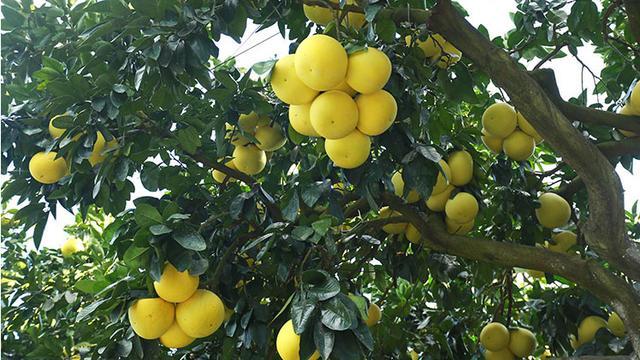
The Guanxi honey pomelo planting area across the country accounts for 15 percent of the total fruit planting area nationwide. Guanxi honey pomelo has the characteristics of large fruit with thin peel, attractive appearance, good storability and high output value. Based on these characteristics, expanding the cultivation of Guanxi honey pomelo can not only improve the economic benefits of honey pomelo but also bring substantial income to fruit growers. Over the years, Guanxi honey pomelo growers have accumulated rich experience through pollution-free, high-yield cultivation practices, gradually mastered scientific cultivation techniques, analyzed and summarized this experience and these techniques, identified problems promptly and adopted effective solutions, laying a solid foundation for the future development of pollution-free cultivation techniques for Guanxi honey pomelo.
1 Scientific Orchard Establishment Methods
1.1 Rational Selection of Orchard Site
When selecting an orchard site, the location, soil conditions and cultivation conditions should be taken as the criteria. Land with convenient transportation, abundant water sources, good air conditions, no pollution, sufficient sunlight, and rich in organic matter andpH 6soil conditions should be chosen as the orchard site. An ecological model combining fruit farming with livestock raising can also be adopted to make the soil fertile, ensure the supply of organic fertilizer, save costs and improve the quality and yield of honey pomelo.
1.2 Rational Planning of the Orchard Site
In addition to scientifically selecting the geographical location, the orchard site also needs to be scientifically planned. According to unified planning, high-quality seedlings should be selected, and the roads between fruit trees,water storage pondsshould be planned. The distance between rows of seedlings is 4-5 m, with30-40 plants/667 sq mplanted. The length, width and height of the planting hole are 1 m. Each hole is filled with 20-50 kg of rice straw, then filled layer by layer with soil, rice straw and lime and compacted. After 2-3 months of green manuring and backfilling, each hole is applied with an appropriate amount of decomposed pig manure, rapeseed cake fertilizer, calcium magnesium phosphate fertilizer and soil, thoroughly mixed, and formed into a tree basin in preparation for planting seedlings.
2 Soil Management
2.1 Soil Improvement
Within three years after planting, the orchard soil must be improved by hole expansion, that is, for three consecutive years, trenches are gradually dug outward from outside the holes. Each hole should also be filled layer by layer with an appropriate amount of weeds, rapeseed cake fertilizer, lime, calcium magnesium phosphate fertilizer and topsoil with weeds.
2.2 Weeding and Turning the Soil
Generally, weeding is carried out twice a year. After the fruit trees mature, a deep turning of the soil is carried out throughout the orchard once every one or two years after fruit harvesting, to a depth of about 20 cm, but note that the depth should be smaller closer to the trunk to prevent damage to the roots.
3 Fertilizer and Water Management
Seedlings should be fertilized reasonably during the cultivation process. The main measures are fertilization during the young tree stage and fertilization during the fruiting stage [Jishan Huayao].
Fertilization during the young tree stage is mainly based on applying water, with good protection of the shoots. Fertilization is carried out 6-8 times a year, with 2 fertilizer applications per flush. The fertilizers used are urea, phosphate fertilizer, diluted biogas slurry, etc., applied by digging ring-shaped trenches and watering. In the first year, the fertilizer should be more dilute, and then gradually increased thereafter.
For fertilization during the fruiting stage, fertilization should be carried out according to the formula, with organic fertilizers accounting for more than half, and a reasonable combined application ratio of nitrogen, phosphorus, potassium, calcium and magnesium of 1:0.5:0.9:1:0.28 respectively.
Fertilization is carried out from late January to early February each year, applying urea, superphosphate, potassium sulfate, rapeseed cake and other fertilizers to each tree. Stabilizing fertilizer is applied from early to mid-May, adding urea, calcium magnesium phosphate, magnesium sulfate and other fertilizers. Boosting fertilizer is applied in mid-to-late June when the fruit gradually matures and expands.
4 Tree Management
4.1 Shaping and Pruning of Young Trees
After the seedlings are planted, at the position of the main trunk, 3-4 main branches growing evenly in different directions are retained at 25-35 cm. On the main branches, three secondary main branches in different directions are selected and retained at intervals of 30-35 cm. Lateral branch groups are then cultivated on the secondary main branches, gradually forming a round or round-centered tree shape, and developing into a crown type with early fruiting and high and stable yield. During the growth period of the branches and shoots, uniform shoot release should be achieved. Scattered growing buds should be cut off promptly, and excessively long branches should be cut back and tipped. In winter, branches with pests and diseases, overlapping branches and useless upright long branches should be pruned.
4.2 Shaping and Pruning of Fruiting Trees
Pruning of fruiting trees should follow the principle of "heavy at the top, light on all sides, heavy on the periphery, light inside" to create good conditions for ventilation and light penetration in the tree body. In spring, closely growing branches, clustered branches and leafless fruiting branches should be cut off; in summer, summer shoots, shaded branches, pest- and disease-damaged branches and fruit-dropping branches should be removed; in autumn, a few autumn shoots should be retained; in winter, winter shoot branches, crossing and overlapping branches, straight long branches, protruding branches, ground-touching branches and dead branches should be pruned.
5 Scientific Management of Flowers and Fruits
5.1 Principles of Flower and Fruit Preservation
When managing the orchard, the principle should be to focus on cultivating flower spikes. Fertilizer should be supplemented before flowering, generally with quick-acting fertilizers (nitrogen and potassium fertilizers). Fertilizer should also be supplemented after the flowering period and during the growth period, such as biogas slurry fertilizer with higher water content. The specific implementation methods are cutting back or thinning out longer spring shoots to reasonably protect the fruit; after the flowering period, carrying out two to three rounds of ring cutting on the main branches, trying not to damage the xylem; in addition, before the flowering period, after the flowering period and during the young fruit stage, additional fertilizer should be sprayed on the leaf surface and outside the roots, such as a mixed aqueous solution of urea, monopotassium phosphate and borax.
5.2 Bagging Measures for Fruit
At present, fruit growers bag the fruit in their orchards, which has the effects of preventing pests and diseases, preventing fruit cracking, preventing pesticide contamination and preventing sunburn, making the fruit color more uniform and increasing fruit yield. The time for bagging fruit is generally in June each year. Before bagging the fruit, pesticide should be sprayed on the fruit to prevent pests and diseases, and bagging should be carried out after the liquid dries. Generally, bagging work can be completed within two days.
5.3 Timely Harvesting
The timing of fruit harvesting is crucial. When the peel color changes from green to yellow, the flesh is plump, the juice is full, and the solid-acid ratio is above 10, harvesting should be carried out in batches, collecting the yellow fruits and leaving the green ones.
6 Pest and Disease Control
The main pests and diseases in honey pomelo orchards include canker disease, yellow spot disease, citrus red mite, rust mite, leafminer and Oriental fruit fly. The control work mainly adopts a comprehensive control method based on agricultural control, biological control and physical control, supplemented by chemical control. The integrated supporting technology of "four ones" pollution-free cultivation is encouraged.
6.1 Canker Disease
Canker disease is a common disease of honey pomelo during the growth period. The general control measures are: in winter, clean up the orchard, cut off diseased branches and leaves, and burn them in a centralized manner; during the growth of branches, prune diseased branches and leaves, and also control pests such as leafminer to reduce susceptible wounds; in addition, chemical control should be carried out. Pesticide should be sprayed before and after the flowering period in spring; in summer and autumn, pesticide should be sprayed when new shoots emerge to 3 cm and at the leaf expansion stage and before self-pruning; and pesticide should be sprayed after typhoon and rain to prevent viruses and bacteria from entering wounds.
6.2 Yellow Spot Disease
The control work for yellow spot disease is basically similar to that for canker disease, but does not require steps such as pesticide spraying. First, in winter and spring, orchard cleanup should be done well, promptly cutting and pruning dead branches and fallen leaves, weeds, densely growing branches, weak branches and pest- and disease-damaged branches in the orchard, while diseased leaves, branches and fruits should be burned in a centralized manner. In addition, the soil should be disinfected with quicklime, and pests and diseases should be destroyed during deep soil turning to reduce the probability of viral and bacterial infection, and tree trunks should be whitewashed and tree crowns sprayed with protective agents to protect the trees.
6.3 Oriental Fruit Fly
The Oriental fruit fly, also known as the fruit borer, is extremely harmful to fruit. Its control work mainly relies on manual control and chemical control: first, manual control is carried out during the fruit drop period, when fallen fruit should be cleaned up promptly, and pest-damaged fruit on the trees should be removed regularly. Common treatment methods are soaking in water, scalding, burning and deep burial. Pest-damaged fruit should be treated by centralized burning, adding lime, immersion in manure pits, scalding with boiling water and deep burial after pesticide spraying. Bagging can also be carried out in late June each year, which can effectively avoid the huge harm caused by adult oviposition; second, chemical control should be carried out. Soil should be treated with insecticides, with the topsoil under the crown of diseased fruit trees requiring key treatment. From May to August each year, which is the peak emergence period of Oriental fruit fly adults, 50% phoxim should be sprayed on the orchard ground once every 7 h, for two to three consecutive sprayings, to kill both larvae and emerged adults. Also, during the peak period of adult occurrence, 90% trichlorfon or dichlorvos should be sprayed on the tree crowns of fruit trees and on weeds around the orchard. Spray disinfection of plants is generally carried out before 10:00 a.m. or from 4:00-6:00 p.m. Researchers have proven through experiments that spraying from 4:00-6:00 p.m. achieves a better control effect on the Oriental fruit fly.
7 Conclusion
Scientific and reasonable honey pomelo cultivation techniques play an important role in the healthy growth of honey pomelo plants. This study analyzes and studies the pollution-free cultivation techniques of Guanxi honey pomelo from the aspects of scientific orchard establishment methods, soil management, flower and fruit management, tree management and pest and disease control, laying a good foundation for promoting pollution-free and high-yield cultivation techniques.