How to cultivate a slipper orchid bonsai? Practical cultivation tips shared
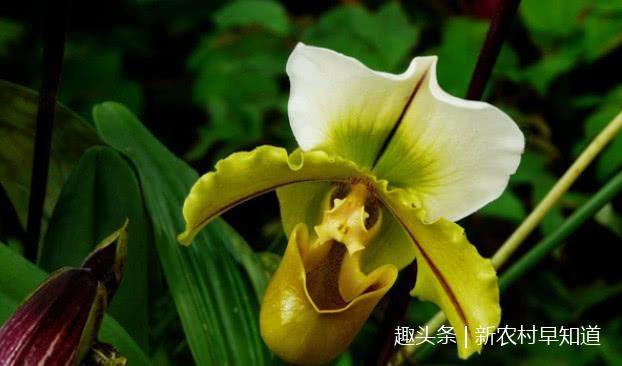
The slipper orchid is one of the many kinds of orchids. Unlike other orchids, it blooms singly, and its petals have brilliant patterns, giving it high ornamental value. Below, the editor will explain the cultivation techniques for bonsai slipper orchids. The bonsai slipper orchid method is very simple: first you need to grasp its growth habits well, and second comes the management techniques. Below is a detailed explanation. Those who like them should take a look right away.
1? Light
Slipper orchids are native to shady, damp forests, so direct sunlight must be strictly avoided. During cultivation, shade of 50%-60% is suitable in spring and autumn, 70%-80% in summer, and 50% in winter. The light intensity requirements of slipper orchids vary by variety. Green-leaved, multi-flowered native species prefer more light, with a suitable light intensity of about 32,400 lx, while variegated-leaf varieties are better suited to low-light cultivation, with a suitable light intensity of about 10,800-21,600 lx[1]. Under suitable light, the plants grow robustly, the leaves are short and wide, the leaf texture is thicker, the flowering rate is high, and the flower colors are vivid. If the light intensity is too weak, photosynthetic efficiency is not high, the plant's nutrition is insufficient, the plant is prone to leggy growth, the leaves are slender, thin and soft, lacking luster, and the flowering rate is low.
2? Temperature
The native environments of slipper orchids are mostly in high-altitude areas, requiring a large day-night temperature difference. In spring and autumn, it is best to maintain a daytime temperature of 26-28 °C and a nighttime temperature of 17-20 °C; in summer, it is best to maintain a daytime temperature of 28-30 °C and a nighttime temperature of 20-22 °C. Different types of slipper orchids differ in their adaptability to low winter temperatures. The non-variegated leaf series is the most cold-tolerant, able to endure a minimum temperature of about 5-7 °C, while the rest need temperatures above 10 °C[1, 2].
3? Water
Slipper orchids grow in damp areas, and their root systems require an environment with good aeration and dislike wetness. Like Phalaenopsis, slipper orchids have no pseudobulbs, and their drought resistance is far inferior to that of Cymbidium and Oncidium. During cultivation, the substrate must be kept moist and the air humidity relatively high. When the substrate surface appears slightly dry, water promptly to keep the pot moist. Watering should be thorough, letting water flow out from the bottom of the pot to expel water and air within the pot.
4? Fertilizer
Slipper orchids like fertilizer, but their roots are very sensitive to salt concentration and are prone to root damage caused by salt accumulation. In daily management, liquid fertilizer, organic fertilizer and slow-release fertilizer can all be used. From March to September, fertilizers with high nitrogen content are suitable, such as Peters 3:1:1 or 2:1:1; after October, fertilizers with more phosphorus and potassium should be applied, such as Peters 1:3:2 or 3:15:5. Apply at a dilution of 2,000-4,000 times, once every 1-2 weeks.
5? Substrate
Slipper orchids are mostly terrestrial orchids, and the cultivation substrate should use an organic mixture. A mixture of sphagnum moss, chopped fern roots, bark, orchid stone, etc. can be used. When planting, use crushed stone or brick pieces as a bottom layer, about 1/5 of the volume, which helps aeration and drainage.
6? Repotting and division
After the flowers fade, repotting and division can be carried out in spring and autumn before new roots grow. Slipper orchids do not have many roots, so be careful when repotting and dividing. Remove the old substrate and rotten roots, and fill the bottom of the pot with crushed stone or brick pieces to facilitate drainage. Within half a month after repotting and division, place the plant in a shady spot and mist the leaves several times a day, but keep the roots appropriately dry. Water only after new roots have grown.
7? Pest and disease control
Common pests of slipper orchids include mites, scale insects and thrips, which can be controlled by applying agents such as abamectin and profenofos, once a week for 3-4 consecutive times. Diseases of slipper orchids are relatively rare, but bacterial and fungal diseases are prone to appear during the plum rain season and summer, and sprays such as mancozeb, carbendazim and agricultural streptomycin can be used. Spraying should be meticulous and thorough, and the bench and the area around the flower pots should all be sprayed. Adhere to the principle of "prevention first, integrated control," improve the environment, pay attention to hygiene, strengthen ventilation and light transmission, avoid high temperature and high humidity, and promptly remove dead branches and fallen leaves as well as plants infected by pests and diseases.
★The editor has worked hard to put this together. If you like it, save it or forward it to other friends! Thank you for your support!
(Article images are from the internet)