Loquat leaves are often overlooked, but they are actually more useful than the fruit, so don't miss them when you see them
Friendly reminder
Hemu Report aims to share and popularize information about various plants and their uses, for reference only. If you need medicinal use, it is recommended to consult a professional physician to avoid problems!
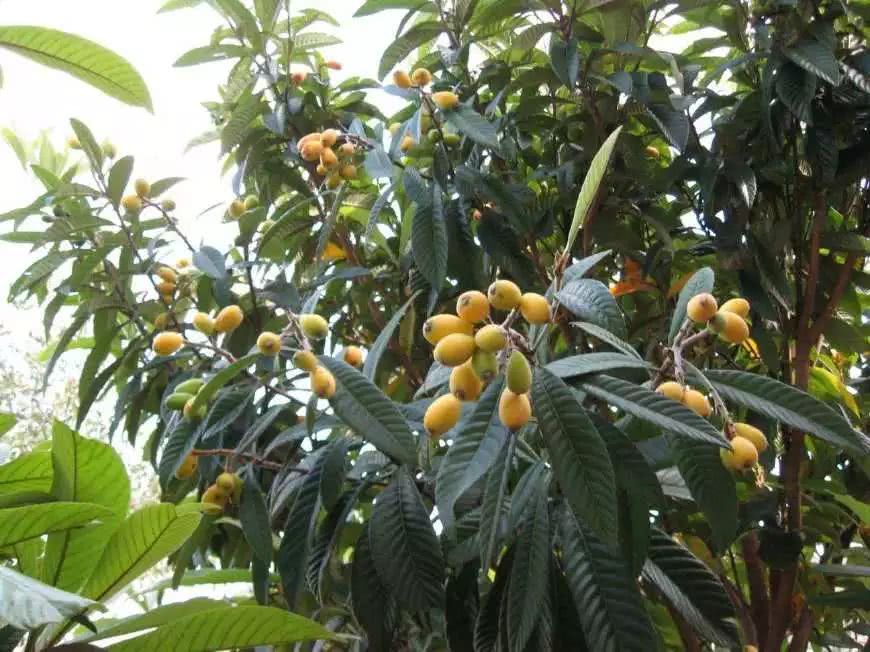
Many farmer friends like to grow fruit trees, and the most popular fruit tree variety in rural areas is the kind that is easy to grow, grows fast, has few pests and diseases, and saves people worry. So is there such a fruit tree? The answer is yes, and that fruit tree is the loquat tree, which is all too common in rural areas. Farmer friends do not bother with it, and it freely blooms and bears fruit. After the fruit falls into the soil, it sprouts and grows into new loquat trees. Compared with cherries, whose fruit is delicious but whose trees are hard to grow, the loquat tree is extremely low-maintenance.
Loquat trees bloom early and bear fruit early, and the earliest fruit to hit the market in spring is the loquat. However, many people only know that loquats are delicious and often overlook their leaves, not realizing that the leaves are even more useful than the fruit. Did you know that?
Loquat leaves are shaped like a fan. Perhaps many people do not know that the leaves are evergreen all year round. Even in the snowy winter, these leaves still stand proudly in the snow. Therefore, loquat leaves can be picked all year round, but only old farmers know their uses. Everyone knows that loquat fruit can moisten the lungs and relieve coughs, but its effect is limited, and loquat leaves make up for this shortcoming very well.
In many famous cough-and-phlegm-relieving medicinal pastes, loquat leaves are used as the main ingredient, supplemented with other medicinal materials. In the "Compendium of Materia Medica" it is recorded: "Loquat leaves, in treating diseases of the lung and stomach, mostly take advantage of their function of directing qi downward." This shows that loquat leaves have a certain therapeutic effect on diseases of the lungs and stomach.
Not many people today know about the effects of loquat leaves. Only some elderly people in rural areas still pick loquat leaves to boil in water and drink. Because loquat leaves are evergreen all year round, they can be picked at any time. When picking, choose loquat leaves from old trees, as their medicinal effect is better. Loquat trees basically have few pests and diseases, so no one sprays pesticides on them, and both wild and homegrown loquat leaves can be picked. After picking them, the simplest method is to add rock sugar and boil them in water to drink. The taste is fresh and sweet, and drinking it has a very good effect on relieving coughs and reducing phlegm.
However, one thing to note: when washing loquat leaves, you must thoroughly brush off the fuzz on the back, otherwise these fine hairs will irritate the throat and cause more severe coughing. Some people who pay attention to health preservation dry the loquat leaves and cook them with porridge. This not only moistens the lungs and reduces phlegm, but also has a stomach-nourishing effect. The specific method is as follows.
Loquat leaf porridge
Brush the fuzz off the dried loquat leaves and cut them into strips with scissors. Fresh loquat leaves can also be used, but the amount must be doubled; likewise wash them and cut them into strips
Put an appropriate amount of water in a pot, add the loquat leaves, and simmer. When the water turns the color of tea, turn off the heat
Strain the cooked liquid, keeping only the broth, pour it into a porridge pot, add rice, and cook
Loquat leaves can moisten lung qi and calm stomach qi, while rice porridge has the effect of tonifying the middle and boosting qi, making it especially suitable for eating during the summer heat.
Loquat leaves with such good effects are unfortunately unknown to most people. Dear readers, when you see loquat leaves in the future, don't miss them. They are even a bit more useful than the fruit, and it would be a pity to miss them!
Finally, the author would like to share with everyone the water I boiled with loquat leaves this afternoon, with a little rock sugar added; it tastes sweet.
Text/Hemu Report, Images/Actual photos
If you like Hemu's articles, you are welcome to follow