What to Do If Plum Blossoms Won't Bloom? Cause Analysis and Solutions
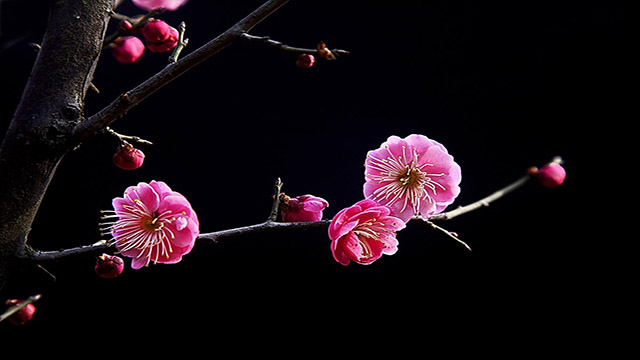
1. Relocate the Position
1. Cause: If the plum blossom is in a rather dark spot with no light and no wind, it can easily fail to bloom.
2. Solution: At this point, you need to move it to a place with ample light and good ventilation.
2. Prune in Time
1. Cause: If it isn't pruned in time, the plum blossom will have a hard time blooming, because most of its nutrients are being concentrated on supplying those useless leaves and branches.
2. Solution: If a branch is very long, cut it off. This generally starts from the seedling stage; when it reaches about 20 to 30 cm, cut off its top, so that more side branches will grow and it can quickly produce flowers. In addition, after blooming, prune the mature branches again.
3. Supplement Nutrients
1. Cause: There is another reason the plum blossom can't bloom, and that is that it doesn't have enough nutrients to support the opening of the flowers. If you haven't fertilized or changed the soil regularly, it will be very hard for it to bloom.
2. Solution: After the flowers have faded in spring, replace its pot. The new potting soil is best if it is fairly loose, and you can also add some base fertilizer, after which you can apply additional fertilizer as appropriate. In addition, in autumn when the soil is fairly moist, you can also add fertilizer two or three times, preferably using a fairly dilute liquid fertilizer.
4. Drain in Time
1. Cause: When there is a lot of water, it is prone to waterlogging, and at this point the flowers are very hard to open.
2. Solution: Water once when repotting, and afterward wait until it is dry before watering again. If it rains, you also need to drain promptly and must not let water accumulate. After the leaves have fallen, do not water again. In addition, when water accumulates, you can place it in a rather shady spot, so the water will quickly evaporate.