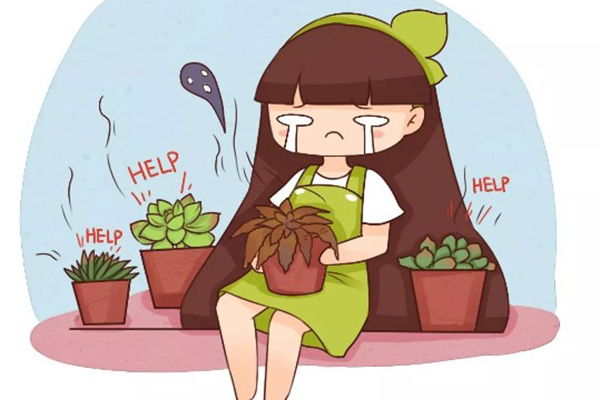
How do you save a succulent with black rot? Act fast or they will all die
1. Echeveria 'Rainbow' (Yudie): the frontline suicide squad
How black rot kills: first the roots rot, then it spreads rapidly to the top
At the mention of black rot, the first thing many flower lovers think of is definitely Echeveria 'Rainbow' (Yudie)! Although Yudie is as beautiful as a flower, it is also the most prone to black rot, and some even die before they make it through summer!
Solution: You can keep the side shoots and the head; the side shoots can be picked off for cuttings, and the head can be beheaded to regrow
Summer survival guide:
1. Place Yudie indoors in a spot with good scattered light, do not expose it to blazing sun; water only when the leaves feel soft to the touch, and never water too much.
2. In summer, you can aim a fan at it to prevent the soil temperature in the pot from getting too high and smothering the roots; ordinary garden soil is fine, no need for a specially mixed soil.
2. Echeveria derenbergii (Jingye): certain death in summer!
How black rot kills: turning to mush and dropping leaves, black rot starting from the roots
On the succulent black rot ranking, the top three definitely include Jingye. When the leaves drop, you only then discover that the stem has already rotted black.
Solution: Remove the mushy leaves, behead the part that has not rotted black and let it regrow roots
Summer survival guide:
1. Make sure the potting soil is loose and breathable; you can choose perlite and coconut coir mixed at a 1;1 ratio, and before summer you can choose a red clay pot.
2. Pay attention to ventilation and shade; in summer you need to pull up a layer of shade netting to avoid blazing sun, and watering about once every 7-10 days is enough.
3. Sedum clavatum (Laoer): the black rot monster!
How black rot kills: black rot starts from the top, and even if you behead it, in no more than 3 days the stem still goes soft
Solution: Cut off the black-rotted head, use the healthy leaves for cuttings, and just throw away all the black-rotted parts
Summer survival guide:
1. Place it indoors in a well-ventilated spot with scattered light, never expose it to direct blazing sun, otherwise the temperature gets too high and it scorches to death immediately.
2. Ventilate often and water sparingly, to avoid the potting soil staying hot and stuffy for long periods, so that Laoer can get through summer safely.
4. Cotyledon tomentosa (Bear's Paw): dropping leaves!
How black rot kills: first the leaves drop, then the whole stem shrivels, and it slowly dies
Solution: If you notice leaves dropping, dig out the Bear's Paw; if the stem is intact, let it dry and repot it; if the stem has rotted black, then just behead it for cuttings
Summer survival guide:
1. Bear's Paw is especially afraid of heat; when summer temperatures are above 30°C, it enters dormancy, and at that point just keep it in a cool, ventilated spot with scattered light.
2. In summer you must control water, watering just once a month is enough; choose a breezy, cool evening to water, no need to water thoroughly, just slightly moisten the roots.
5. Echeveria 'Romeo' (Luomiou): rapid black rot!
How black rot kills: first the core rots, then the leaves drop, and it rots black rapidly
Solution: Dig out the plant, remove all the rotted leaf core and black-rotted leaves, trim the roots a bit, keep the healthy parts, let them dry and replant; if the black rot is especially severe, then you can only discard it.
Summer survival guide:
1. Choose a loose, breathable nutrient soil; you can mix a little sand or perlite into the soil to prevent the roots from being smothered by summer heat and stuffiness.
2. Summer weather is hot, so you can keep it indoors with a fan to cool it down; when watering, just give a little water along the edge of the pot.
6. Echeveria 'Furong Snow Lotus': hard to get through summer!
How black rot kills: the bottom leaves rot black and turn to mush, leaves drop, and then the stem turns black
Solution: Pick off the black-rotted, mushy leaves, then behead it; if after beheading the stalk is not black, then apply a little carbendazim and replant; if the stalk is already black, then it is basically beyond saving.
Summer survival guide:
1. More sun gives better color. Pay attention to shading at noon; in the morning and evening you can let it get direct sun while the sun is not especially harsh, so the Snow Lotus colors up and the white powder on the leaves looks even better!
2. Water sparingly, and water only after the potting soil feels completely dry; water slowly along the edge of the pot, and do not spray water onto the leaves.
7. Sedum rubrotinctum (Hongzhiyu): the leggy king!
How black rot kills: too much water makes it go leggy and drop leaves in no time; too little water makes the stem go soft and leads to black rot
Solution: Cut off all the black-rotted parts, apply a little carbendazim to the wounds, place in a cool, ventilated spot to let the wounds dry, then repot.
Summer survival guide:
1. Aside from needing a little shade at noon in summer, at other times direct sun is no problem at all.
2. Be sure to be careful with watering; you can choose to water in the evening, and take care not to get water on the leaves, to avoid direct sunlight scorching the leaves.
8. Echeveria 'Little Red Riding Hood' (Xiaohongyi): certain death in summer!
How black rot kills: the bottom leaves turn to mush first, then the stem rots black, and the whole plant dies
Solution: Remove the mushy, withered leaves, and promptly cut off the black-rotted leaves too; let the remaining parts dry at the wounds and then replant.
Summer survival guide:
1. Ventilate often. Once it is hot, stuffy and unventilated, Xiaohongyi can die in no time. You must make sure to open the windows every day for ventilation, or aim a fan at Xiaohongyi to cool it down.
2. Make sure the potting soil stays slightly dry; pick up the pot to feel it, and water a little only after it feels noticeably lighter, and do not water thoroughly.
Now the weather is getting hotter and hotter,
have the succulents at your home rotted black yet, fellow flower lovers?
Why not leave a comment to tell Huahua
which variety at your home has already rotted black and died?