Appreciation of Works from the 2018 Satsuki Azalea Bonsai Exhibition
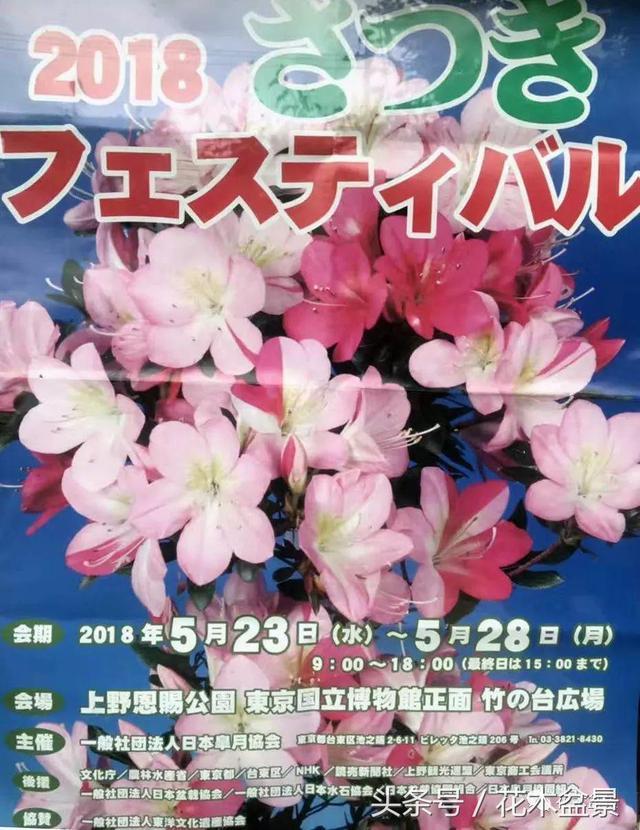
People who love flowers, trees and bonsai are all people of refined taste!
▋The history of Ueno Onshi Park
In 1625, during the shogunate era of Japan, the third shogun, Tokugawa Iemitsu, established Toeizan Kanei-ji Temple in the "demon gate" direction (that is, the northeast direction) of Edo Castle. This temple also became the family temple of the Tokugawa clan and, along with Zojo-ji Temple, was listed as a burial place of the shoguns. Within this vast temple area there were also temples such as Kiyomizu Kannon-do Hall and Shinobazu Pond Benzaiten Hall, which could be said to have served as the center of local faith at the time, and the scenery here was often depicted in the works of ukiyo-e artists.
However, these places were burned down in 1868 during the Boshin War (also known as the Battle of Ueno). In 1870, when the Dutch physician Bauduin inspected Ueno, he suggested that the Japanese government set up a park there. The government accepted Bauduin's opinion and in 1873 planned Japan's first park at this site, and Bauduin is also regarded as the father of Ueno Onshi Park. The facilities in the park also increased year by year; for example, in 1882 the Tokyo National Museum and the zoo were established, and in recent years, because the area has been positioned as a "forest of culture," related artistic activities have become even more active.
If a traveler has studied Japanese culture even a little, upon seeing the two characters for "onshi" in the name, they can probably guess that it is related to the Japanese imperial family. Ueno Onshi Park covers an area of 530,000 hectares and was originally imperial family property. In 1924, Emperor Taisho handed it over to the government's jurisdiction, which is why it is called "onshi."
▋Basic information and map of Ueno Onshi Park
Ueno Onshi Park is vast in scale. A map is attached first so that everyone can have a preliminary idea.
Ueno Onshi Park can roughly be divided into two areas. One is the park area closer to the station exit, including facilities such as the National Museum of Western Art, the Tokyo Metropolitan Art Museum, the Tokyo National Museum, the National Museum of Nature and Science, and Ueno Zoological Gardens, as well as temples and shrines such as Ueno Toshogu Shrine and Kiyomizu Kannon-do Hall, and scenic spots such as the statues of Saigo Takamori and Noguchi Hideyo. To the west are Shinobazu Pond Benzaiten Hall, the lotus pond and the swan boat boarding area.
All the above images were provided by Japanese friend Hiroyuki Suzuki
▋For more bonsai information, please follow the WeChat public account: Huamu Penjing
If you are interested in growing flowers, follow the WeChat public account: Yanghua Renjia