Sowing and propagating with peat soil seedling blocks, and surprisingly the survival rate turned out pretty good.
Normally I use seedling pots for sowing and propagating, but these past few days I saw flower enthusiasts using a new little seedling tool, so I bought some to test the results. They are actually just seedling blocks. I tried opening a few of them and found that the material inside is peat soil, with very little coconut coir and wood shavings, and the weight is very light. Let's see how the sowing results turn out.
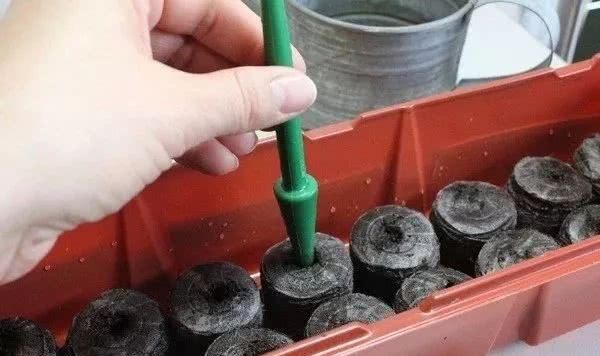
When sowing, just poke a hole in the top, water it first to moisten it, and then put the seeds in.
Sowing with seedling blocks is still very simple. Just put two or three seeds in one small seedling block. The planting process is very simple. During care, keep the seedling block moist and keep the environment warm. It is even better if you can cover it with a plastic cover on top, simulating a greenhouse environment, which can do a good job of promoting seed germination.
After spring warms up, you can start sowing and propagating. Here I choose to place seedling blocks on a seedling tray. Of course, there are drainage holes at the bottom. The placement location is a south-facing windowsill with appropriate light, avoiding excessive shade, which is suitable for planting and raising seedlings.
These seedling blocks are actually made from compressed peat soil, that is, sphagnum peat moss, which is why they are so light. They contain nutrients that can appropriately promote seedling growth. These small seedling blocks slowly expand after watering, which is also good for the plant's root system. The nutrients inside will also slowly seep out after watering.
The outside of the seedling block is wrapped in a layer of netting. Actually, this small net is made from some degradable materials, so even if it is directly buried in the soil there is no problem. It is also a disposable seedling tool.
After the seedlings grow out and produce 3~4 true leaves, they can be transplanted. Directly put the seedling block into a larger pot of soil, or bury it directly in the yard.
After watering the seedling block thoroughly, not only should it be placed in a warm and ventilated place, it also needs a plastic cover on top. It can maintain relatively high temperature and humidity, promote faster seed germination and rooting, and help increase the germination rate.
This kind of seedling block is suitable for propagating and cultivating various plants. It can be used for sowing and raising seeds, and can also serve as a small container for plant cuttings.
Potted plants suitable for sowing and raising seedlings include common Cleome, hollyhock, foxglove, zinnia, dahlia, daisy, coleus, larkspur, parsley, oregano, mint, basil and cilantro, among others.
The above are small seedlings cultivated with seedling blocks. As the number of waterings increases, after they grow to 3~4 true leaves they need to be transplanted. When planting them in a new flowerpot, there is no need to remove the netting of the seedling block; it will decompose on its own.
These seedling blocks expand very easily. Generally, add an appropriate amount of water to each small ball. If the seedling block expands too much, you need to pour off the excess water. It is best to place the seedling blocks on a tray with a grid.
After sowing and propagating with seedling blocks, you need to put a label on top to avoid forgetting what plant this is. Record the name of the plant seeds and mark the cultivation time. After that, you can directly insert it beside them, and later care will not have to worry about confusion.
Put about three seeds in each seedling block. Just scatter the seeds evenly on top. This ensures that a small seedling can grow in each seedling block.
I like growing various herbaceous plants the most, such as pansy, wishbone flower, coleus and cilantro. After planting, place them in a warm and ventilated position with appropriate scattered light, but avoid direct sunlight.
During care, keep it warm, keep the seedling block expanded, and avoid excessive drought. The seedling block itself has good water retention capacity, so there is no need to water frequently.
Also, pay attention to covering it with a lid, which can maintain humidity and temperature and help promote seed germination. Once you see small seedlings, uncover the lid.
Be careful not to overwater. It has good water retention capacity. When it has moisture it is dark brown. If the seedling block turns light brown, you need to replenish water in time.
After 1~2 weeks, the seeds slowly sprout. Once the seeds germinate, uncover the top lid, give appropriate scattered light, avoid excessive shade, and let them grow slowly.
Most of the seeds in the seedling tray have grown out. Some seedling blocks have many seedlings growing in them, and they are growing too crowded. At this time, you need to thin them appropriately and keep the strong-growing seedlings.
Proper thinning can promote growth. Seedlings also need appropriate spacing to grow well and to keep the surrounding air circulating. Seedlings growing densely are very prone to fungal diseases and lodging.
For some seedlings that are too dense, I directly separate them with small tweezers. After that, carefully replenish water. Generally, add water from the tray and let it slowly absorb water from the bottom, slowly soaking the pot from below.
After the seedlings grow out, avoid watering too frequently, otherwise they are prone to black rot and lodging. Give the seedlings a little appropriate light. You can move them to a south-facing windowsill and give appropriate light every day, maintain a certain environmental humidity, and when you find the seedling block turning light brown, replenish water for it.
Raising seedlings requires special care. Avoid direct sunlight or excessive exposure. Beginners can choose flowers that germinate easily, such as common basil, purple basil, coleus, dahlia, zinnia, moss rose, oregano and cilantro. These are especially easy to germinate, and the seedlings will also grow very well.
After the seedlings in the seedling blocks grow 3~4 true leaves, they can be transplanted. You can directly move the whole seedling block to a new environment. You can directly place the seedling block in a flowerpot, cover it with an appropriate amount of soil, water it thoroughly, and then place it in a position with appropriate scattered light, gradually increasing the light.
The above are flower seedlings raised in seedling trays, mainly herbaceous flowers. The germination rate is also very high, and the seedling growth is similar to that with seedling blocks, but transplanting is not as convenient.
Summary:
Sowing and propagating with seedling blocks is quite convenient. It is very suitable for beginners to propagate flowers. After the seedlings grow out, they are easy to manage and easy to survive after transplanting, because the step of digging up the seedlings for transplanting is eliminated. Directly burying the seedling block in the potting soil completes it.