Some people say that fallowing is due to our country's overproduction. That is not wrong, but it is still not quite accurate.
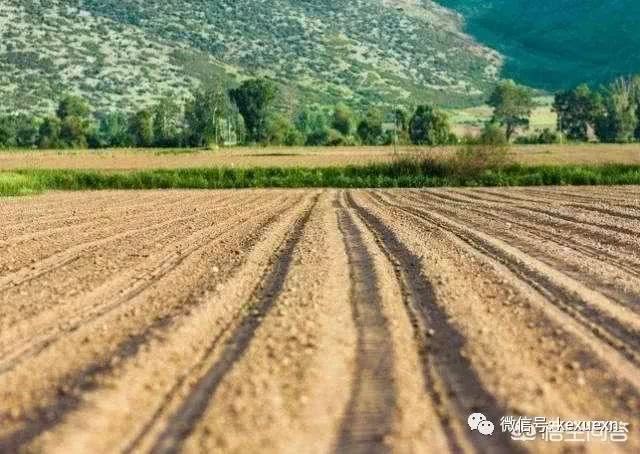
In 2017, the area of fallow land in our country was 2 million mu, and the area of crop rotation was 10 million mu, still far from the target of 50 million mu. Crop rotation and fallowing have two meanings: crop rotation is, on the basis of the previous crop, switching to other cultivated crops, while fallowing means not cultivating the land for a period of time.
To answer the question of whether crop rotation and fallowing mean that our country has a grain surplus, we must first understand the background against which the state proposed crop rotation and fallowing.
Crop rotation and fallowing do indeed have a certain impact on our country's grain output, but with the emergence in recent years of a series of problems such as soil damage, declining soil fertility, and depletion of groundwater resources, the contradiction between production and the environment has become increasingly prominent. That is to say, if things continue this way, the arable agricultural production capacity of our country will become weaker and weaker in the future, meaning it will not be capable of sustainable development. At present, chemical fertilizer application on farmland in many areas is excessive, and soil fertility can be said to be consumed in advance.
Against this background, the state proposed agricultural crop rotation and fallowing to allow farmland to recover and restore its production capacity. At a meeting of the Ministry of Agriculture and Rural Affairs, a certain leader also made relevant statements on this issue: due to the implementation of crop rotation and fallowing, although the annual quarterly output declined somewhat, the output of a single quarter increased considerably. In addition, crop rotation is not implemented on the same field year after year, but in rotation. In this way, the soil ecology of areas nationwide with declining soil fertility can be appropriately improved.
Let us now talk about the impact of crop rotation and fallowing on output. Under the current background of our country's successive years of destocking grain, it also shows that our country's grain supply is still relatively sufficient, and the scope of crop rotation and fallowing has not affected our country's food security. Taking 2017 as an example, the output affected by crop rotation and fallowing was about 8 billion jin, roughly equivalent to 0.6% of our country's total grain output, a very weak impact.
From the above analysis, everyone should understand that the premise of crop rotation and fallowing is that our country currently has enough grain to support the implementation of such a strategy. But do not think that implementing crop rotation and fallowing means our country's grain supply is sufficient. To be precise, our country's grain is only structurally sufficient. After all, last year our country still imported 95.53 million tons of soybeans.
This is Science Agriculture. You are welcome to follow, and let us grow our knowledge together.