Can't grow osmanthus well? Let me teach you a trick to grow it easily, with no yellowing leaves and blooms every year
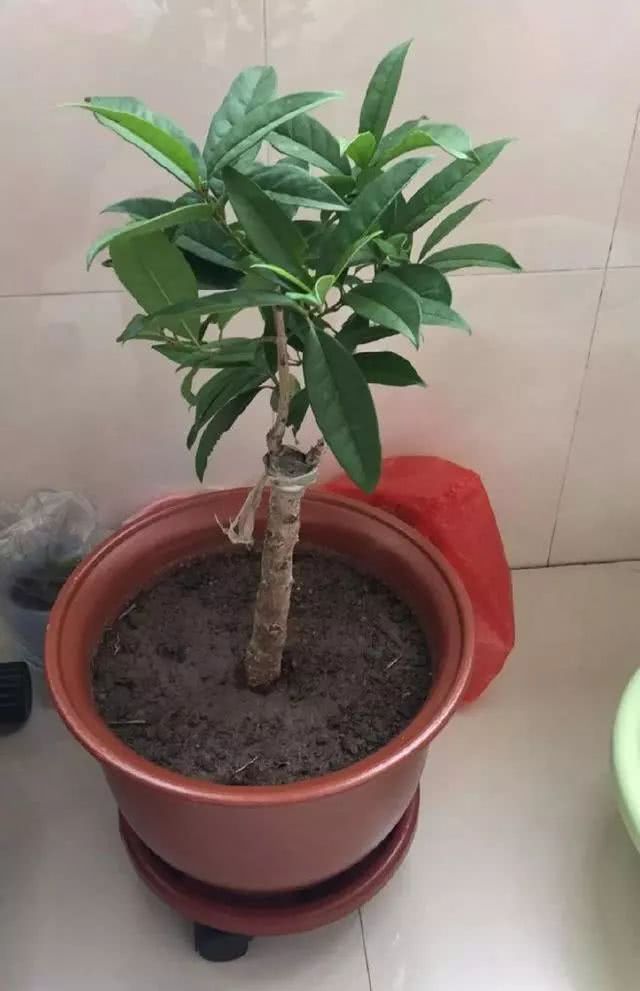
How should you care for a newly bought osmanthus?
After buying it and potting it up directly, be sure to place it in a cool, ventilated spot, and absolutely do not expose it to strong light. A bit of scattered light is enough. Ventilation must be good; mist it every morning and evening to maintain air humidity. When the soil surface in the pot dries out, water it thoroughly in time. Keep caring for it this way until its side buds clearly start growing, then gradually increase the light, and do not expose it to strong light all at once. During this period, be sure not to fertilize it. After it has clearly started growing, wait about a month or so before starting to fertilize it. Alright, now let's talk about the daily care of osmanthus.
The first point in growing osmanthus is choosing a pot. We must choose a pot with good breathability. It is best to use a ceramic pot, because ceramic pots have very good permeability, so they are quite suitable for planting osmanthus.
As for the choice of potting soil, osmanthus likes slightly acidic soil. When mixing soil for it, try not to use soil that is too alkaline. When growing osmanthus in a pot, the size of the pot limits the development of the osmanthus root system, so we must give it good soil. It is best to mix a loose, breathable, nutrient-rich soil containing humus. We can mix it using river sand, leaf mold, and dry fermented sheep manure or cow manure and the like. The soil mixed this way is rich in nutrients, suitable for growing osmanthus, and also has good drainage.
When watering osmanthus, absolutely avoid the potting soil being too wet. The principle for watering it is to water when dry and let it dry when wet, that is, water it thoroughly again only after the soil surface in the pot has completely dried out. Just before it approaches blooming, be sure to keep the potting soil moist. Until flowering ends, be sure to water it thoroughly in time before bringing it indoors for winter. After bringing it indoors, when the soil surface in the pot dries out, water it thoroughly in time. The water temperature must be close to room temperature.
Osmanthus is very fond of fertilizer. When there is enough fertilizer, it blooms profusely and fragrantly. If there is insufficient fertilizer and water, it easily fails to bloom or blooms sparsely. When fertilizing in spring, once every half a month is enough. Mainly use a compound fertilizer. In summer, apply a phosphorus- and potassium-based fertilizer about once every ten days. Continue until early August, when you give it the last application of fertilizer, then stop fertilizing and quietly wait for it to bloom. After it finishes blooming, resume normal topdressing with compound fertilizer. Continue until it is brought indoors for winter, then stop fertilizing.
Osmanthus is a long-day plant and rather likes strong light, so absolutely avoid insufficient light. Throughout the year, let it get as much light as possible. If it does not get enough light during the growing season, its branches and leaves tend to grow leggy. This affects the differentiation and formation of flower buds, which leads to failure to bloom.
There is so much to write about osmanthus care. Roughly, it comes down to these few points. If you can master these few points, the osmanthus you grow will keep blooming, and the flowers will be very fragrant.