The Succulent Self-Healing Path: Feeling the Power of Life Through Simple Labor
Follow
Follow the Encyclopedia · Encounter Beauty (WeChat ID: duoroubaike)
Main text begins:
Thanks to the author [Nangong] for theoriginal submissionsharing
Submission date: May 4, 2018
Edited and compiled by: Encyclopedia Jun
Location: Beijing
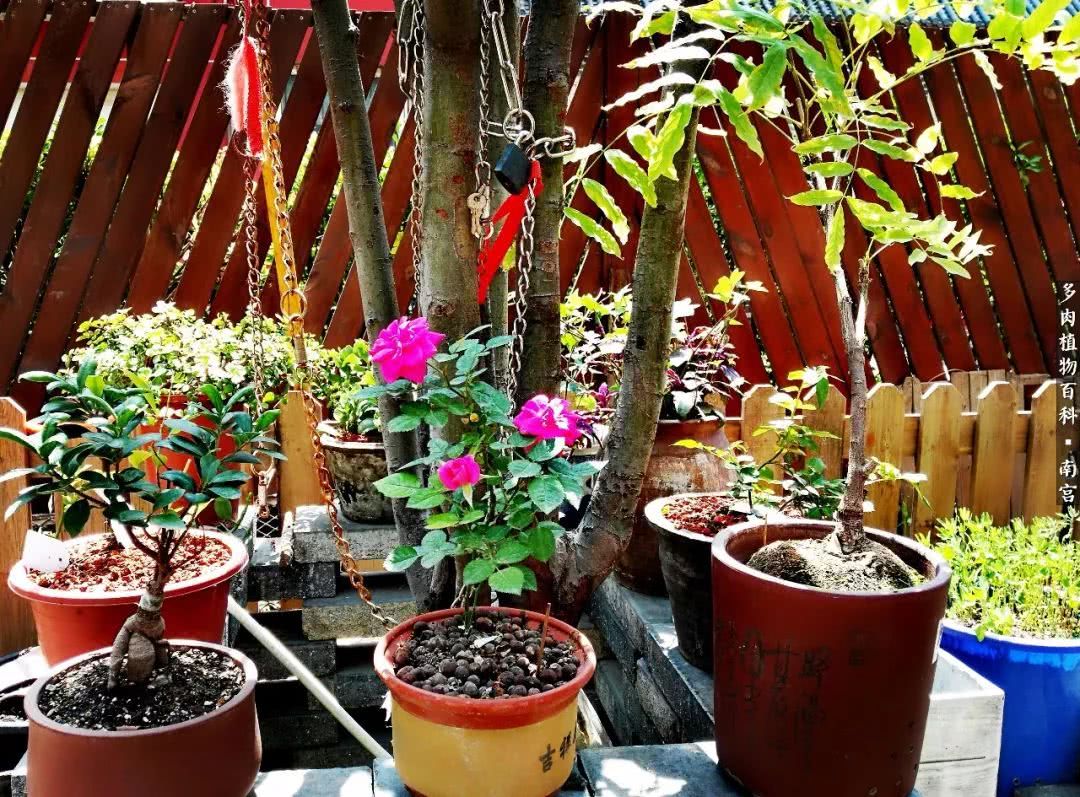
Every year, with anticipation for spring, I sow the flowers I love in my own little garden. The climbing roses and wisteria I have always dreamed of - I have always had a special fondness for vining plants. Yet the plan to plant fruit trees has been delayed beyond my plans. If conditions allow next year, I intend to plant a vegetable box one square meter in size. The Germans invented this growing technique; it is very economical. A whole family's vegetables for a year can be provided by it, with plenty to spare. You can also fertilize with the humus formed from the remains of their ancestors, imagining them reincarnating in cycles, growing this year's crops.
I always thought, living in a house with a garden, I must carefully plan how to make this garden worthy of its existence. So, I started running to flower markets and buying potted flowers like crazy. The result was that I brought them home and watered them frantically, and in the end they all perished. I started thinking, where did the problem lie?
I remembered people saying that growing flowers cultivates character. It dawned on me, and I made another trip to the flower market. Each time I bought a flower, I wrote down its name. So I began learning about these plants' habits on Baidu, noting the key points in a notebook: how to water, how to fertilize, how to kill pests and treat diseases, how to learn propagation. Then I studied floral art. Over three years, accumulating little by little, I learned a great deal. But in the end I discovered that the plant world is also a very magical discipline. The deeper you understand, the more you feel your own ignorance. As a result, I reined myself in, planning to care well for the plants I already had and let the rest take their natural course - and when problems arise, make a last-minute effort then.
Now is exactly the time to plan carefully for spring planting. I thought I should build a glass house for the plants to overwinter. But after repeated calculations, a glass house costs too much. If I wanted a glass house that is warm in winter and cool in summer, I would need to hire a professional company to design it, and it would need to incorporate smart technology to make use of its functions. As it turned out, by my reckoning, 100,000 yuan would not even be enough, so that idea was shelved. I began the second plan: a wooden cabin made of preservative-treated timber. A wooden cabin's humidity and temperature are very stable. The drawback is that its lighting is not as good as a sunroom, but the cost is low.
So the wooden cabin was quickly built. But when summer came, there were still problems. I had to move the plants outside for open-air growing. Open-air growing would not suffocate the plants, because Beijing's climate is really not a paradise for ornamental plants. This way, a pavilion with a glass roof entered my plans again - it could also appropriately block rain, and in winter and summer it would save me from always being frantically busy rescuing plants on the verge of death. But in recent days the rain has begun to arrive. Spring rain is as precious as oil, but for succulents, too much rain is not a good thing. Now, at last, there is a place to put them.
It has rained for two days, and there seems to be no sign of spring's arrival at all. But plants and trees are the most sensitive. Wildflowers on both sides of the road are racing to bloom, and sawgrass has already turned green in patches. All kinds of plants in the neighborhood are also lush and verdant. At this moment the spring rain falls lightly, and the damp, cold air always creates an illusion. But look - you can already see several green lives struggling out of the soil. And I have dug out my stored thick clothes and put them on again.
Succulents are very magical plants. This season is also when they bloom and pollinate. Bell-shaped little flowers adorn the first few tender yellow and pink blossoms to reveal their stamens. When they bloom, they are all so shy yet joyful. The blooming African daisies and daisies (already blooming for the third time) also gaze out at the quiet, expectant world. In my leisure time, I can never resist standing on the doorstep and looking back at my yard. Besides some green plants, there are also several bonsai I planted with my own hands. Though I call them "bonsai," I have always been too lazy to wire them into shape. This is a technical job, and it also requires great patience, a bit of meticulousness, and a degree of single-mindedness. And then, just like when I usually read books, when I am lazy, I put them "on a high shelf," using the simplest method - just pruning their overly vigorous branch tips.
If you do not labor, your spring will certainly not automatically bring you anything - those empty-handed purple cabbages are waiting for me to patiently tend them, collect the seeds, and prepare them for sowing next year!
Spring planting is also a busy season. A few hours later, drenched in sweat, you drag your exhausted body and aching spine back into the house, and suddenly feel that the room's chill is so unfamiliar and strange. In the evening you leaf through a gardening book bought from Taobao. When you see the heart-stirring gardening projects, there is also no lack of dry and tedious drudgery. In the end you cannot read more than a few pages before you are so sleepy your eyes will not stay open. At that moment, you do not want to move even a finger. Finally, muddle-headed and dragging your weary body, you stagger into the bathroom. Though reluctant, you must wash yourself clean before you can get into bed. Lying in bed, your mind starts racing with wild thoughts again. No matter what, God is always kind, and in the end still grants us a comfortable garden, with countless kinds of plants in it, a group of succulents, a few that bloom abundant pink flowers in spring, and a patch of small succulent flowers blooming in summer, delighting the eye and refreshing the mind.
I think of that saying: "Very truly I tell you, unless a kernel of wheat falls to the ground and dies, it remains only a single seed. But if it dies, it produces many seeds. John 12:24." Although this passage is used by God to teach believers how to fulfill their mission, it also plainly tells you: if a seed is not sown in the ground, it remains just one seed; but if you sow a seed into the ground, it becomes countless seeds - just like those disciples who risked their lives to scatter "seeds" everywhere. Jesus liked to use ordinary things as parables to teach his disciples. Each parable is full of simple philosophy and is very concrete. And when you are engaged in this simple labor, you will also keep thinking about life and about the limited understanding of nature.
Have you ever thought about the magic of plants? In the wild, with no one to manage them, they will do their utmost to entice insects to pollinate them, use scent to attract rodents and small birds to eat their seeds, and then, with the animals' excrement, or because the animals store them in the ground and forget to eat them, the seeds are sown in different ways. Just like dandelions, relying on their own conditions - you will see them in April like countless little parachutes, flying everywhere, then landing somewhere to take root, and the next year there is a patch of new life.
Around 1999, I went to the Netherlands on vacation. I took a fancy to this wooden shoe at first glance, so without hesitation I bought it. Actually, at the time I did not know it was a hanging planter. I just collected it like a specialty souvenir. Then two years ago, when I first wandered around a greenhouse, the thought of this wooden shoe suddenly came to mind. So I went to the greenhouse again and asked the owner to plant a jade pendant succulent inside it. Yes, at that time I did not know about root trimming, did not understand how to care for succulents, and knew even less about those fresh and refined Chinese names. But it seemed to sit quite well in the wooden shoe. In a flash, more than two years have passed.
It was brought back from the greenhouse together with the jade pendant, also planted with the greenhouse owner's help. It was repotted once in between, and I began learning to trim roots on my own. This is a delicate job, and it can train a careless personality like mine.
I still like buying large succulents at the greenhouse, like the "sunset afterglow" type. But I have never been able to grow "sunset afterglow" well. The first time I grew succulents, I spent a very high price to bring it back from the greenhouse, without even clearly remembering its name, and without understanding its habits - just relying on an ignorant, fearless personality. It felt very hard for it to establish itself. I repeatedly dug it out to look at the roots and planted it back in, until in the end I tormented it to death. These two were acquired again from the greenhouse last autumn. And see, they still have not settled in.
Like most young literary types who love growing succulents, I also very much like the "Guanghan Palace" variety. I have already grown several to death. This one was also picked up last year from the greenhouse I often visit. It all depends on their fate.
Two years ago, on my first visit to the greenhouse, I brought back a trunkful of miscellaneous succulents. Among them was the cloud leaf? For a moment I cannot remember what it was called. It was originally a cluster of old stems, but I watered it until the roots rotted. This is a branch that survived from a cutting last year. It has finally settled in.
Also a product of my first visit to the greenhouse. I planted the purple pearl and the new jade pendant together to save on planters. A greedy heart is truly contemptible. The new jade pendant - I want to grow it into a waterfall one day. The planter is already prepared for it. I hope it will not let me down.
"Gorgeous pinwheel"? Just like its name, you only know after growing it that it is simply the "super-breeder" among succulents. I can never resist duplicating them.
Back to the point. Speaking of this crested one, I have grown it for more than a year. In early spring I changed its planter. It was still the first one I bought from Encyclopedia Jun's micro-shop. Unfortunately, I just do not know what it is called.
Ice plum? A crested leaf-cutting seedling.
One of the products from my second purchase at Encyclopedia Jun's micro-shop. The cottonrose Echeveria in the bottom corner was very large when I got it. Succulents are a magical kind of plant. At the time I found that this cottonrose Echeveria had black rot at the roots, and half of the rosette was cut away. Last winter I propagated it by cutting and it actually survived. This shows that plants' self-repair function is extremely precise - it can promptly make adjustments and heal itself. And the small leaf-cutting seedlings are also growing vigorously. Thanks to the Lord of creation!
This batch is newly acquired from Encyclopedia Jun's micro-shop and is still in the acclimation period. I cannot stop, and I feel a bit guilty.
Bought two years ago from a micro-shop with very little business - a crested Echeveria 'Tippy' for four yuan. In the end that shop never updated again. Every time I buy a succulent or green plant, it is like adding a book or a painting - each has a story. So I began, just as I cherish every book and every painting, to slowly cherish each one of them, regardless of where they came from, because my memories are there at the moment I see them exist...
Various trailing succulents. I have always had a special fondness for this kind of elegant hanging plant. Does it not give a very romantic feeling?
A divided anthurium. Born and raised in Kunming, I love all kinds of flowers and plants. After arriving in Beijing, I always dreamed of bringing my hometown's flowers and grasses to Beijing. But Beijing's poisonous summer - how awe-inspiring! It is really not a paradise for plants. Yet this, in turn, can temper the willpower of flower lovers.
Last autumn I scattered a handful of leaves, and this year they grew into a Medusa.
Encyclopedia Jun's red fingers.
Gardening is a kind of passion.
Fire ritual is the real "fighting force" among succulents.
Speaking of it, I have never figured out what this succulent is. It has gone through hardships. When I first visited the greenhouse and went home to tidy up, I found it lying buried, neither dead nor alive, in the medium soil the shop had given me - a tiny little thing. I casually picked it up and tossed it aside. A few days later, when I was planting succulents, I found it again in the soil, drooping and listless, almost the size of a fingernail. So, with a lucky frame of mind, I casually planted it in a seedling pot, and the result is what it looks like today. I cannot help but sigh at its vitality.
To escape the chaos of war and treat his depression, Hesse fled to the outskirts of Bern during this period. He used a farm there, laboring hard in the fields, to heal his psychological wounds: if you are willing, you can see only the joyful side - in the crops you see the abundant vitality of the soil, in their shapes and colors you see God's precise creation and His rich emotional changes and imagination. In planting, you can carefully observe small lives and come to understand human nature, because every plant also has its own personality: some are frugal, some extravagant; some are reserved and self-satisfied, some merely scrape by.
This is also a question I often ponder during labor. If you are a depression sufferer, then please pick up a pickaxe. Starting today, go into the fields or among the crops to seek out the problems in your life; your loss, anxiety, frustration, sorrow... you will have no time to be sentimental, no leisure to fret over gains and losses. Because from the lives of those plants, you will feel how kind God is.
A succulent from beautiful Cyprus in the Mediterranean - so stunning. Before I could figure it out, it bloomed overnight. I have just learned that its scientific name is Aizoaceae - crab claw. Another one also belongs to the Aizoaceae family, called: stem Aizoaceae.
Conclusion: You too can feel God's generous love in farming!
Advertisement ADVERTISEMENT
This article has beenexclusively authorizedby the author to WeChat public account: Succulent Plant Encyclopedia (ID: duoroubaike). The content of the article does not represent the views or stance of the public account.
- Review of last issue's wonderful pushes -