Lavender cuttings are easy to take, so you don't need to spend money on seeds again
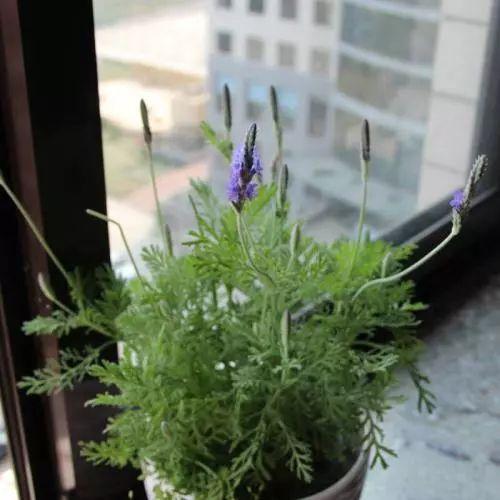
Lavender is beautiful and elegant, and full of romance, so many flower lovers quite like it. Recently many flower lovers have been asking one question: can lavender be propagated from cuttings? Actually it can. Lavender cuttings are generally taken in the two seasons of spring and autumn, though summer also works, only spring and autumn are more suitable.
1. Choosing the branch
Choose a relatively good branch; here it is best to select a semi-lignified branch of the current year's growth, then cut it into small sections 8-10 cm long, with the bottom cut at a 45° slant. Keep 6-8 leaves on the upper part of the section, and the lower leaves can be cut off. If a flower lover already has a pot of lavender, they can directly pinch off the tips and then use the pinched-off tips for cuttings, and the survival rate is very high.
2. Soil preparation
The soil used for cuttings is not complicated; perlite, or coarse sand, etc. can all be used. Of course, it is best not to use garden soil, as its aeration and water permeability are poor, which will greatly reduce the survival rate.
3. Taking the cuttings
Insert the small lavender sections into the soil, to a depth of about 1/3 of the section length, leaving 3~4 pairs of leaves above. To increase the survival rate of the cuttings, water thoroughly after inserting, then cover with a layer of film or a plastic bag, and place in a shaded, cool spot with scattered light, ventilating once every 3-5 days. Roots form in about two weeks.
Actually, taking lavender cuttings is very simple; you just need to prepare healthy branches and breathable sandy soil and then provide routine care, and the survival rate of lavender cuttings is extremely high, reaching about 70%, so there is no need to worry at all. However, lavender looks more beautiful when planted in clusters, so when taking cuttings, everyone should be sure to take quite a few of them.