What green plants are essential for cooling off in summer?
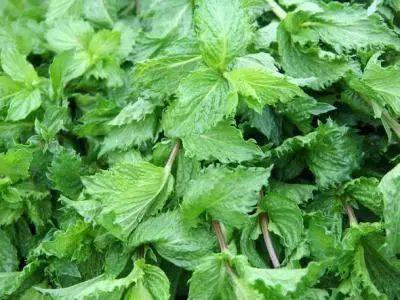
In summer, people are always made irritable, gloomy, and foggy-headed by the muggy weather, and simply cannot concentrate on work or study. At times like this, keeping some refreshing, mind-sharpening plants at home is very important.
1. Spearmint
Spearmint, also called green mint, is one of China's ancient medicinal herbs and has excellent effects for relieving summer heat. Many gardening enthusiasts have trouble telling spearmint and mint apart, but it is actually very easy to distinguish them: spearmint leaves are a bit more wrinkled, and their fragrance is even richer.
Uses:When you feel dizzy, drowsy, or low on energy, you can rub a spearmint leaf on your temples for a cooling sensation. If an insect bite itches unbearably, you can rub it on as well, and it quickly stops the itch. Keep a pot on the windowsill at ordinary times, and just smelling it will double your energy! Spearmint is often used in toothpaste to add fragrance and a cooling effect.
How to grow:Spearmint adapts fairly well to its environment and can be sown in spring, summer, or autumn. You can use loose sandy soil or leaf mold, grow it in a bright spot with indirect light, and water it once every 1-2 days!
2. Gynura bicolor
Gynura bicolor is fairly common in the south and has the effects of nourishing qi and blood and reducing inflammation and pain. If you are bitten by insects, you can crush the leaves of Gynura bicolor and apply them to the wound in a circular motion to cool and stop the itch. Even if the wound has been scratched open, it can still be applied.
How to grow:Its root system is fairly well developed, with many lateral roots, shallow-growing, and strong regeneration ability. It is highly stress-resistant and relatively tolerant of drought and heat. It can be sown in all three seasons of spring, summer, and autumn, and growing it on a balcony is also a good choice. You only need to water it every day.
3. Goji leaves
When it comes to goji berries, everyone is certainly familiar with them. Their fruit is very nourishing, and whether used in soup or steeped in water, it is a good choice. Today what we are talking about is the leaves of the goji plant. Its leaves can likewise be steeped in water to drink, which helps protect eyesight, and they can also be served cold-tossed, stir-fried simply, or used in soup.
How to grow:It can be sown in all four seasons, especially in spring and summer, which are good times for sowing. It has no particular requirements for soil; ordinary garden soil is generally fine. It relatively likes light, so it can be placed on a balcony for care.
4. Liangmianzhen (Zanthoxylum nitidum)
Liangmianzhen is something everyone has heard of. You may not have seen what it looks like, but you have certainly heard of Liangmianzhen toothpaste. This is truly a childhood memory. Simmer the leaves of Liangmianzhen in water for about 15 minutes until a greenish-yellow thick liquid is produced, then apply it to bruised areas to reduce swelling and dissolve blood stasis. The roots of Liangmianzhen can be dried and used as medicine. It is a very famous toothache remedy, so it is often added to toothpaste.
How to grow:It can be planted throughout the year and has no requirements for soil; whether leaf mold or ordinary garden soil, both are fine. Aside from shading it in summer, it can be grown in direct sun in spring, autumn, and winter. Water only when the potting soil is dry, and avoid waterlogging.
5. Agastache rugosa
The famous Huoxiang Zhengqi Shui uses it as its main raw material. It is an essential tool for clearing heat and relieving summer heat. Keep a pot in summer, and it could not be better. In summer, dizziness and fatigue are unavoidable. At times like this, you can have a cup of agastache tea, which is guaranteed to refresh and sharpen the mind, and its leaves can also be eaten.
How to grow:It likes high temperatures and a sunny, well-lit environment, and grows poorly in shaded places. Areas with an annual average temperature of 19-26°C are more suitable for its growth. When the temperature is above 35°C or below 16°C, growth slows or stops. It likes to grow in humid, rainy environments and is afraid of drought.