How to Make a Winter Jasmine Bonsai and Care Tips
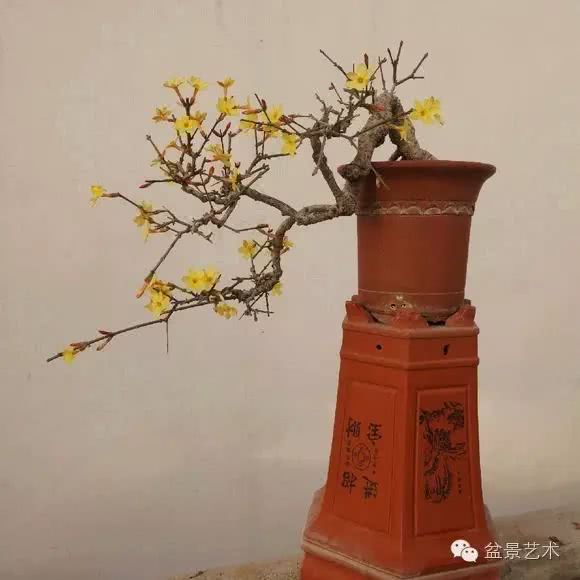
Winter jasmine (Jasminum nudiflorum) is highly adaptable, loves light, tolerates cold, drought and alkaline soil, and dislikes waterlogging. It is not demanding about soil and can grow in slightly acidic, neutral or slightly alkaline soil, but grows best in loose, fertile sandy soil. Planting is generally done after the flowers fade or in mid-September. If you want to train it into a raised-root style, you can raise the roots a little at planting time, but do not raise them too high at once, otherwise it is bad for growth. Because winter jasmine flowers are yellow, it is best to choose light blue, purplish red or black pots when planting, so that the pot and the flower colors harmonize. If cultivated properly, it will be covered with yellow flowers in spring, spread green leaves in summer and autumn, and have graceful green trailing stems in winter, filling all four seasons with a feeling of spring.
Care and Management
(1) Location. For newly planted or newly repotted winter jasmine, first water it thoroughly, place it in a shady spot for about 10 days, then move it to a half-shade, half-sun spot; after a week of care, place it in a sunny, well-ventilated and fairly humid spot for care. In winter, in the south it is enough to bury the pot containing the winter jasmine in soil in a wind-sheltered, sunny spot for safe overwintering; in the north it should be moved into a low-temperature (about 5°C) indoor space in early winter to overwinter. If you want winter jasmine to bloom early, you can move it at the right time into a moderately warm or warm sunny indoor spot. If placed in a sunny indoor spot at about 13°C, spray the branches, stems and leaves with clean water 1-2 times a day, and it will bloom in about 20 days; if placed in a sunny indoor spot at about 20°C, it will bloom in about 10 days. After flowering, keep the room temperature at about 8°C, and be careful not to let wind blow directly on it, which can extend the flowering period. After the flowers open, the higher the room temperature, the faster the flowers fade.
(2) Watering.Winter jasmine likes moisture, especially in the hot summer. In addition to watering once every morning, it should also be watered appropriately in the afternoon. To maintain humidity in the microclimate, spray water on the ground regularly. Winter jasmine dislikes water accumulating in the pot. During the plum rain season, when rain continues for days, the pot should be laid on its side or moved to a place where it will not be rained on. In winter, when temperatures are low and water evaporates little, water less.
(3) Fertilizing.When planting winter jasmine, put a few pieces of animal hoof at the bottom of the pot as a base fertilizer. During the growing season of winter jasmine, apply 1-2 times a month a well-rotted, dilute liquid fertilizer. July to August is the period of flower bud differentiation for winter jasmine, so a liquid fertilizer containing more phosphorus should be applied to help flower bud formation. If, before flowering, a well-rotted, dilute organic liquid fertilizer is applied once, it can make the flower color more brilliant and prolong the flowering period.
(4) Shaping.Winter jasmine has strong sprouting ability, so during the growing period it must be pinched back regularly and some branches must be cut off or shortened to maintain the tree shape. After the flowers fade, the branches should be cut short, generally leaving only 2-3 buds, while the main branches may keep a few more buds. After new branches grow, with proper care, flower buds will cluster.
(5) Pest and Disease Prevention.Winter jasmine has very few pests and diseases. Occasionally red spider mites occur, and they should be removed promptly.