Detailed Guide to Making Aloe Bonsai, a Step-by-Step Easy Tutorial
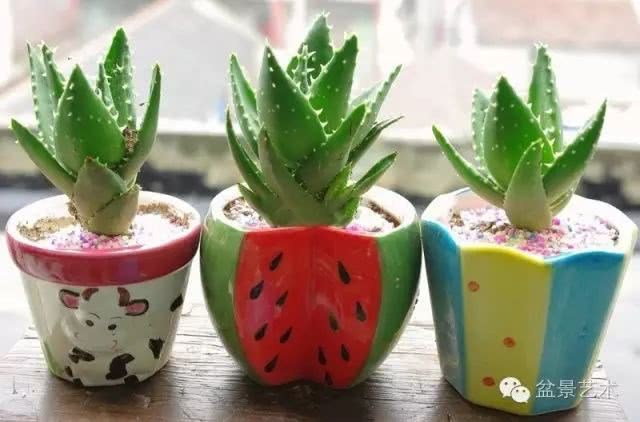
Can Aloe Be Made into Bonsai? Promotional materials from some flower bases say: "Aloe has a graceful posture, is emerald green and alluring, and has considerable ornamental value. If developed as bonsai, the prospects are good and the benefits considerable." That being the case, exploring the use of aloe to make bonsai is still necessary and beneficial. The author believes that, according to the traditional requirements for making flower bonsai, using aloe as material to make bonsai is not quite ideal, but from the perspective of "inheritance and innovation," this new topic is still feasible.
Aloe bonsai is a new branch of Chinese bonsai, and its artistic classification should belong to the "flower and grass bonsai" type. Like other bonsai, aloe bonsai is not simply a miniature of nature; it is also a re-creation of natural scenery on the basis of realism using romantic techniques, "shrinking the dragon to an inch" before presenting it to people. Aloe bonsai is a plastic art piece combining natural beauty and artistic beauty. Bonsai creation not only requires a certain artistic cultivation, but also requires shaping through artistic processing methods such as material selection and pruning, even wiring, as well as carving and hollowing of accessories, so one must possess a certain basic scientific knowledge and horticultural skill. Aloe bonsai uses aloe as the main material, and after certain modification and processing, with appropriate arrangement of rocks and accessories such as figures and animals, it reproduces in a pot the beautiful image of flowers and plants in nature and a profound artistic conception. The making of aloe bonsai has much in common with the making of other bonsai, except that on the basis of inheriting the characteristics and techniques of traditional bonsai making, one must also insist on one point, namely highlighting the unique feature of aloe bonsai within flower and grass bonsai.
Making aloe bonsai can be divided into two steps: design and operation. The design of aloe bonsai mainly involves determining the theme and conceiving the composition. Conception is the specific artistic image of the work formed by the author during the creative process. Shaping is the author's creation based on the natural laws of plant physiology and the specific form of aloe, combined with the author's aesthetic views, so as to achieve the goal of formal resemblance. Conception focuses on handling the work's "spirit" (that is, spiritual charm, namely expression and dynamics, and poetic flavor), while composition focuses on handling the work's "form" (that is, type and body). Whether the work succeeds or not, conception is the key. The specific operation of making aloe bonsai is much the same as the process of making other bonsai. A few points are explained below:
Material Selection For making aloe bonsai, use small varieties among succulent flowers and dwarf aloe as materials. There are many usable aloe varieties, reportedly more than 500, from which one should select aloe varieties that conform to the conceived composition and highlight the theme.
Pots The pots used for aloe bonsai are similar to those for tree bonsai. Sometimes, according to need, one should make wooden pots (which must undergo anti-corrosion treatment) or carve wooden outer pots.
Accessories When making aloe bonsai, sometimes according to the needs of the conceived composition, one should make figures and animals from plastic, ceramics, or clay. Accessories for aloe bonsai can also use stones, other plants, and so on.
Modification The processing of aloe in aloe bonsai is simpler and easier than that of trees. Generally, one only needs to remove unnecessary leaves, and some leaves can be appropriately bent and processed.