Cultivation and Care Methods and Technical Key Points Explained in Detail
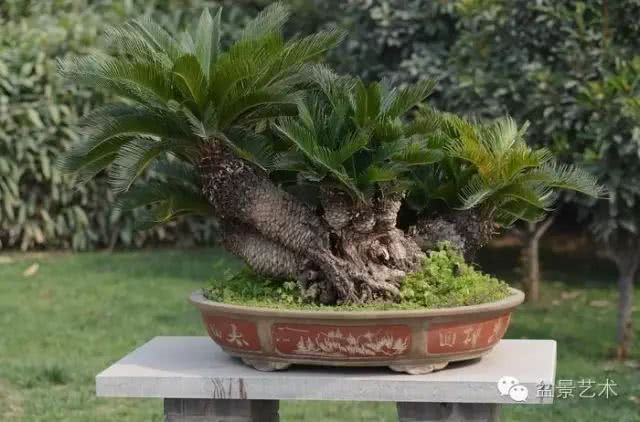
Cycad is properly named Cycas revoluta, also known as iron-armored pine, phoenix-tail banana, etc. It is an evergreen small tree of the genus Cycas in the family Cycadaceae, and is a precious ancient relict plant. What is mainly cultivated in China is Cycas revoluta, native to the mountainous areas of Fujian. In recent years, Sichuan Panzhihua cycad, Yunnan cycad, etc., have also been introduced and cultivated in various places.
Ground-planted cycads can reach 8 m in height. Potted ones reach 2 m to 3 m. The stem is thick and cylindrical, its surface densely covered with dark brown shriveled leaf bases and leaf scars, resembling a pineapple, and it very rarely branches. On the stems of many-year-old old plants, small stems often sprout from adventitious buds, called suckers. The fibrous root system is fleshy. Large pinnate compound leaves cluster at the top of the stem; the length and number of the leaves are usually proportional to the age of the tree, with the longest reaching 2 m and the leaflets numbering more than 100 pairs. The leaflets are long and strip-shaped, closely and neatly arranged on the petiole, thickly leathery; each year a cluster of new leaves sprouts from the top of the stem at the center of the leaf cluster, and the lower leaves dry up year by year. The flowers are terminal, with male and female flowers on separate plants. The female inflorescence is flat-spherical, somewhat palmate, densely covered with brownish hairs; the male inflorescence is cone-shaped and yellow; the flowering period is usually July to August. The seeds are ovate, slightly flattened, vermilion and glossy.
Cycads like sunlight and also tolerate partial shade. They grow well in warm, humid conditions with fresh air. They are not cold-tolerant, and are grown in pots in areas north of the Yangtze River basin. For potted plants in the north, avoid fierce winds and scorching sun in spring and autumn, and avoid long-term waterlogging of the potting soil during hot summers and rainy seasons. They need acidic soil; yellowing of the leaves often occurs when alkaline soil is used. They are strongly tolerant of fertilizer; in poor soil their growth stalls, and they often do not sprout new leaves for many years. Cycads grow slowly, usually with the stem growing only 1 cm to 2 cm per year, and they can live for more than 200 years.
Cycads are mostly propagated by dividing and planting suckers. Usually stems about 1 m tall often sprout suckers, growing into 1 or 2 small stems side by side, which can be cut from the mother plant and planted in a substrate of half vermiculite and half humus soil, maintaining 40% moisture content, and kept in a high-temperature, sparsely shaded environment; the following spring they can sprout fibrous roots and bud clusters. If the leaves are slow to extend, cover with plastic film to promote growth. If suckers are cut from the mother plant too early for cultivation, their initial growth is very slow; it is best to let the suckers grow on the mother plant for 2 years to 3 years before cutting them off for planting, as then they root and sprout more easily.
Potted cycads should be planted according to plant size in flower pots of different sizes, using a slightly acidic sandy culture soil rich in humus, loose, fertile and highly permeable. The bottom hole of the flower pot (wooden tub) should be made large, and a layer of broken tiles should be laid at the bottom of the pot as a drainage layer to prevent root rot. It is not necessary to repot every year, but organic liquid fertilizer should be applied frequently, preferably sesame paste residue or soybean cake water, which can make the leaves glossy and emerald green. Northern water tends to be alkaline, so it is best to water with a 1/500 ferrous sulfate aqueous solution about once every two weeks. In summer, keep the potting soil moist frequently. In winter, move it into a low-temperature greenhouse for care. In the following spring, take it out in mid-April. If it is overwintered in a medium-temperature or high-temperature greenhouse and sprouts new leaves in early spring, then it must wait until the dry spring winds have passed before it can be moved outdoors and kept under a shade shed; after the new leaves have all unfolded and become sturdy, move it into sunlight, otherwise the new leaves are prone to scorching and damage.
Cycads are susceptible to damage by scale insects. Scale insects mostly hide on the underside of the leaflets, and sooty mold is also likely to occur in poorly ventilated environments; attention should be paid to ventilation and timely pesticide control.
Small potted cycads can be placed indoors in bright spots on desks or shelves for display, and can also be enjoyed as combined bonsai.