I fed the gardenia a little residue, and it couldn't wait to bloom
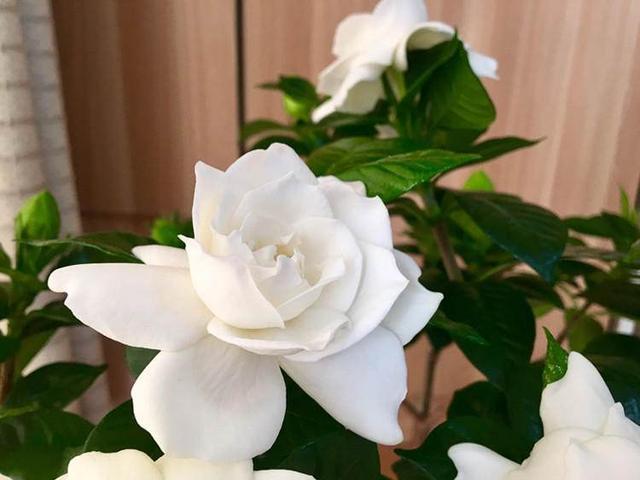
Fellow gardenia growers, would you like your gardenia to bloom more? Then you need to understand that gardenias have comprehensive requirements for the three main elements: nitrogen, phosphorus, and potassium. To supply these 3 elements, you can try these "residues" - they have high fertilizer efficiency, a fairly complete nutrient profile, and are especially simple to use.
The method for fermenting these "residue fertilizers" is: put crushed soybean cake, rapeseed cake, or sesame oil residue into a crock, add 10~20 times the amount of clean water, cover the opening tightly, and place it in the yard. After more than 1 month of full fermentation and decomposition, when the water becomes viscous and dark brown, you can take out the clear liquid, dilute it, and use it.
When applying it to gardenias, take out the clear liquid from the upper part, add about 20~30 times the amount of clean water per portion, and apply after dilution. The fermented liquid from soybean cake, rapeseed cake, or sesame oil residue is a fairly ideal liquid fertilizer. Generally, after April each year, when the gardenia is moved outdoors and the plant begins to grow and develop, water fertilizer should be applied.
When fertilizing, stick to the principle of "light fertilizer, frequent application," usually fertilizing once a week. From bud formation to flowering, the number of fertilizer applications can be appropriately increased to promote bud development and flowering. If fellow growers find it troublesome, they can also use a general-purpose organic nutrient solution for flowers instead of this "residue" fertilizer, diluting it 500 times and watering the gardenia roots once every 7 days.
Fellow growers should note that in winter, when the gardenia is overwintering and the plant is in a semi-dormant state, do not fertilize. Continuing to fertilize will instead be harmful. In addition, when growing potted gardenias, it is strictly forbidden to apply unfermented "raw fertilizer," such as fish-washing water, meat-washing water, or water used to rinse milk bottles; still less should you place eggshells with leftover egg liquid upside down in the flowerpot. This not only fails to act as fertilizer, but also compacts the potting soil, and the raw fertilizer releases heat during fermentation and burns the roots.
In addition, for newly potted gardenias or those just repotted, because the root system has been damaged, do not fertilize immediately, to avoid burning the roots. For gardenias whose roots have been burned by overly concentrated fertilizer, causing leaf drop, immediately repot them. First remove the outer layer of soil around the roots, then replace with new potting soil. After potting, immediately water once thoroughly and place them under a shade awning. In this way, after a period of time, new leaves can grow again.
In addition, when caring for gardenias, pay attention to timely shaping and pruning. Prune diseased and pest-damaged branches and overly dense branches so that the branches and leaves of the whole plant are evenly distributed, improving ventilation and air permeability, and making the plant grow robustly, evenly, and beautifully.