How do you care for potted oxalis? Remember these few points, and the stems will be thick and strong, the growth vigorous, and the blooming abundant
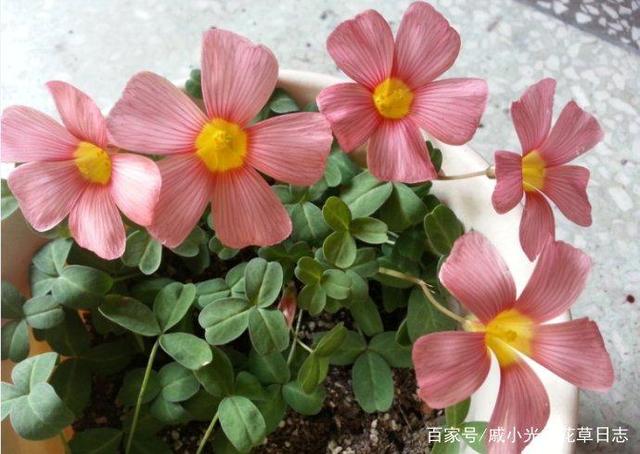
Speaking of oxalis, it really is as ordinary as can be. It is truly a plant that cannot grace elegant halls, or rather, it is often not kept as a flower or ornamental plant; instead, it is frequently seen in parks and along roadsides. Its leaves generally grow at the top of the stem, and each stem bears only three leaflets; at night the leaflets fold up.
However, through horticultural breeding, many new varieties of oxalis are now completely different from the local wild oxalis that grows everywhere. The flower colors are very rich, including yellow flowers, purple flowers, red flowers, and white flowers, and there are also those with purple leaves. The plant form and flowers are also very large, and different colors have different characteristics, presenting different visual impressions; some are fresh and delicate, some elegant, some peculiar, and they are highly ornamental.
Potted oxalis, also called three-leaf clover, is also relatively easy to care for. Unlike those annual herbaceous flowers that pass away after one beautiful season, often leaving their owner feeling reluctant to part with them. It is also different from tulips and hyacinths, whose bulbs after blooming are like chicken ribs, too wasteful to discard yet useless to keep. It blooms year after year without fail, and blooms more luxuriantly each year. Oxalis will spread rampantly; this is its wild-weed nature.
For potted oxalis, once the seeds mature they burst open on their own and bounce everywhere. You can leave the seeds in the flower pot, and next year a pot of clear water can awaken them. Its root system is especially well developed; it will not die from drying out or from waterlogging, making it very easy to care for. Of course, the look of oxalis bursting out of the pot is another kind of beauty. The secret to a pot-bursting display is, on the one hand, dense planting, and on the other hand, sunlight and sufficient fertilizer are also essential.
Potted oxalis likes sunlight. Too short a daily sunshine duration will affect its growth and flowering; it will not only grow leggy but also produce fewer flowers. In addition, the flower pot needs to be turned regularly, otherwise the plant will grow toward one direction, affecting the effect of the plant form.
For potted oxalis, appropriate fertilization can promote more robust plant growth, more flowers, and a longer flowering period. For base fertilizer, bone meal or slow-release fertilizer is generally fine. When the plant enters its vigorous growth period, you can spray a phosphorus-potassium fertilizer once every 10-15 days, and after flower buds appear, you can apply an additional dose of monopotassium phosphate, with the concentration according to the product instructions.
In daily care, the potting soil must not remain too wet for a long time, otherwise the bulbs are prone to rot. For routine watering, you can use the method of lifting the pot and water only when the pot feels light.