A detailed guide to osmanthus bonsai cultivation techniques, explained in one article
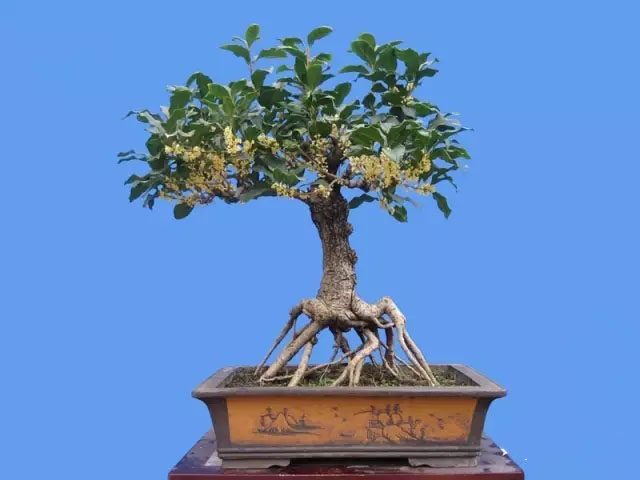
Osmanthus bonsai cultivation techniques
1. Pot selection: Osmanthus has green leaves and yellow flowers and stays evergreen all year round, so it is best to choose a relatively deep round or square pot. The diameter of the pot opening should roughly match the spread of the osmanthus branches and leaves, which benefits root development and growth. Pots made of purple clay ceramic or glazed ceramic are best. Purple or ochre colors are better, as they can create a striking contrast with the colors of the flowers and leaves and increase the ornamental effect.
2. Soil: Osmanthus likes fertilizer, so fertile, loose, well-drained sandy loam is best. The growing medium for potted osmanthus is usually made by mixing 1B3 each of garden soil, composted manure and river sand. Attention must be paid to disinfection treatment so that pests and diseases are not introduced.
3. Planting: Osmanthus is best planted in early spring or autumn. Before potting, place a layer of river sand or vermiculite at the bottom of the pot to improve aeration and drainage, then spread a layer of peat soil or fine mud about 2-3 cm thick on top, up to 1B3 of the pot's depth. Then put the osmanthus seedling with its root ball into the pot, fill with growing medium, press firmly with your fingers, and fill soil up to near the pot rim. The soil surface should be 2-3 cm lower than the pot rim to make watering and fertilizing easier. After planting, water thoroughly, then move it to a shaded place for about 10 days so it can "adapt to the pot" and gradually resume growth.
4. Shaping: Osmanthus has strong sprouting ability and tolerates pruning. One or two years after potting, shape it during the plum rain season or after flowering in autumn, using a combination of bending and tying with pruning. The trunk can be bent and tied into a curved-trunk form or slanting-trunk style. If the trunk is relatively tall, it can be appropriately shortened to encourage new branches and trunks to sprout from the base, so the lower part does not become bare. Or heavily prune the upper branches and shoots and overly dense branches to stimulate new branches to grow from the lower part of the trunk, maintain balance between upper and lower parts, and make the tree shape beautiful with lush flowers and leaves.
5. Tree shape: For osmanthus styling, curved-trunk, slanting-trunk or flowing styles are best. The tree extends at an angle, with dense branches and leaves, simple and natural, and is the most enjoyable to appreciate. When it blooms, its rich fragrance fills the air and delights the heart.
Why osmanthus bonsai needs pruning
When pruning, disordered crossing branches, overlapping branches, parallel branches and opposite branches should be adjusted, that is, cut off one of them or thin out one section and keep one. The remaining branches can grow thick and strong because nutrients are concentrated. When a cultivated branch grows to a suitable thickness, carry out stronger pruning to shorten it and produce second-section branches. When the second-section branch grows to a suitable thickness, prune it again. After that, handle the third and fourth sections and so on in the same way. Generally, keep two small branches on each section of branch, one long and one short. After years of pruning, the lower branches become short, thick and strong, vigorous and powerful, gradually forming the desired tree shape.
Pruning of the osmanthus tree body includes measures such as pinching, cutting back, thinning and wounding. Pinching means pinching out growing tips and removing leaves. During the growing season, removing the tender tip at the top of a new shoot is called pinching. Pinching can promote axillary bud growth, produce more branches, inhibit height growth, and help make the bonsai shapely and attractive; removing leaves means removing part of the leaves, which can promote the sprouting of new leaves. Cutting back means shortening current-year branches; after cutting back, medium and short branches increase and the mother branch thickens. As the saying goes, when branches are sparse, cut back, and when cut back, branches become dense, which is good for branch shaping. Thinning means thinning pruning, cutting away overly dense branches from the base, which helps improve ventilation and light penetration and promotes vigorous growth of the remaining branches. Wounding means scoring, girdling, twisting branches, twisting shoots and bending branches on the osmanthus branches and trunk. Flower-viewing osmanthus bonsai can use this method to promote flowering.