Orchid root rot can be cured too - let me teach you a trick to bring it back from the brink
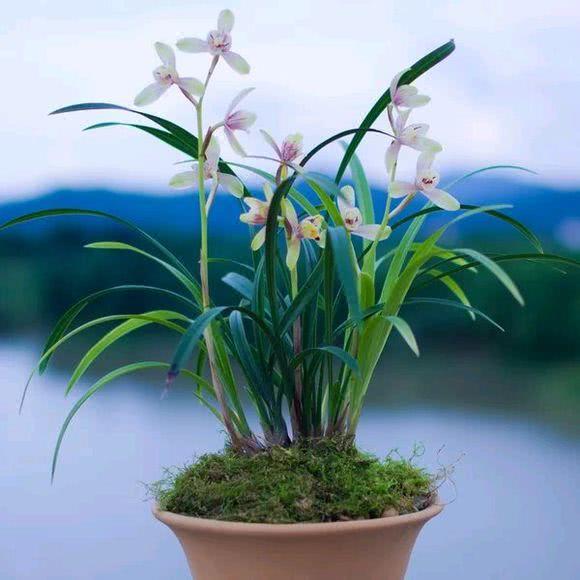
Actually, in my impression, orchids are a lazy person's plant - the better you treat them, the more delicate and difficult they become to keep alive. But their valley-like elegance fascinates countless people, and I was "unfortunately" among them, caught between love and hate for this plant. I once ran into the problem of root rot myself, and it took quite a bit of effort before I gradually worked out a few lessons, so here is a little treat for you all.
1. Once you discover it, repot as early as possible to keep the condition from worsening. In my view, it is best to use granular potting medium specially for orchids, as it drains and breathes well.
2. For a period after repotting, this stage is like recovery after surgery - when the roots have been damaged, care is needed. I suggest placing it in a shaded, well-ventilated spot, but take care that the wind is not too strong, so it is not affected.
3. Besides making sure the potting soil drains, replenishing nutrients is also important. I suggest sprinkling on a little organic fertilizer, such as well-fermented animal manure.
4. Watering should be judged by how dry or moist the potting medium is. You may be asking me how to judge this. Semi-moist with a touch of dryness is best; if it rains, move it to a sheltered spot, and try to keep the potting soil moisture just right so it can root normally.
To prevent root rot from happening again, you can do the prevention work in advance, otherwise it will be too late to fix later. I also have some preventive measures you can refer to.
1. Balance the levels of beneficial bacteria and harmful pathogens in the orchid pot. This is a bit abstract, so you can control it yourselves.
2. Keep it ventilated, especially in summer, when poor air circulation is a breeding ground for all kinds of diseases.
3. The potting medium needs to be fully fermented and disinfected before use, so that unclean substances are not mixed in.
4. Check the pH of the potting medium at regular intervals; if it is found to be too high or too low, it needs to be adjusted. I searched my meager knowledge base and found that pH test strips can be used to check the pH, and these can be bought online, so you do not need to worry about not being able to find them.
5. When new shoots unfurl their leaves, watch out for damage from nematodes, ants and the like - that is, just check on its growth from time to time.
6. During the rooting stage, provide more phosphorus and potassium fertilizer and beneficial bacteria to promote vigorous root growth.
7. You must not be lazy! Do the disinfection well, remove dead leaves and rotten roots, and wipe out disease while it is still germinating.
With the two guides above, you no longer need to worry about root rot, and you will no longer both love and hate your orchids. Isn't it very easy? One trick takes away a lot of your worries.