Getting plants through summer takes some know-how, and just blasting the air conditioner is not enough
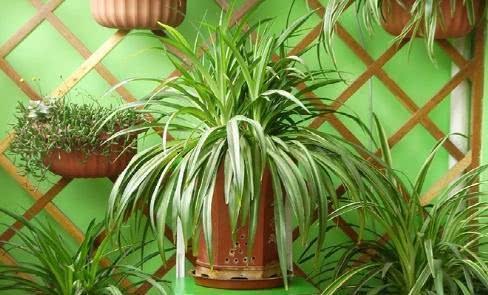
Once summer arrives, everyone would rather stay in an air-conditioned room than go outside. Plants are like people: stay in an air-conditioned room too long and they can come down with air-conditioning sickness too. When we are indoors we cannot do without the air conditioner, and we feel perfectly comfortable, but have we ever considered how the flowers and plants indoors feel?
This ailment is "air-conditioning sickness." When you hear this term, you are surely baffled; it is quite normal for it to appear in people, but in plants it seems unusual. What causes air-conditioning sickness? I think it is necessary to share some knowledge with everyone: air-conditioning sickness in plants is mainly caused by temperature differences and lack of water. Do you feel you have learned something new? Air-conditioning sickness makes plants grow slowly and may even cause rot. But I will give you some tips. Are you ready to take them on?
1. Do not set the air-conditioning temperature too high or too low; both extremes are unsuitable for plant growth. I suggest generally keeping it at 25-26°C, which is most suitable, and after the air conditioner has run for 2-3 hours, open a window to let in fresh air.
2. In addition, the key to helping plants avoid "catching a cold" in an air-conditioned room is to maintain humidity. At the same time, I offer everyone a method: alternate watering and misting. This method really is a bit troublesome! But the effect is indeed very good. At regular intervals, spray clean water on the branches and leaves or wipe the leaf surfaces with clean water, 2-3 times a day.
3. Move the flowering plants away from the air-conditioning vents, and let the flowers see the sun from time to time; they cannot be kept indoors all the time. After plants have stayed in an air-conditioned room for one or two weeks, they should be moved to the balcony to "air out" for two days, then rotated back, so they get enough dew and light.
4. Furthermore, let me tell everyone one thing to watch out for: do not fertilize flowers kept in an air-conditioned room, to avoid root rot.
5. Having read this, you may wonder: what kind of plants can adapt to an air-conditioned room environment? I will give the answer here. Plants suitable for an air-conditioned room include Crassulaceae plants, cacti and the like.
6. Pay attention to whether the flowers and plants are sick; if they are, treat the pests and diseases according to the specific variety.
Misconception: The pothos, lucky bamboo and spider plants long rumored online to be suitable for growing in air-conditioned rooms are actually not that tough. For example, spider plant, which belongs to the Liliaceae family, may well be blown to death after being kept in an air-conditioned room for a long time. And the oxygen-releasing function that netizens have long praised occurs only when there is sufficient light. When there is not enough light, they instead take in oxygen and release carbon dioxide, competing for oxygen with their surroundings. Our air-conditioned rooms do not have enough light, so they are competing with us for oxygen.
Do all of the above and you can prevent your flowers and plants from getting "air-conditioning sickness," so you can grow flowers and plants well even in an air-conditioned room!