Literati-style bonsai have a flowing, concise form
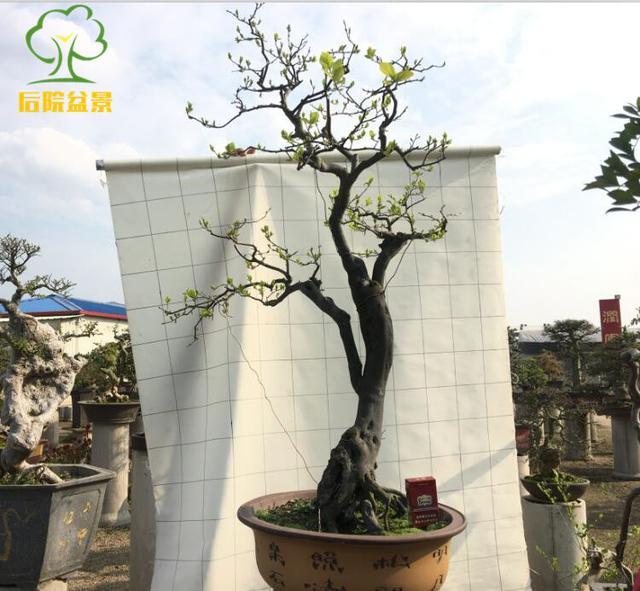
The flowing, concise literati-style bonsai
Literati bonsai requires grasping its special style in shaping, and even more attention must be paid to expressing and reflecting the literati's spiritual realm through form.
Literati bonsai trees mainly emphasize the characteristic of being thin and tall, with the main trunk changing slowly from thick to thin from the base to the tip. In order to reflect the conciseness of the composition, literati bonsai generally best uses the single-trunk or double-trunk form. To fully express the charm of literati trees, material that is old and vigorous is preferable.
Because the main trunk of a literati tree emphasizes being tall, thin, and old, the branches should be few and the pads should be light. Generally, the branch positions of literati bonsai works are relatively high, about above 2/3 of the trunk height, and there are also cases where the branch positions are lower due to the characteristics of the material. Regardless of whether the branch positions are high or low, it is all to seek an elegant, free, concise, and quietly refined tree posture, leaving more blank space in the composition.
The making of a literati tree may seem easy, but it is actually not simple. In order to reflect its appropriate and harmonious beauty as well as a sense of conciseness, freshness, elegance, and freedom from vulgarity, the posture of the literati tree's main trunk, the positions of the branches, the number and weight of the branch pads, and the form and specifications of the pot all need to be considered. It requires the maker to have a special aesthetic inspiration and solid cultural grounding, and at the same time to have skilled bonsai-making techniques.
The key point in the care of literati trees lies in control. In order not to let the branches and trunk grow thick and tall, and to always maintain a tall, thin main trunk, light and thin branch pads, and ancient-looking bark, in care and management one should not apply too much fertilizer or change the soil frequently. According to the characteristics of different tree species, the minimum living conditions should be provided, to the extent that they do not begin to age. Even so, the potted tree will always continue to grow, with branches and leaves renewing, branch pads becoming heavier, and the crown expanding, causing the work to become unbalanced from top to bottom and lose the original literati tree form. Therefore, regardless of the tree species of the work, it should be shaped in time during the season when shaping is possible, in order to maintain the original form of the literati tree.
Literati-style bonsai f picture [Jishan Huayao], when planting, generally a shallow round pot is better. The main trunk of the literati style is either straight or slightly curved, with no side branches left from the base of the roots to the top; shaping is carried out using the side branches in the crown area, leaving one longer side branch in the crown area, either on the left or the right, wound with wire at 45 degrees, with the lower part bent. The second side branch should be shorter than the first side branch and then gradually brought in to the apex.
Literati-style bonsai
The main tree species for making literati-style bonsai include: boxwood, Chinese plum yew, five-needle pine, cypress, and others.