Detailed Explanation of Propagation and Pest and Disease Control Cultivation Techniques for Scutellaria baicalensis (Northern Medicinal Herb)
Propagation and Pest and Disease Control Cultivation Techniques for Scutellaria baicalensis
1 Morphological Characteristics
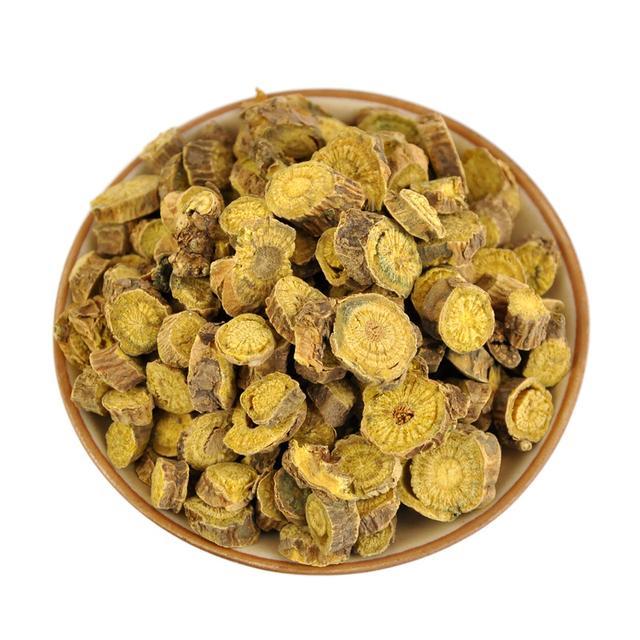
Scutellaria baicalensis is a perennial herb with branched roots; several stems cluster on one root, long and thick, cylindrical in shape; new roots are solid inside, old roots mostly hollow, deep yellow inside, outer bark dark brown. The whole plant is 30-30 (50) cm tall; stems have fine stripes, bluntly four-angled, covered with upward-curving to spreading pubescence or hairless, often tinged purple or green. Leaves are opposite, sessile, round-lanceolate to linear-lanceolate, 1.5-3.5 cm long, 3-9 (13) mm wide, entire, base nearly rounded, apex obtuse, surface slightly hairy or hairless, dark green, underside pubescent along the midvein, pale green, densely covered with black sunken glandular dots. Racemes are terminal or axillary, 7-15 cm long, one side; bracts nearly hairless, 7-12 mm long, leaf-like, ovate-lanceolate to lanceolate; calyx purple-green, two-lipped, upper lip with a shield-shaped appendage on the back, enlarged in fruit, membranous; corolla purplish-red or blue-purple, two-lipped, upper lip slightly notched at apex, helmet-shaped, lower lip 7.5 mm wide, middle lobe triangular-ovate, lateral lobes converging toward the upper lip, corolla tube slender, abruptly curved at base; stamens 4, slightly exserted; ovary 4, hairless, borne on a ring-shaped disc, brown, deeply lobed; style slender, slightly cleft at apex. Nutlets 4, black, ovate, 1 mm in diameter, 1.5 mm long. Flowering period July-August, fruiting period August-September.
2 Habitat and Distribution
Scutellaria baicalensis prefers abundant sunlight for growth; its annual total radiation for growth is 459.8-564.3 kJ/cm2, with 501.6 kJ/cm2 being optimal; it is relatively tolerant of poor soil, suitable for growing in deep, fertile neutral and slightly alkaline loam or sandy loam environments, with soil pH 7 or slightly above 7 being optimal; the optimal average annual temperature is 2-4°C, it is cold-resistant, and the underground parts of adult plants can safely overwinter at -35°C low temperatures, and will not die at 35°C high temperatures, but cannot withstand sustained high temperatures above 40°C; it is relatively drought-tolerant, and can grow normally with annual precipitation of 400-600 mm; it is rarely seen in shaded and wet areas under mountain forests in the middle temperate zone, and is commonly distributed in plateau grasslands or sunny slopes at altitudes of 600-1,500 m, often coexisting with some weeds in its central distribution area, such as Artemisia species, grass family weeds, etc.[2].
China's wild Scutellaria baicalensis resources are widely distributed, growing within the range of 110° E-130° E and 34° N-57° N, mainly concentrated in Shaanxi, Shanxi, Hebei, Liaoning, Jilin and other parts of North China. The national reserves of wild resources are about 150,000 t, of which reserves of 100-500 t are found in 27 counties and banners including Wutai in Shanxi, Shide and Alu Cheng'erqin in Inner Mongolia, and Longhua, Weichang, Fengning, Chicheng in Hebei; the Bashang area of Hebei is the authentic production area of Scutellaria baicalensis, known as "Rehe Scutellaria baicalensis"; reserves of 500-1,000 t are found in Dorbod Mongol Autonomous County in Heilongjiang, Zhalantun in Inner Mongolia and other places; reserves of 1,000-5,000 t are found in Yakeshi, Oroqen Banner, Ergun Left Banner in Inner Mongolia and other places.
3 Cultivation Techniques
3.1 Land Selection and Preparation
In view of the habit of Scutellaria baicalensis being afraid of waterlogging and fond of light, plots with sufficient sunlight, no tree shading, sheltered from wind and facing the sun, high and dry terrain, low groundwater level, good drainage, loose soil, deep soil layer, and rich in humus sandy loam or light chestnut soil should be selected. On the determined plot, apply 450 kg/hm2 superphosphate, 75 t/hm2 high-quality decomposed farmyard manure plus an appropriate amount of potassium fertilizer as base fertilizer, applying sufficient amounts. Deeply plow the land 25-30 cm, harrow fine and level, then make flat beds 1.2 m wide for sowing.
3.2 Seed Propagation
3.2.1 Seed selection. Since the flowering period of Scutellaria baicalensis lasts 2-3 months, the seed maturation period is very inconsistent, and seeds are very easy to shed, so they need to be collected as they mature; finally the fruiting branches can be cut off, dried in the sun to harvest seeds, and impurities removed for later use. In order to reduce the harm of pests, diseases and field weeds, high-quality seeds should be selected for sowing, and such seeds have a high germination rate after sowing, strong germination vigor, and uniform growth, making management convenient. The specific seed selection criteria are: possessing the excellent characteristics of the original variety, uniform in size, plump grains, bright color, free from pests and diseases.
3.2.2 Direct seeding. The sowing period should aim to achieve full and strong seedlings, and should be appropriately determined according to local conditions. Generally, spring sowing is carried out in April-May, summer sowing in the rainy season July-August (suitable for places without irrigation conditions), and winter sowing can be carried out in October. Generally, drilling is used, opening shallow furrows 2-3 cm deep at row spacing of 25-30 cm, sowing seeds evenly into the furrows, covering with about 1 cm of soil, and lightly pressing after sowing. Since Scutellaria baicalensis seeds are tiny, in order to sow evenly, they can be mixed with 5-10 times fine sand before sowing; the sowing rate is 7.5-11.25 kg/hm2. Sowing in the rainy season results in emergence in 5-7 d; at other times, if soil moisture is moderate, emergence occurs in about 15 d.
When preparing the land, deep plowing and fine harrowing must be done, with level ground and fine soil, because the soil covering during sowing cannot be too thick; incomplete emergence often occurs due to uneven surface soil or soil drought, causing contiguous missing seedlings and broken rows. If it is too dry during sowing, water timely after sowing; before full emergence and for a period after emergence, soil moisture should be maintained regularly. To shorten the emergence time, it is best to carry out germination treatment before sowing (soak seeds in warm water at 40-45°C for 5-6 h, remove and spread thinly in a wooden germination tray lined with double-layer degreased gauze, rinse with clean water twice a day at 20-25°C to maintain moisture, and sow once most seeds have germinating embryos). Since germinated seedlings are fragile, they should be sown in soil with good moisture to resist drought and protect seedlings. In arid areas, spring sowing can use plastic film mulching to retain moisture and preserve soil moisture; the method of nursery seedling raising and field transplanting is suitable for certain particularly arid hillside fields.
3.2.3 Seedling raising and transplanting. Generally, the ratio of field transplanting area to seedling raising area is 5:1. In late April, select a wind-sheltered and sunny plot as a nursery for sowing, with a seed rate of 22.5 kg/hm2; thin seedlings timely after emergence, maintaining a plant spacing of about 5 cm, strengthen fertilizer and water management, and pay attention to moisture and temperature preservation; transplant to the field immediately after the soil thaws in the following spring, with plant and row spacing of 9 cm × 18 cm.
3.3 Cutting Propagation
Scutellaria baicalensis planted by cutting seedling method has high yield and good quality; the selection of propagation season and cutting position is the key factor for the success of cutting propagation. Scutellaria baicalensis cuttings can be carried out in spring, summer and autumn, but the cutting survival rate is highest in May and June of spring; transplant the surviving seedlings in the rainy season, and they form large seedlings before winter, allowing safe overwintering. The middle and lower parts of stems cannot be used as cuttings; the semi-lignified young tender part of the stem tip should be selected regardless of any treatment, with a survival rate of over 90%. For cutting, use sand, sandy loam or sand mixed with vermiculite as the substrate, and insert into the prepared seedbed at row and plant spacing of 10 cm × 5 cm; cut 6-10 cm long tender stems from the stem tip as cuttings, remove the leaves of the lower 2 nodes, and retain 3-4 leaves; cloudy days are the best time for cutting, and on sunny days it is suitable to cut before 10:00 am or after 4:00 pm; to keep cuttings fresh, cut and insert immediately; water every morning and evening after insertion, but to avoid causing cutting rot, the water amount should not be too large; build a shade shed with 50%-80% shading to improve the survival rate; transplant to the field 40-50 d after insertion, with plant and row spacing of 15 cm × 30 cm being suitable.
3.4 Division Propagation
Division propagation, besides having the advantages of fast growth and short production cycle, also has a high survival rate. During harvesting, select high-yield and high-quality plants, cut the root head part for propagation, and keep the main root for medicinal use. In spring, it can be planted as dug; in winter, the harvested root heads can be buried in cellars for overwintering, and division carried out in the following spring. When dividing, use a knife to split the root head into several individual plants according to its natural shape, leaving 3-4 bud eyes on each individual plant, then plant in the field at plant and row spacing of 20 cm × 30 cm to improve the propagation coefficient.
4 Field Management
4.1 Thinning and Final Singling
After emergence, remove overly dense weak seedlings. When seedlings are 6-7 cm tall, thin to a plant spacing of 12-15 cm, and fill in gaps where seedlings are missing; overly dense seedlings can be moved to fill gaps, and replanting should be done on cloudy days or in the afternoon, must be transplanted with a soil ball, and watered after planting.
4.2 Intertillage
In spring, intertillage is needed 2-3 times; intertillage should be shallow so as not to damage the medicinal roots.
4.3 Topdressing
The first topdressing is carried out after final singling, applying 7.5 t/hm2 dilute human excrement and urine; in June-July, apply 450 kg/hm2 diammonium phosphate; respectively after greening and before row closing (late June) in the 2nd and 3rd years, apply 7.5-15.0 t/hm2 human excrement and urine once each; during the flowering period, carry out foliar spray fertilization on sunny days, using 9 kg/hm2 potassium dihydrogen phosphate, applied in 3 split applications.
4.4 Drainage and Irrigation
Scutellaria baicalensis is drought-tolerant; apart from appropriate watering during sustained drought, generally no watering is needed. In the rainy season, timely drain field accumulated water to prevent seedling death and root rot, and to reduce quality and yield.
5 Pest and Disease Control
5.1 Diseases
5.1.1 Leaf blight. The pathogen is a type of fungus that harms leaves, a Deuteromycete. This disease occurs frequently and severely in rainy and high-temperature seasons, extending inward from leaf tips or leaf margins into irregular dark brown lesions, rapidly spreading from bottom to top, and finally the leaves wither and die. It initially occurs in spots and patches, and if not controlled in time can spread to the entire field. Control should eliminate overwintering inoculum in winter, dispose of diseased residues in the field; spray 1:120 Bordeaux mixture or 50% carbendazim wettable powder 1,000 times liquid at the initial stage of disease.
5.1.2 Powdery mildew. High field humidity easily leads to the occurrence of powdery mildew. This disease mainly infects leaves, producing white powdery spots on both sides of the leaves, gradually merging and covering the entire leaf, and finally scattered black small granules appear on the lesions. Control should strengthen field management; 0.1%-0.2% wettable sulfur powder can be spread or 50% amobam 1,000 times liquid sprayed.
5.2 Main Pest - Scutellaria baicalensis moth
As an important pest of Scutellaria baicalensis, the Scutellaria baicalensis moth overwinters as pupae on residual leaves; larvae make thin silk nests on the back of leaves, and the insect body feeds on leaf mesophyll inside the silk nest, leaving only the epidermis. Control should first clean the garden, and spray 90% crystalline trichlorfon 800 times liquid during the occurrence period.
6 Harvesting, Processing and Storage of Scutellaria baicalensis
6.1 Harvesting and Processing
Scutellaria baicalensis can be dug up after growing for 2-3 years. Since the content of the active ingredient baicalin in fresh and dry roots of 3-year-old plants is higher than that of 2-year-old plants, and the baicalin content is highest after leaf fall in autumn, the best harvest period is generally after the aboveground parts wither in autumn of the 3rd year of growth. The root system of Scutellaria baicalensis is deep and long, and deep digging is required during harvest to avoid breaking the root strips; remove residual stems, dry until half-dry, peel off the outer bark, tie into small bundles, and continue to dry in the sun or dry by heat. Since Scutellaria baicalensis turns green when exposed to water, and turns red when exposed to excessive sunlight, during the drying process, not only should water wetting and rain be prevented, but excessive sunlight should also be avoided to ensure quality.
6.2 Storage
Scutellaria baicalensis is generally stored in stacks or sealed pieces at around 30°C, with a safe moisture content of 11%-13% and relative humidity of 70%-75%, in a dry and ventilated place. In summer high-temperature seasons, Scutellaria baicalensis is prone to insect damage or moisture discoloration; once moisture-affected or mildly moldy products are found, ventilate timely, turn the stacks, and dry in the sun. It can also be maintained in a sealed warehouse filled with CO2 or N2, which not only prevents mold and insect pests, but also has no obvious effect on the components of Scutellaria baicalensis, with normal color and odor. In addition, studies have found that sealed fumigation with 10,000:1 cubeb volatile oil for 6 d greatly reduces the mold content, indicating that fumigation with cubeb volatile oil for mold prevention has the advantages of being economical, practical, and residue-free.
7 Market Analysis
As one of China's traditional commonly used large-variety Chinese medicinal materials, Scutellaria baicalensis has a long application history and very large demand[3]. Besides being used in traditional Chinese medicine prescriptions for pain relief and anti-inflammation, and for purging fire and clearing heat, it is also widely used as a raw material in the Chinese patent medicine industry; its extracts baicalin and baicalein as pharmaceutical raw materials have opened up new avenues for the further development and utilization of Scutellaria baicalensis. The famous Chinese patent medicine Shuanghuanglian series preparations are produced using three Chinese medicinal materials: honeysuckle, Scutellaria baicalensis, and Forsythia; the Qinbaohong series products using Scutellaria baicalensis, Syringa reticulata, and Rhododendron dauricum as raw materials have also become well-known products at home and abroad.
Growing social demand has strongly stimulated the development of the Scutellaria baicalensis market. According to statistics, in the 1950s-1960s, the purchase and sales volume of Scutellaria baicalensis was 2-3 million kg; in the 1970s it increased to 4 million kg; in 1983 the purchase volume of Scutellaria baicalensis soared to 21 million kg, and the sales volume increased to 8 million kg. In the 1990s, the price of Scutellaria baicalensis remained at 12-15 yuan/kg, and in recent years it has shown an upward trend. China's commercial Scutellaria baicalensis mainly comes from wild resources, but after long-term predatory harvesting, especially the excessive purchase in 1983, Scutellaria baicalensis in most mountainous areas and grasslands has been dug out completely, and the resources in the vast majority of areas are on the verge of extinction. The remaining wild resources are mostly in remote areas with inconvenient transportation, harsh conditions, and sparse population, making digging difficult. In addition, for more than ten years, the northern region has been persistently dry with little rain, and the recovery of wild resources has been slow. Moreover, due to the high profits of Scutellaria baicalensis, wild resources are still being continuously dug, continuing to shrink, and product quality continues to decline.
The less-than-optimistic market supply has created favorable conditions for the development of Scutellaria baicalensis production. We should seize the opportunity, establish wild resource protection areas for Scutellaria baicalensis in authentic production areas, and gradually restore wild Scutellaria baicalensis communities, mainly by adopting measures of artificial planting and wild growth. Earnestly implement the policy of combining harvesting, protection, and cultivation, plan harvesting, plant while harvesting, and after several years of less harvesting, more planting, and more cultivation, bring Scutellaria baicalensis resources into a dynamic equilibrium state, entering a track of virtuous cycle and sustainable development. In addition, promote and apply high-yield and high-quality cultivation techniques to guide Scutellaria baicalensis production, establish artificial planting bases, and breed excellent varieties, so as to improve the yield and quality of Scutellaria baicalensis, create higher economic benefits for medicinal farmers, and at the same time meet the needs of domestic and international markets.