What to Do About Uneven Grape Berry Size? Cause Analysis and Control Measures
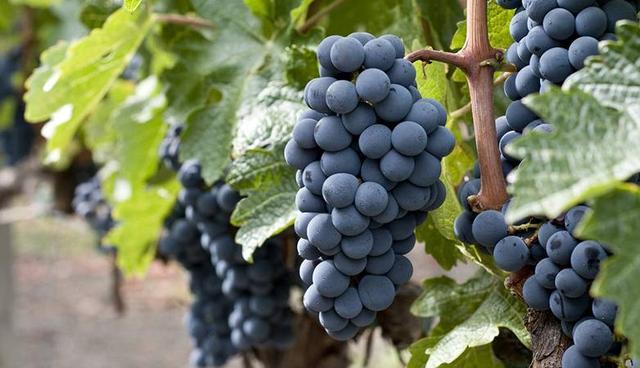
Causes and Countermeasures of the Uneven Berry Size Phenomenon in Grapes
1 Main Causes of the Uneven Berry Size Phenomenon in Grapes
1.1 Internal factors. The primary cause is degeneration to which the variety is prone; as Kyoho grapes age with increasing years of growth, degeneration of the tree's genes is one of the causes of uneven berry size.
1.2 Environmental influences. Freeze damage to the canes during dormancy, freezing of flower buds from low temperatures at bloom, and poor pollination caused by various factors all readily lead to the uneven berry size phenomenon in grapes.
1.3 Pruning factors. In Wei County, Kyoho holds an absolute dominance, and all vines use vertical trellising on a fence system; this trellis type very easily causes excessively vigorous shoot growth, a dense canopy surface, poor ventilation and poor light, which in turn causes pollen abortion, not only reducing the fruit set rate and causing loose clusters, but also readily leading to the uneven berry size phenomenon in grapes.
1.4 Influence of crop load. An excessive load weakens the tree, causing poor flower bud differentiation the following year, and the young berries cannot keep up nutritionally, which readily causes uneven berry size in grapes; too low a load causes excessive vegetative growth in grapes, which likewise affects flower bud development and young berry growth, causing uneven berry size in grapes.
1.5 Soil fertility and water factors. Too little organic fertilizer and too much nitrogen fertilizer cause overly vigorous plant growth that readily causes uneven berry size; a lack of the element zinc in the tree shortens shoot internodes, makes leaves smaller and causes leaf chlorosis, and also readily produces the uneven berry size phenomenon.
1.6 Other causes. The use of fruit-setting hormones and seedless agents also readily causes uneven berry size; grape fanleaf virus and the like also readily produce uneven berry size.
2 Prevention and Control Measures
2.1 Appropriately change the trellis structure. Although Lutou Village still uses a fence trellis, only the trunk is tied; the new shoots are allowed to grow parallel to the ground without being tied, weakening the apical dominance of the new shoots so that their growth tends toward moderate vigor, which favors fruit set.
2.2 Rational pruning. For winter cane pruning, follow the principle of "thin out the vigorous and the weak, keep the moderate." Do not carry out pre-bloom follow-up pruning too early; 3 to 5 d before bloom is suitable. When tipping two-bud fruiting units, leave one long and one short: short canes should keep 6 to 8 leaves, and long canes (vigorous canes) should keep 8 to 10 leaves. Clusters less than 10 cm long should not be tipped or only lightly tipped, and those around 20 cm should have 1/5 removed. For overly vigorous fruiting canes, twist the cane above the cluster to favor fruit set.
2.3 Rationally adjust the crop load. In full-bearing vineyards, yield should be controlled, generally 2 000 to 2 500 kg per mu is suitable; weak canes should carry no clusters, moderate canes should carry a single cluster, and vigorous canes at the tips may carry double clusters, using the fruit to suppress the canes.
2.4 Rational fertilization and watering
2.4.1 Fertilization management. Kyoho grapes generally receive no nitrogen fertilizer before bloom; a root-promoting water-soluble fertilizer may be applied as a top dressing, and quick-acting nitrogen fertilizer should be applied promptly after fruit set. During the young berry swelling stage, pay attention to balanced application of nitrogen, phosphorus and potassium fertilizers, and from the coloring stage to the ripening stage, pay attention to supplementing more potassium fertilizer and medium and trace element fertilizers. After harvest, organic fertilizer must be applied as a base fertilizer to raise the soil organic matter content, improve the environment for grape root growth, and ensure a balanced and comprehensive nutrient supply.
2.4.2 Water supply. Soil moisture should be such that soil 10 cm below the surface before bloom can be formed into a ball in the hand and crumbles when dropped. In low-lying land or heavy clay soil, give one pre-bloom watering or no irrigation. Reasonable water control before bloom favors fruit set; water lightly about 10 d before bloom to ensure soil moisture and the vineyard microclimate. If watering is too late or the amount is too large, it is unfavorable for fruit set.
2.5 Adjust the medium and trace element content in the soil. Spray zinc sulfate on the leaves 2 to 3 weeks before bloom, 1 to 2 consecutive sprays at 10 to 15 d intervals. Because plants find it difficult to absorb zinc from the soil, a 0.1% to 0.2% zinc sulfate solution can also be sprayed on the leaves. For Kyoho, it is best to finish arranging the clusters 3 d before bloom and cut off the upper 1 to 2 long secondary clusters. Boron deficiency causes irregular berry size. Spray boron fertilizer as a 1 000-fold solution 2 to 3 weeks before bloom. Grapes severely deficient in potassium have small and irregular berries; especially in the later stages of grape growth, increasing potassium fertilizer can significantly improve fruit quality.
2.6 Use secondary canes to set fruit. When the grapes are as large as soybeans, the uneven berry size phenomenon is already clearly visible. You can cut off the branches and leaves above the 5 to 6 leaf position to stimulate secondary cane growth and use the secondary canes to set fruit; although ripening is about 1 week later, the fruit set rate is high and the clusters are uniform, which can effectively control uneven berry size.
2.7 Use growth-regulating substances. When using a hormone containing forchlorfenuron as a swelling agent, a treatment concentration above 200 mg/kg or treatment too early easily causes uneven berry size; the Kyoho variety should be treated 10 to 15 d after bloom. Practice has shown that using the growth promoter PBO on vigorous Kyoho trees markedly increases fruit set and helps control the uneven berry size phenomenon in grapes. Special attention must be paid to strictly prohibiting pesticide spraying at full bloom in grapes, because spraying at bloom affects grape pollination and easily forms uneven berry size.