Common Misconceptions and Countermeasures in the Cultivation and Management of Pear Jujube and Winter Jujube Trees
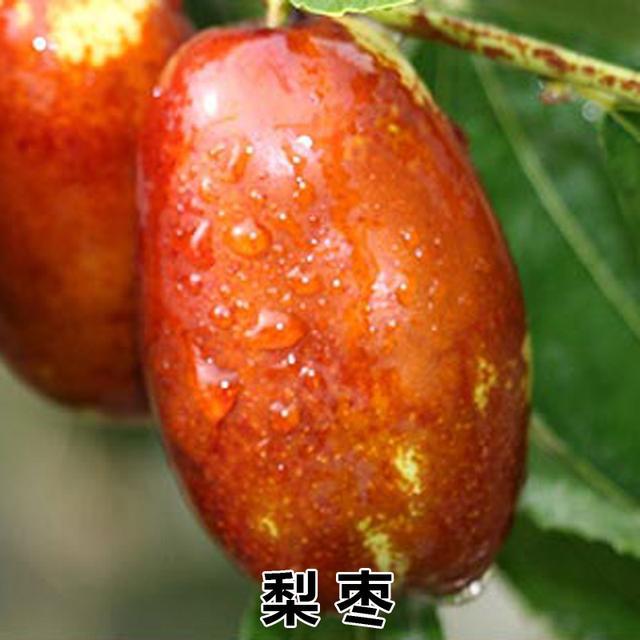
Various Misconceptions and Countermeasures in the Cultivation and Management of Pear Jujube and Winter Jujube Trees
Various Misconceptions and Countermeasures in the Cultivation and Management of Pear Jujube and Winter Jujube Trees Achieving high yield, stable yield and quality in pear jujube, winter jujube and other varieties is not determined by any single measure. In production practice, many jujube growers have numerous misconceptions in pear jujube and winter jujube production, causing the input-output ratio to keep shrinking, and in some cases the harvest does not even cover the costs. How can jujube growers break out of these misconceptions? The following analysis and countermeasures are offered for the reference of jujube growers.
1 Soil and Fertilizer Management
1.1 Severe Deficiency of Soil Organic Matter
Soil organic matter is the sole criterion for measuring soil fertility. In many soils, organic matter is 0.4%-0.5%. For many years, jujube growers have applied fertilizer with "two excesses and two deficiencies," namely too much nitrogen fertilizer, too much phosphorus fertilizer, too little potassium fertilizer, and even less organic fertilizer. This has caused soil compaction, poor permeability, reduced microorganisms, tree decline, yellowing, low fruit set, low yield, poor quality and other adverse phenomena that are increasing in number and severity.
Countermeasures: Increase the application of organic fertilizers, such as chicken, sheep and pig manure, and compound fertilizers containing medium and trace elements and microbial bacterial fertilizers, humic acid compound fertilizers, etc. Increase soil organic matter and permeability. To manage trees, first manage the roots; root management is fundamental. Thin soil means weak trees; rich soil means vigorous trees; when the roots die, the tree dies.
1.2 Raw Manure Applied to the Field Without Composting
Organic manures, such as chicken, sheep, pig, cattle, horse, donkey and mule manure, applied directly to the field without high-temperature composting, cause root burn and tree death.
Countermeasures: Organic fertilizers such as chicken, sheep, pig and cattle manure must be thoroughly decomposed before use, so that jujube trees can grow vigorously.
1.3 Excessive Fertilization, Input-Output Ratio Declines Many jujube growers believe that the more fertilizer the better, thinking that with abundant fertilizer and frequent watering there is no need to ask anyone and high yield will follow. They apply 300-400 kg of inorganic compound fertilizer or single nitrogen fertilizer per mu. This goes against their wishes and actually reduces yield. Fertilizers have an irreplaceable nature relative to one another.
Countermeasures: Soil testing and formulated fertilization should be carried out, supplementing whatever is deficient, calculating the amount of fertilizer based on yield, and applying balanced formulated fertilization. Only in this way can blindness be overcome and twice the result be achieved with half the effort.
1.4 Arbitrary Fertilization Without Regard to Tree Needs
Buying whenever there is money, fertilizing whenever one happens to, violates the laws of jujube tree growth and development and of water and fertilizer application, resulting in large investment and low benefit.
Countermeasures: It should be calculated that producing 50 kg of jujube requires absorbing 0.8 kg of pure nitrogen, 0.45 kg of pure phosphorus and 0.65 kg of pure potassium from the soil. The emphasis of fertilization should be placed on fertilizing after jujube harvest; topdressing should be carried out when jujube branches stop growing, during the critical fertilizer-demand period (late May to mid-June) and during the 40 d enlargement period before harvest. Only in this way can balanced and rational fertilizer use be achieved, fertilizing on schedule and on demand, avoiding blindness.
1.5 Clean Cultivation in the Jujube Orchard, No Grass Grown, Water and Fertilizer Loss and Fewer Fruits Set Clean cultivation in the jujube orchard causes soil nutrient loss and reduced fertilizer and water retention capacity.
Countermeasures: Practice artificial grass planting and natural grass growing, and mulching with grass. When the grass grows to 40 cm high, mow it down or spray herbicide, but do not hoe to remove the roots. Repeat this three times a year. In summer it lowers soil temperature by 4-6 degrees C and preserves moisture for 20-25 d, more than 10-15 d longer than clean cultivation, and it also controls excessive jujube tree growth. In winter it raises soil temperature by 2-4 degrees C and preserves moisture. Only by doing this continuously for many years will the jujube orchard remain evergreen and thriving, though of course fertilization is not excluded.
2 Water Management
2.1 Watering Without Purpose, the More the Better, Increasing Jujube Costs and Reducing Benefits For jujube trees in Yuncheng City, with annual rainfall of 500-550 mm, the normal growth of the jujube orchard can be fully satisfied. The rainfall timing in our city basically coincides with the water requirement pattern of jujube growth. Some jujube growers, in 2002 and 2003 when annual rainfall was about 900 mm, still watered the jujube trees 11 times, with the least being 3-4 times. Such blind water use not only causes a great waste of water resources but also wastes funds and labor.
Countermeasures: Watering should be combined with the water-demand timing of jujube tree growth. The emphasis should be placed after jujube harvest, during the period of tree nutrient storage. Where there is capacity for only one watering, that single watering should be placed before leaf fall in autumn. Watering should be placed during the critical water and fertilizer period after jujube fruit set, namely late May to mid-to-late June. If there is drought, place it during the jujube fruit enlargement period (July-August). This period is precisely when annual precipitation in our area is most concentrated, and generally there is no drought, so do not water.
2.2 Too Much Spring Watering, Yellow Leaves and Few Fruits Set
Many jujube growers do not know that jujube flowering and growth come from the tree's nutrient storage from the previous autumn, mistakenly believing it comes from early spring watering and topdressing. So many jujube growers carry out spring watering, but after watering, because the ground temperature is low, the jujube trees turn yellow, sprout late, grow slowly, set fruit late or fail to set fruit.
Countermeasures: Attention should be paid to autumn watering to increase the tree's nutrient accumulation, helping the tree resist freezing, sprout early and grow early. Spring watering promotes excessive shoot growth and is a major factor promoting physiological fruit drop of jujube.
2.3 Watering in Extreme Drought Causes Massive Jujube Fruit Drop
Not watering unless there is drought is the concept many people have about jujube orchard management. Watering during extreme drought: because during drought leaf transpiration is greater than that of jujube fruit, much water transfers from the jujube fruit to the leaves. Watering during extreme drought reverses the extreme, thereby promoting massive jujube fruit drop.
Countermeasures: Severe weather drought has omens. Watering can be carried out according to weather forecasts or weather conditions and the water-demand timing of jujube trees, placing the water at the early drought stage. For example, drought followed by continuous overcast indicates long-term drought later, so watering should be done promptly after the drought followed by overcast, effectively overcoming artificial physiological jujube fruit drop. Do not water during long-term extreme drought.
3 Cultivation Management
3.1 Removing Jujube Heads Too Late, Affecting Jujube Bearing Shoot Growth and Flower Bud Formation
Generally, jujube growers remove jujube heads when the jujube head has grown to 6-9 cm or even 12-15 cm. Doing so wastes nutrients, affects jujube bearing shoot growth and flower bud formation, and leaves latent buds room to remain dormant, bringing trouble to later management and affecting yield.
Countermeasures: Jujube heads should be removed promptly when they have grown to 1-2 cm. This saves labor, conserves nutrients, and promotes jujube bearing shoot growth.
flowering, more fruit set, and good fruit.
3.2 Leaving Too Many Jujube Bearing Shoots, Haste Makes Waste Many jujube growers leave 7-8 jujube bearing shoots per jujube spur.
Countermeasures: Selectively leave 2-3, at most 4, jujube bearing shoots per jujube spur to reduce shoots and increase efficiency, fully utilizing nutrients and cultivating commercial jujube.
3.3 No Fruit Thinning, Letting Them Grow Freely
Seeking only quantity without seeing the light of day, keeping every jujube seen. The result is that haste makes waste: the quantity is not small but there are few high-quality commercial jujube, wasting manpower, materials and financial resources, with no benefit.
Countermeasures: During the young jujube stage, thin fruit separately according to variety. For pear jujube, leave 1 fruit every 8-10 cm; for winter jujube, leave 1 fruit every 4-5 cm when thinning and setting fruit.
3.4 Unscientific Girdling During the Flowering Period
Many jujube growers do not accurately grasp the timing of girdling jujube trees. Some girdle at the initial flowering stage or after the full flowering stage, neither of which achieves the goal of improving fruit set. Moreover, some believe girdling 1 cm is best, while others believe 0.5 cm is best; opinions differ on girdling width.
Countermeasures: Correct girdling should be carried out on a sunny day during the full flowering stage, and the girdling wound should be pasted with paper, removing the paper half a month later. After girdling, promptly spray the tree with 920 plus boron fertilizer, so as to achieve early fruit set and good fruit set. Girdling width should be determined by the thickness of the jujube tree trunk. As tree age increases, it should be determined by main trunk thickness: for young trees 0.5 cm is right, but for middle-aged trees 1 cm is right. For a 10-year-old jujube tree with a thick main trunk, girdling should be 1.5-2 cm, with prompt paper pasting; the widest should not exceed 2.5 cm, so as to achieve twice the result with half the effort.
3.5 No Management After Jujube Harvest
Many jujube growers, after harvesting jujube, do not fertilize, water, treat disease or control insects. The tree's nutrient accumulation is low, the tree is weak the next year, and after several consecutive years the tree declines and the orchard is ruined.
Countermeasures: Raise awareness. After jujube harvest, promptly fertilize and water, and prevent disease and control insects. Promote tree nutrient storage. Lay a good material foundation for the next year's growth and fruiting.
4 Pesticide Application on Fruit Trees
4.1 Blind Pesticide Use During the Jujube Flowering Period Is Highly Harmful
The main goal during the jujube flowering period is to improve fruit set. It requires spraying gibberellin (920), requires boron, requires 22-25 degrees C weather, and requires insects for pollination. However, many fruit growers blindly use pesticides during the jujube flowering period, causing harm to the jujube trees.
Countermeasures: Spray the tree with the "Penkang" Cuikang Flower and Fruit Spirit, which keeps buds, flowers and fruit from dropping; during the flowering period spray the jujube tree with gibberellin (920) 1 g added to 40-50 kg of water; spray the tree with 0.3% borax plus 0.5% white sugar or honey; release bees to promote pollination and fruit set.
4.2 Not Diluting When Mixing Pesticides, Mixing Multiple Pesticides and Fertilizers
Many jujube growers, when spraying jujube trees, want one application to achieve multiple effects and mix 7-8 pesticides and fertilizers at once, causing severe jujube fruit drop.
Countermeasures: Fungicides, insecticides and acaricides should each be diluted into a mother liquor separately and then mixed to achieve the proper effect. Generally, one disease or one insect should be the main target with control of one or two others, and never mix pesticides and micro-fertilizers together. No more than 4 should be mixed at one time.
4.3 No Measurement of Pesticide Concentration When Mixing
Many jujube growers do not use a measuring cup or syringe for measurement but rely on the bottle cap to measure pesticide and mix the concentration. The result is that the concentration is too high, damaging either flowers or leaves, causing the severe lesson of the entire orchard's jujube fruit dropping. This should be kept in mind.
Countermeasures: Jujube growers should buy a measuring cup or syringe and strictly mix and measure according to the dilution ratio on the pesticide bottle.
4.4 Pesticide Bottles Stored Randomly Without Labels
Some jujube growers store herbicides, fungicides, insecticides and regulators mixed together. Over time, the labels are lost, and they are reluctant to throw away the pesticide in the bottles, so when mixing they use them blindly and indiscriminately. The result is that herbicides mixed with pesticides caused great losses, a severe lesson.
Countermeasures: People divide by groups, things gather by kind; store by category. Buy a pencil and promptly attach written labels to unlabeled bottles, writing the pesticide name and use to prevent misuse causing pesticide damage and unnecessary losses. For pesticide in unlabeled bottles that cannot be identified, throw it away rather than use it.
5 Disease Prevention and Insect Control
5.1 Emphasizing Insect Control, Neglecting Disease Prevention
Many jujube growers, seeing damage from scale insects and green plant bugs, are anxious and actively control insects, while they do not pay attention to disease prevention because pathogens are invisible. Only when disease becomes a disaster do they suddenly realize.
Countermeasures: Disease prevention and insect control should be carried out simultaneously, with both prevention and control applied. It should be integrated management, grasping the occurrence patterns of diseases and insects, buying genuine pesticides, and above all timely prevention and control.
5.2 Disease Prevention and Insect Control Tight at First and Loose Later, No Tree Management After Jujube Harvest
All kinds of diseases and insects have their own occurrence patterns. The main insect pests in the early stage are: green plant bug, jujube gall midge and thrips, generally from late March to mid-May; in the later stage they are peach fruit borer and red spider mite (mid-May). Diseases include: rust, brown spot and anthracnose. Prevention and control should be carried out throughout the year, not attending to the head but not the tail.
Countermeasures: Carry out targeted prevention and control on time, on schedule and according to the occurrence patterns of diseases and insects, and persist in integrated management.