What climate suits the Shatang mandarin? A detailed guide to planting and management methods
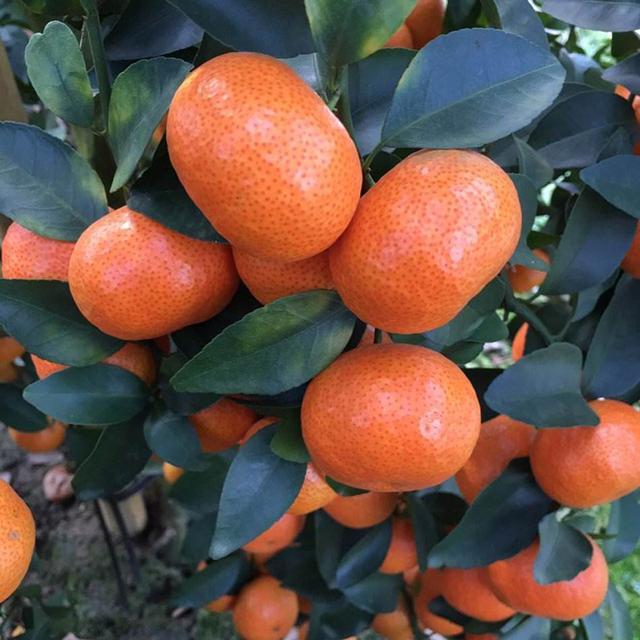
Selection of climate conditions and planting management for the Shatang mandarin
1 Selection of climate conditions
The Shatang mandarin has a certain level of requirements for climate conditions; general cultivars require annual rainfall of 1,200-2,000 mm, an annual average temperature of 18-21°C, and an absolute low temperature that must be above -5°C. At the same time, the adequacy of sunlight needs to be fully guaranteed, and the land must be strictly selected and controlled. To ensure the growth benefits of the Shatang mandarin, the organic matter content needs to be ensured at above 1.5%, while also ensuring good water retention and drainage performance, with the groundwater level below 1 m; the thickness of the soil layer and the looseness of the soil texture should have an active soil layer of more than 1 m, while the pH value should be controlled at 5.5-6.5, and the best soil types are sandy loam, paddy soil, and alluvial soil. In addition, during the planting process of the Shatang mandarin, it is also necessary to ensure the water source, conditions for irrigation, and the transportation environment.
2 Seedling selection and planting
When selecting seedlings, choose cultivars that are early-maturing, pure in variety, and free of pests and diseases as much as possible, ensure a well-developed root system, and select cultivars with ideal compatibility between the scion and the rootstock[1]. During planting, 1) the dwarfed and densely planted method should be adopted as the main approach, with the number of plants per 667 sq m controlled at 130 plants, and the row and plant spacing between each plant controlled at 3.0 m x 1.65 m; for planting on mountain conditions, the row and plant spacing can be appropriately increased to 3 m x 2 m. The planting time should be chosen from February to April. 2) Ensure that the plant roots cannot directly contact organic fertilizer that has not been fully rotted and decomposed, to avoid the occurrence of root damage and prevent excessive plant growth[2]. In order to better reduce the impact of transpiration on the plants, the leaf parts of the saplings need to be treated first before planting; for the root treatment, the main root needs to be pruned first, but the fibrous roots still need to be retained, and a small amount of rooting powder should be applied at the same time to achieve continuous root growth. 3) Ensure that the fibrous roots can spread out naturally, and compact the soil after backfilling.
3 Management during the planting process
3.1 Management during the seedling stage
During the seedling stage, about 2 weeks after planting, the root systems of some plants will gradually begin to grow; at about 40 d of growth, apply 300-times diluted humic acid rooting water-soluble fertilizer, or prepare a 0.5% aqueous solution by mixing urea with water, applying 2 scoops per plant. After that, manage once or twice every 30 d[3]. For plants whose new roots have not fully grown out, rooting water needs to be applied as soon as possible to avoid affecting the plants. As the young trees grow, the usage amount and concentration ofhumic acid rooting water-soluble fertilizercan be gradually increased, and a small amount of urea can be appropriately added for drenching. After the planting time exceeds 2 years, the frequency of fertilization needs to be appropriately reduced, but each fertilization must still ensure an appropriate amount.
For tree shape management and pruning, the natural heart shape should be the main form. After the plant is established, it needs to be cut back at a position 40 cm on the main trunk. After sprouting, select about 3 branches growing in different directions as the main branches; the angle between the main branches and the main trunk should be maintained at about 45°. If the angle of the main trunk does not exceed 45°, the angle can be adjusted manually. On the main trunk, select 3 branches in different directions as secondary main branches. To ensure the directionality of shoot growth, the method of bud removal and shoot control can be adopted.
3.2 Management during the orchard establishment stage
In spring, flower-promoting fertilizer needs to be applied; for young trees, pre-shoot fertilizer and post-shoot fertilizer should be appropriately applied. If drought occurs in spring, irrigation treatment can be carried out as soon as possible to ensure sufficient moisture. For young and vigorous saplings, 2 rounds of bud removal treatment can be carried out. Inflorescences that are present in excessive amounts should be thinned as soon as possible, and the spring shoots should be pinched; at the same time, pest and disease control should be done well for new shoots. From the early flowering stage to the full flowering stage, the amount of fertilizer applied can be appropriately increased; to ensure growth benefits, flower thinning should continue. After flower drop occurs, the fruit tree generally will gradually grow, and then it will enter the fruit drop stage. According to the actual situation of the canopy and fruit set, ensure sufficient water and fertilizer; during the young fruit stage, apply foliar fertilizer, remove diseased and deformed fruits, and still maintain moisture when preventing and controlling pests and diseases.
In summer, after the spring shoots turn slightly green, potassium dihydrogen phosphate can be sprayed to promote maturity and inhibit the germination of summer buds, avoiding the problem of excessive new shoots competing for nutrients and causing fruit drop. In the early summer, new orchard establishment and replanting can be done in a timely manner, and attention should be paid to drainage of accumulated water in the orchard. During fruit expansion, potassium fertilizer needs to be supplemented in a timely manner to ensure fruit expansion and the quality of autumn shoots. For shoots with a relatively large fruit load, the water supply can be appropriately increased. After full fruit set, no summer shoots should be retained; for young trees, the amount of bud-promoting fertilizer used can be appropriately increased to ensure "three fertilizers per shoot," and cold protection and warmth preservation should be done well.
In autumn, in early autumn the summer shoots will gradually turn green; at this time, attention can be paid to carrying out drought resistance treatment in the orchard, supplementing water and fertilizer, applying corresponding measures to prevent the occurrence of pests and diseases, and giving appropriate protection to new shoots. For large trees, organic fertilizer can be applied additionally, and soil covering and drought prevention should be done well. In mid-autumn, fruit-strengthening fertilizer can be appropriately applied; to ensure the fruit growth rate, the water intake can be appropriately increased, and the problem of reduced fruit yield caused by climate should be avoided. In addition, for some soil types, deep soil improvement treatment can be appropriately carried out to ensure the growth rate of the Shatang mandarin.
In winter, at the very beginning of winter, comprehensive reclamation treatment can be carried out on the orchard, and the roots of the Shatang mandarin can be exposed and dried; at the same time, farmyard manure can also be appropriately buried and applied, and for those with a relatively large fruit load, the amount of water and fertilizer applied can also be appropriately increased. By reasonably controlling moisture, new shoot growth can be controlled, and pesticide use should be stopped 30 d before fruit picking to avoid fruit sales problems.
In mid-winter, high-yielding fruit trees can be picked in stages; for green fruit trees, flower-promoting hormone treatment can be applied; lime slurry can be applied to the trunk and main branches; diseased branches, dead branches, and the like should be pruned in a timely manner and destroyed by centralized burning or deep burial. For young trees, cold protection work can be done in a timely manner; at present, the main approach is to spray seaweed acid foliar fertilizer to enhance the stress resistance of the fruit trees for cold resistance. And at the end of winter, fruit picking can continue, and the fruit picking task should be completed as early as possible to ensure the fastest possible recovery and accumulation of tree nutrients; at this time, fertilizer and water control treatment needs to be done well. For trees with relatively serious drought problems, active treatment should be carried out. At the end of winter, clean up the entire orchard, especially handling fallen branches and the like, to prevent pests and diseases from overwintering. For young and old trees, winter fertilizer can be appropriately increased to promote the growth of spring shoots.
4 Pest and disease control techniques
There are relatively many types of pests and diseases of the Shatang mandarin. The following analyzes several relatively common types of pests and diseases and their control measures.
4.1 Scab
This disease mainly damages tender branches, leaves, and young fruit. After leaves are affected, a large number of small ulcer-like spots appear, which later turn waxy yellow. After fruit is affected, a large number of tumor-like protrusions often grow. For the control of this disease, when spring buds sprout and when 2/3 of the flowers have fallen, spray once each with a 1,000-times solution of 65% pyraclostrobin·metiram (BASF Cabrio Top) or a 1,000-times solution of 41% thiophanate-methyl·tebuconazole (Longdeng Wenda) for foliar spraying treatment.
4.2 Anthracnose
Anthracnose mainly occurs under high-temperature and rainy conditions. After onset, red small spots appear on the leaves, and under dry conditions they may turn into black small spots and appear in an outlined pattern. The control measures for anthracnose are mainly spraying 25% pyraclostrobin (BASF Kairun), a 1,000-times solution of 65% pyraclostrobin·metiram (BASF Cabrio Top), or a 1,000-times solution of 41% thiophanate-methyl·tebuconazole (Longdeng Wenda) during the tender shoot stage or young fruit stage.
4.3 Mites
Mite pests are mainly red spider mites and rust mites. Red spider mites mainly affect leaves, fruit, and tender shoots; affected leaves lose their luster and appear grayish white. Rust mites damage fruit, causing the fruit to form black skin. The control measures for red spider mites are mainly to use 97% mineral oil to clean the orchard in winter; in other occurrence seasons, acaricides such as abamectin, spirodiclofen, and etoxazole can be used for treatment, applied continuously three or four times at intervals of 15-20 d. In addition, predatory mites can also be released for treatment. The main control time for rust mites is June; they occur frequently under drought and high temperature. The main approach is to observe the pest population density, and when rust mite damage occurs, spray pesticide in a timely manner for treatment. The main chemical agents include carbosulfan (prohibited after October), lufenuron, and abamectin.
5 Conclusion
For the planting of the Shatang mandarin, effective planting methods need to be adopted. Targeted selection and optimization need to be carried out from aspects such as the selection of saplings, the methods of cultivation and field planting, and the management of flowers and fruit, and effective management methods should be applied. Different management plans should be adopted for new shoots in different seasons, and management measures should be comprehensively considered according to tree age and fruit, thereby ensuring the healthy growth of the Shatang mandarin and improving the economic benefits of planting.