Detailed Explanation of Suitable Cultivation Areas and Terrace Planting Techniques for Luling Walnut
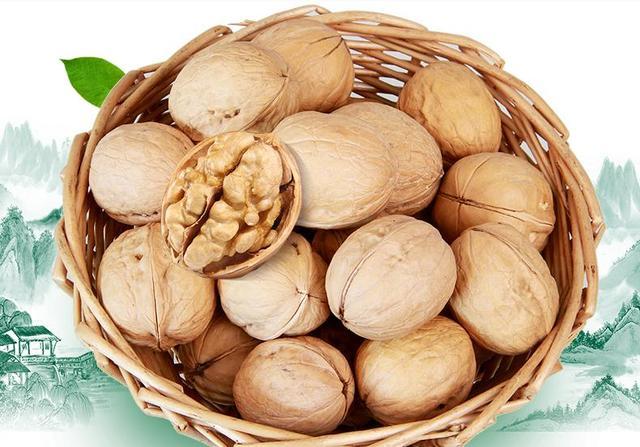
Suitable Cultivation Areas and Terrace Planting Techniques for Luling Walnut
Luling walnut is a superior variant single plant discovered from 5-year-old "Xiangling" by the College of Forestry of Hebei Agricultural University and Hebei Luling Fruit Industry Co., Ltd. In recent years, Luling walnut has passed the variety certification of forest trees in Hebei Province, been recognized as green food, and won the "Olympic Recommended Fruit Product" award. Luling walnut has strong cold resistance, drought tolerance, and strong resistance to bacteria. Its fruit shape is attractive, the kernel is plump and fragrant, the kernel yield rate is high, the shell is thin with no astringent taste, and it is rich in protein and fat content. It is a key demonstration and promotion variety of the Ministry of Science and Technology of China. This variety grows vigorously with strong branching ability, and is suitable for planting in the walnut cultivation areas of the Taihang Mountains, the southern foothills of the Yanshan Mountains in Hebei, and the Xingtai Plain. Planting Luling walnut on terraces is of great significance for increasing local walnut production, scientifically utilizing land resources, and promoting local agricultural economic development.
1 Biological Characteristics of Luling Walnut
The fruit of Luling walnut is a nut, oval-shaped, light yellow, with an average three-diameter of 3.42cm and an average single fruit weight of 12.8g. The fruit surface is smooth and attractive, the suture line is smooth and not protruding, and it can be shelled by gently pinching with the hand. The seed coat is light yellow with no astringent taste, and the kernel is plump and fragrant.
The tree posture of Luling walnut is open in form, the crown is semi-circular, the trunk and perennial branches are grayish-brown and relatively smooth, and one-year-old branches are yellow-green. Luling walnut begins to sprout in mid-April and begins to unfold leaves in late April; male flowers bloom in early May; mid-June to early July is when the walnut fruit grows rapidly; mid-July is the hard-shell stage of Luling walnut; mid-September is the fruit maturity stage; late October is when Luling walnut begins to shed leaves. Young trees of Luling walnut have a very strong growth momentum and strong branching ability. They begin to bear fruit after 4 years of planting, with the main fruiting area being on short and medium branches, and enter the full fruiting stage after 7 years of planting. Luling walnut has strong adaptability, with relatively high cold resistance, drought resistance, stress resistance, and disease resistance, and good planting returns.
2 Establishment of Luling Walnut Cultivation Orchard
2.1 Orchard Establishment
Luling walnut cultivation orchards are generally established on sloping land, flat land, or mountain terraces. The soil is required to have good water retention and aeration, and the soil layer of the plot must be deep. When establishing the orchard, terraces should first be built along the contour lines, with a field surface width of 2m and a soil preparation depth of 80cm being optimal. Commonly used row and plant spacings are 5m×3m, 4m×5m, 6m×4m, and 5m×2.5m. During cultivation, cultivators should select appropriate plant and row spacings based on specific soil fertility, orchard management level, and environmental conditions to determine planting points. In the autumn of the year before planting, planting holes should be dug, and 30kg of manure soil should be added to each planting hole, mixed evenly with topsoil and filled into the planting hole.
2.2 Preparation Before Seedling Planting
Before planting, seedling preparation and treatment should be carried out. The requirements for seedlings are as follows: (1) The seedling variety must be pure, and the rootstock type must be the same; (2) The seedlings must have no mechanical injuries or pests and diseases; (3) The main root length of the seedlings must be greater than 20cm, the number of lateral roots must be greater than 15, and neither the main root nor the lateral roots should have split injuries.
Before planting, seedlings should undergo root trimming treatment to remove excessively long roots or roots with split injuries. Then, the seedlings should be graded and bundled according to height and thickness. Finally, the root systems of the seedlings should be soaked in a liquid made from rooting powder for more than 12h. After soaking, the root systems should be disinfected with lime sulfur mixture.
2.3 Seedling Planting
When planting seedlings, attention should be paid to position correction to ensure that the root collar remains level with the ground, and the root system should be in a naturally spread posture within the planting hole. Then, soil should be backfilled. When backfilling to halfway, the seedling should be gently lifted, and then backfilling should continue. While filling soil, the soil should be tamped down to ensure full contact between the root system and the soil. After planting is completed, irrigation should be carried out immediately, requiring sufficient and thorough watering. After the irrigation water seeps down, soil should be sealed to preserve moisture, and then a tree disc with a diameter of 1m should be made to facilitate rainwater collection or irrigation.
After seedling planting, trunk heading should be carried out at a plump bud 60~80cm above the seedling, and a plastic bag with a length of 70cm and a diameter of 8~10cm should be placed over the seedling stem to prevent damage to the seedling from leaf-eating pests such as scarab beetles. In early May, check the survival status of the seedlings, and if dead seedlings are found, replant immediately. After the temperature rises, ventilation treatment should be carried out first, and then the plastic bag should be removed. In addition, overwintering and cold protection measures during the seedling stage should be well implemented, especially in the first 3 years after planting Luling walnut. After leaf fall each year, use 15~20 times water to boil vinyl alcohol, and coat the entire tree with polyvinyl alcohol.
3 Orchard Management
3.1 Soil, Fertilizer, and Water Management
3.1.1 Deep Plowing and Soil Improvement
Before autumn fertilization, deep plowing and soil improvement should be carried out. On one side outside the planting hole, dig a ditch with a depth of 0.4~0.6m and a width of 0.3~0.35m. When backfilling, a certain amount of organic fertilizer can be mixed in, and an appropriate amount of water should be applied after backfilling. In addition, tree disc trimming, planting hole expansion, and terrace reinforcement and repair should be carried out every year.
3.1.2 Fertilization
Base fertilizer should be applied after fruit harvest and before leaves turn yellow. Apply 30kg of organic fertilizer per plant for young trees, 40kg of organic fertilizer per plant for trees beginning to bear fruit, and 70kg of organic fertilizer per plant for trees in the full fruiting stage. Topdressing should be carried out during the early bud stage, rapid young fruit growth stage, and hard-shell stage. After 5 years, the topdressing amount should increase according to tree age and yield growth. In addition, foliar fertilizer spraying should be carried out on Luling walnut. For fruiting trees, foliar fertilizer spraying should be carried out at the initial flowering stage of female flowers, using urea or borax. For young trees, spray urea at the early stage, once every 15d. By late August, spray potassium dihydrogen phosphate, once every 15d, for 3 consecutive sprays.
3.1.3 Water Management
Irrigation should be carried out separately before budding, before flowering, after fruit setting, during the hard-shell stage, and before freezing when the soil is deficient in water. In years with abundant rain, attention should be paid to drainage.
3.2 Flower and Fruit Management
When walnut male flowers begin to swell, manual flower thinning should be carried out, with a male flower thinning amount of about 95% being optimal. When female flowers enter the initial flowering stage, fertilization treatment should be carried out, spraying a mixed solution of 500 times urea and 500 times borax once every 2d, for a total of 3 times. In addition, to improve the fruit setting rate of walnuts, manual pollination should be carried out.
3.3 Training and Pruning
The most suitable tree shapes for Luling walnut are the single-layer high open-center shape or the central leader stratified shape. Among them, the single-layer high open-center tree shape has a trunk height of 0.6m, with 3~4 main branches at the base arranged adjacently, and one main branch every 0.2~0.3m upward. These main branches are arranged in a spiral pattern with gaps on the central leader. The central leader stratified tree shape has a trunk height of 0.4~1.0m, with 2~3 layers of main branches on the trunk, and the number of main branches is 5~7.
Spring pruning usually involves notch budding and bud removal pruning for young trees. Summer pruning is generally carried out in May~June. For young trees whose new shoots have grown to more than 40cm, pinching should be carried out, leaving about 20~25cm. For sprouts at thinning sites, removal measures should be taken. Autumn pruning is generally carried out after fruit harvest and before leaves turn yellow, when the tree body has no bleeding, making it suitable for adjusting the tree framework and thinning out large branches and shade-casting large branches in the retracted portions. Winter pruning is generally carried out between Major Cold and Start of Spring. Before spring budding, when there is basically no bleeding, thin out excessively long fruiting mother branches and relatively slender and dense short fruiting mother branches, and carry out heavy short cutting on some water sprouts as reserved branches.
3.4 Pest and Disease Control
The main pests and diseases of Luling walnut are walnut bacterial brown spot disease, walnut shoot borer, and overwintering larvae. Among them, strengthening tree management and paying attention to frost protection and drought protection of the tree body can effectively avoid the occurrence of walnut bacterial brown spot disease. Spraying 5 degrees Baume lime sulfur mixture during spring budding and spraying 1~2 times of 21% Guofukang 400 times solution during the growing season can effectively control walnut shoot borer. Before winter, deeply plow the soil under the tree crown. If infested fruits are found during the growing season, remove them immediately, which can eliminate overwintering larvae. In addition, starting in late April, install one frequency-vibration insect-killing lamp per 5hm2 to trap and kill phototactic pests and adults, such as scarab beetles, walnut tussock moths, and yellow slugs.