A Detailed Guide to the Pest Species, Damage and Control Measures of Jujube Trees in Shenmu City
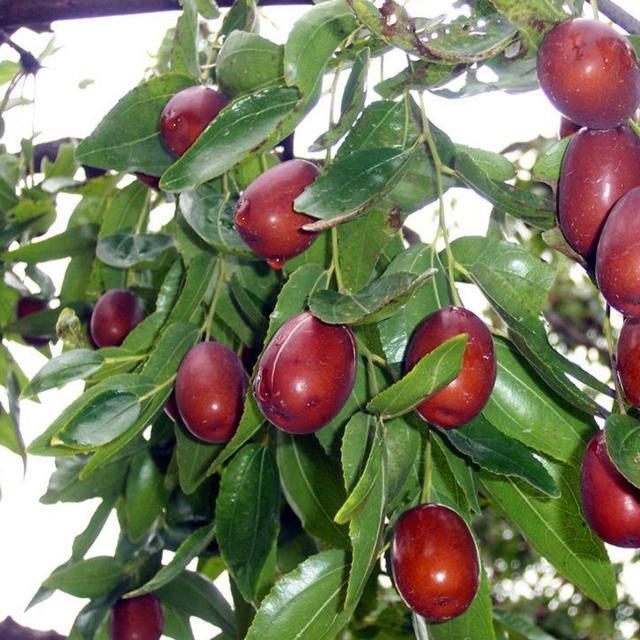
ShenmuCityPest Species, Damage and Control Measures of Jujube Trees
1 Main Pest Species and Damage
1.1 Jujube Flying Weevil
Also known as the bud-eating weevil, small gray snout beetle, order Coleoptera, family Curculionidae. In the jujube area along the Yellow River in Shenmu, the jujube flying weevil is the pest that appears earliest in the annual growth cycle of jujube trees and causes severe damage. Adults begin feeding on tender buds and young leaves of jujube trees in early spring, and in severe cases often eat all the tender buds, causing the jujube trees to sprout a second time, delaying flowering and fruiting, and resulting in low yield and poor quality of jujube fruit. It has 1 generation per year, overwintering as larvae in the soil. The following year, it pupates from late March to early April; when jujube trees sprout in mid-to-late April, adults emerge from the soil to cause damage; they mate and lay eggs in early May, the egg stage lasts half a month, and hatching begins in mid-May, after which they descend from the tree and enter the soil, damaging underground plant tissues until autumn, when they make nearly round earthen cells in which to overwinter. Damage also occurs in June, but rarely causes disaster. Adults have a death-feigning habit, are inactive in the early morning and evening, and fall to the ground and feign death when disturbed[1].
1.2 Green Plant Bug
Also known as the alfalfa plant bug, small stink bug, order Hemiptera, family Miridae. Nymphs and adults pierce and suck the sap of tender buds, young leaves, flower buds and young fruit of jujube trees. Affected leaf buds show chlorotic spots and, as the leaves grow, become irregular holes, commonly known as "broken-leaf madness." After flower buds are damaged, their development stops and they wither and drop. Stems appear as "garlic-sprout branches," and affected fruiting branches cannot extend normally and become curved, known as "scald disease." It has 4-5 generations per year, overwintering as eggs in the branch tips of alfalfa, peas, etc., or in nearby shallow soil. The following year in March-April, when the average temperature reaches above 10°C and relative humidity reaches 70%, the overwintering eggs begin to hatch; after jujube trees sprout, nymphs climb the trees to cause damage; the other generations occur in early June, mid-July, mid-August and mid-September, with severe generation overlap. Damage is most severe in early-to-mid May when the fruiting branches of jujube trees spread their leaves, and in mid-June during the flowering and young fruit stages; most affected fruit drops, seriously affecting yield. Adults have relatively strong flying ability, often hide during the day, and when disturbed quickly move away and are hard to find; they mostly feed and cause damage in the early morning and at night[1].
1.3 Jujube Leafroller
Also known as the jujube leaf tier, jujube small moth, order Lepidoptera, family Tortricidae. Larvae damage jujube buds, leaves, flowers and fruit, often spinning silk to stick leaves and fruit together, with the larvae hiding inside to feed on leaves, gnaw the fruit skin, and bore into the fruit to feed around the pit on the flesh, excreting frass outside the fruit, causing the affected fruit to soon turn red and drop, seriously affecting jujube fruit yield and quality. It has 3 generations per year, overwintering as pupae in rough bark cracks and tree holes at the base of the trunk and main branches of jujube trees and in the surface soil around the roots. The following year, eclosion begins in late March, peaks in mid-April, and ends in early May. After eclosion, they mate after 2d, mostly in the morning. First-generation larvae occur during the budbreak and leaf-expansion stage of jujube trees, feeding on new buds and tender leaves. Second-generation larvae occur around the flowering period, damaging leaves, flower buds, flowers and young fruit. Third-generation larvae occur during the fruit coloring stage, damaging leaves and fruit. Larvae also have the habit of spinning silk and dropping down to move to new feeding sites; after first- and second-generation larvae mature, they spin cocoons and pupate in damaged leaves; third-generation larvae mature from early September to mid-October, gradually crawl into bark cracks, make cocoons, pupate and overwinter. Adults hide during the day on the undersides of jujube leaves or in crops and weeds under the trees, and are active at dawn and dusk[Jishan Huayao].
1.4 Jujube Inchworm
Also known as the jujube looper, jujube geometrid, order Lepidoptera, family Geometridae. Larvae damage tender buds, young leaves and flower buds, and spin silk to wrap around them, hindering the extension of branches and leaves; as larval instars increase, food consumption also increases, and in severe cases they can eat all jujube buds, leaves and flower buds, causing a sharp drop in yield that year, or even total crop failure, and also affecting the fruit-setting rate the following year. It has 1 generation per year, overwintering as pupae in the soil 10-20cm under the trees, with the most found in the soil within 1m of the trunk. In Shenmu, the following year eclosion and emergence from the soil begin in early April; after hatching, larvae climb the trees to cause damage; May is the peak period of larval damage; from late May to mid-June, after larvae mature they crawl down along the trunk into the soil; in late June the soil-entering larvae pupate and overwinter[1].
2 Control Measures
2.1 Agricultural Control
(1) Deep plowing and soil improvement in winter to destroy the overwintering sites of pests such as the jujube flying weevil, green plant bug and jujube inchworm. (2) Scrape bark to destroy eggs and kill pupae. Before jujube trees sprout, scrape off old and peeling bark, prune off stubs with eggs, remove dead branches, rotten fruit and weeds in the jujube grove, and plug tree holes with yellow mud to eliminate overwintering eggs of the green plant bug and overwintering pupae of the jujube leafroller. (3) Knock trees to shake off pests. Taking advantage of the death-feigning habits of jujube inchworm larvae and jujube flying weevil adults, use sticks to strike the jujube trees and shake the pests down, and eliminate them promptly.
2.2 Physical Control
(1) Banding to block pests. In late March, tie a 8-10cm wide plastic film ring around the base of the trunk, overlapping the joint by 3-4cm and fastening it tightly with a stapler, leaving no gaps. Every morning or evening, capture and kill the female jujube inchworm moths attracted under the plastic band[1]. (2) Tie straw rope to trap and kill. Below the plastic film encircling the trunk, tie straw rope around the base of the trunk for 2-3 turns, luring female jujube inchworm moths to lay eggs there; check and replace the straw rope regularly, and burn the replaced rope[1]. (3) Bundle grass. In late September, tie bundles of grass at the trunk forks to attract jujube leafroller larvae to enter and pupate; remove and burn the grass bundles in winter. (4) Apply glue rings. Before jujube trees sprout in spring, scrape a smooth band 10cm wide around the trunk at a height of 1m, and evenly apply insect-sticking glue (in a closed ring), which can effectively prevent jujube flying weevil adults and green plant bug nymphs from climbing the trees to cause damage. (5) Light trapping. Taking advantage of the phototaxis of jujube leafroller and jujube inchworm adults, hang blacklights in the jujube grove at night to trap and kill adults.
2.3 Biological Control
Protect natural enemy insects, help natural enemies overwinter safely, use pesticides reasonably, and avoid killing natural enemy insects. Mass-rear and release natural enemy insects. The main natural enemies of the green plant bug include the twenty-eight-spotted ladybird, seven-spotted ladybird, Chinese green lacewing, and large green lacewing. Natural enemies of the jujube leafroller include Trichogramma. The main natural enemies of the jujube inchworm include the tussock moth ichneumon wasp, the silkworm tachinid, and the variegated broad-fronted tachinid. Protect and use beneficial birds such as sparrows, azure-winged magpies and woodpeckers, as well as frogs and other animals, to control pest numbers.
2.4 Chemical Control[1]
(1) From late March to early April, evenly spray 50% phoxim EC at 300-500 times dilution within 1m under the tree canopy, then lightly rake the soil to poison and kill jujube flying weevil adults. (2) In early-to-mid April, during the jujube tree budbreak period, spray pesticides such as 50% phoxim EC at 2000 times dilution and 40% omethoate at 2000 times dilution to control jujube flying weevil adults. (3) From late April to early-to-mid May, spray pesticides such as 2.5% deltamethrin at 6000 times dilution and 40% omethoate at 1500 times dilution to control jujube leafroller and green plant bug nymphs. Spray pesticides such as 25% diflubenzuron III at 1500 times dilution to control the jujube inchworm. (4) From mid-to-late June to early July, spray pesticides such as 2.5% deltamethrin at 6000 times dilution and 40% omethoate at 1500 times dilution to control jujube leafroller and green plant bug nymphs.