Practical Techniques for Improving Quality and Efficiency in Apple Production
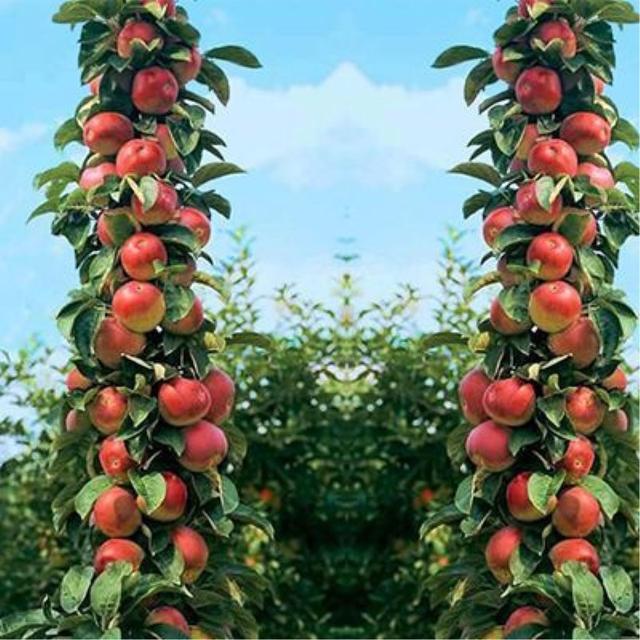
Techniques for Improving Quality and Efficiency in Apple Production
Premium apples are high-grade, high-quality apples with excellent external and internal quality, and safety that meets the requirements of domestic and international markets. Selecting superior varieties, creating good soil conditions, establishing orchards in suitable sites, rational close planting, and scientific planting are the prerequisites and foundation for premium apple production; while scientific fertilization, rational shaping and pruning of apple trees, and strengthening fine management of flowers and fruits are indispensable conditions for producing premium apples [Jishan Huayao]. This article introduces the cultivation and management techniques for premium apples. To produce premium apples, it is necessary to improve the management level of apple orchards.
1 Selection of Superior Apple Varieties
China is a major apple-producing country, with apple output accounting for 65% of the world's total apple production. Apples such as "Hanfu" from southern Liaoning, "Huaniu Apple" from Tianshui, Gansu, "Luochuan Fuji" from Shaanxi, Qianxian Red Fuji, and Shandong "Fuji" are renowned both domestically and internationally. For modern apple cultivation, it is recommended to select spur-type varieties suited to local conditions, such as "Yanfu," "Royal Gala," and "Oyama Wase," to gradually replace inferior varieties. Newly established apple orchards should uniformly adopt superior apple varieties and dwarfing rootstocks. Old orchards with poor varieties should be promptly top-grafted to improve the degree of improved varieties and achieve premium apple production [2].
2 Establishing Orchards in Suitable Sites
Apple is a perennial plant. The suitable soil texture for cultivation is sandy loam or loam, and the soil organic matter content should ideally reach above 1.2%. When establishing an orchard, the site must be carefully selected. First, choose sandy loam or loam with deep, fertile soil and good permeability; generally, the soil layer thickness should be above 1m. If it does not meet the standard, soil should be added to thicken the layer. Second, fully consider the light conditions of the orchard. The quality of lighting conditions greatly affects apple quality. Generally, hillside orchards have sufficient sunlight, good air circulation, and good drainage, bearing fruit earlier than flatland orchards, and with large day-night temperature differences, the fruit quality is good, making premium production easier.
3 Scientific Planting
In order to rationally and fully utilize land resources, newly established apple orchards adopt close planting, with a plant spacing of 2-3m and a row spacing of 4-5m. Before planting, dig planting holes according to the required density. The planting holes should be 0.8m in diameter and 0.8m deep. Separate the subsoil from the topsoil, then mix fermented farmyard manure with the topsoil and backfill, filling to 20cm from the ground surface, and tread firmly.
Planting is generally carried out from late March to early April in spring. 3-5 days before planting, fill the planting holes with sufficient water to allow the activated soil to settle. Use first-grade seedlings. Before planting, soak in clean water for 24h and dip the roots in rooting powder treatment, then plant immediately. After planting, irrigate immediately, cover with soil and lay plastic film to conserve moisture.
4 Strengthening Field Management
4.1 Scientific Fertilization
For premium apple production, fertilization is mainly based on organic fertilizer, supplemented by chemical fertilizer, implementing soil testing and balanced fertilization, and timely supplementing deficient elements. The organic fertilizer applied must undergo high-temperature fermentation to prevent burning the tree roots. When farmyard organic fertilizer sources are insufficient, commercial bio-organic fertilizer can also be purchased and used. Applying organic fertilizer alone usually cannot meet the apple tree's demand for the three key elements of nitrogen, phosphorus, and potassium, so it should be appropriately combined with some chemical compound fertilizer specially formulated for fruit trees [3].
4.1.1 Autumn Application of Base Fertilizer
Base fertilizer should mainly consist of farmyard manure or commercial organic fertilizer. For apple orchards in full fruit period, the application rate of high-quality farmyard manure per 667 sq m should be 3000kg, and the application rate of commercial bio-organic fertilizer per 667 sq m should be reduced as appropriate, combined with calcium-magnesium phosphate fertilizer and fruit tree special compound fertilizer according to circumstances. The application method is mainly ring trenching or radial trenching, with a trench depth of about 40cm, gradually deepening as the root system grows downward. After fertilization, irrigate thoroughly in a timely manner.
4.1.2 Topdressing
Apple orchards are topdressed 2-3 times per year. The first time is before bud break, mainly with nitrogen fertilizer. The second time is during flower bud differentiation and young fruit expansion, mainly with phosphorus and potassium fertilizers, used in combination with nitrogen, phosphorus, and potassium fertilizers. The third time is only for late-maturing varieties such as Red Fuji, topdressed during the rapid fruit expansion period in mid-to-late August, mainly with potassium fertilizer, combined with a small amount of nitrogen and phosphorus fertilizers. The fertilization method generally adopts the ring trench method, with a trench depth of 15-20cm. After topdressing, irrigate in a timely manner.
4.1.3 Foliar Spraying
Foliar spraying is a fertilization method that is easily absorbed by crops, has quick fertilizer effect, and high fertilizer utilization rate. Generally, spray 2 times in the early growth stage, mainly with boron fertilizer and liquid calcium fertilizer; spray 2-3 times in the late growth stage, mainly with phosphorus fertilizer, potassium fertilizer, and liquid calcium fertilizer. Common fertilizer concentrations are amino acid calcium at 500 times dilution, potassium dihydrogen phosphate at 0.2%-0.3%, and borax at 0.1%-0.2%. The last foliar fertilizer application must be sprayed more than 20d before the fruit harvest period.
4.2 Rational Shaping and Pruning
The spindle shape and slender spindle shape for apple tree shaping and pruning have the advantages of simple operation and easy promotion, with few branches removed during shaping, balanced tree vigor, few large branches, many small branches, good light conditions, and a high rate of premium fruit. Different shaping methods are adopted according to planting density. Orchards with a plant spacing of 2m x 4m adopt the slender spindle shape; orchards with a plant spacing of 3-4m and a row spacing of 4-5m adopt the spindle shape.
4.2.1 Shaping and Pruning of Young Trees
Pruning of young trees focuses on shaping, generally carried out in early spring. All branches below 50cm on the trunk are removed; above 50cm, leave one branch approximately every 20cm, choosing good directions. Branches longer than 70cm are not pruned at all; all are left to grow and bent flat with bud notching; branches about 50cm long are lightly headed back; branches less than 30cm are severely headed back to stimulate new branch growth, to be handled again the following year. The central leader is generally not headed back, but ring-cut every 20cm to promote uniform branch growth. From May to June, timely twist shoots and pinch tips to control growth. For vigorous trees, ring-cut the main branches to promote flower bud differentiation.
4.2.2 Pruning of Initially Fruiting Trees
For initially fruiting trees, the pruning method is mainly summer pruning, combined with winter and summer pruning. Winter pruning focuses on thinning, supplemented by renewal pruning, cultivating main branches with single-axis extension. For upright branches within the canopy, bend them flat if there is space, or thin them out if there is no space; water sprouts and thin weak branches must be thinned out; auxiliary branches affecting the growth of scaffold branches are mainly renewal-pruned and transformed into large fruiting branch groups; for medium-vigor branches or medium-to-strong branches, leave them unpruned to promote flower formation. Summer pruning mainly adopts methods such as bud notching, branch bending, shoot twisting, and girdling. In mid-May, when new shoots grow to 15cm, twist them promptly; those exceeding 20cm should have their tips pinched to control growth; those without growth space should be thinned out promptly; those with space can be heavily headed back to stimulate new branch growth. In early June, carry out girdling. For vigorous trees, trunk girdling can be used; for weak trees, methods such as ring cutting and strangling can be used to promote flower bud differentiation and fruit expansion. In August, carry out branch bending or branch pulling, adopting the steps of "first push, second knead, third press, fourth position," pulling branches to nearly 80 degrees, and keeping them straight without "arching." Through rational pruning and shaping, the germination rate and flower formation rate can be improved.
4.2.3 Pruning of Full-Fruiting Trees
For apple trees entering the full fruit period, the shaping task has been completed. The main task of pruning is to stabilize tree vigor and tree structure, stabilize fruiting positions, timely renew and rejuvenate fruiting branch groups, and prevent fruiting positions from moving outward. In addition, the fruit load must be controlled to prevent alternate bearing. During pruning, except for branches retained as scaffold branches, other branches are treated as auxiliary branches; overly dense auxiliary branches are renewal-pruned or promptly thinned out. Remove 1-2 at a time; do not thin out all surplus branches at once. The principle of "distinguish urgent from gradual, thin out in stages" should be mastered. What needs adjusting for scaffold branches is the extension direction, angle, and vigor; whether to keep or remove auxiliary branches depends on whether they affect the main branches. Pruning in close-planted orchards should achieve "branches between trees can shake hands, branches between rows never touch heads," with at least 80cm distance between two rows of trees. After the canopy grows to a certain size, it no longer needs to be expanded. At this time, peripheral branches must never be headed back; instead, branch bending and branch pulling methods should be used to handle branch tips. Back branches or side branches can also be used for head replacement, allowing them to maintain dominance without becoming overly vigorous. Summer pruning mainly adopts methods such as bud notching, branch bending, shoot twisting, and girdling to promote flowers and fruits. Before and after bud break, notch above the buds at positions on the central leader and main branches where branches are missing to stimulate new branch growth; for main branches that grow extremely vigorously and are not easy to flower, carry out ring cutting and girdling from late May to early June; useless branches such as root suckers, water sprouts, and overly dense branches should be promptly thinned out. To stabilize fruiting positions, carefully prune fruiting branch groups so that the fruiting branches within the groups always remain in a "young" state. Pruning of branch groups should achieve both renewal and retention, combining renewal with retention, so that branch groups are renewed in turn and bear fruit cyclically. A certain proportion of vegetative branches must be maintained within branch groups; they cannot all be fruiting branches. To maintain good ventilation and light transmission conditions, crossing, overlapping, and adjacent branches in the canopy should be appropriately compressed or thinned out, so that fruiting branches are as close to scaffold branches as possible.
In summary, attention should be paid to the renewal and rejuvenation of branch groups, improving light conditions in the inner canopy, promoting vigorous growth of branch groups, and ensuring high and stable yields.
4.3 Flower and Fruit Management
To obtain high-quality fruit and improve the premium fruit rate, various measures of flower and fruit management play a key role.
4.3.1 Determining Fruit by Flowers, Thinning Flowers and Fruits
The earlier flowers are thinned, the better; it can begin at the inflorescence separation stage. Less thinning of flowers and fruits on strong trees and strong branches; appropriately more thinning on weak trees and weak branches. For varieties with a high fruit-setting rate, mainly thin inflorescences, and thin more; for varieties with a low fruit-setting rate, mainly thin individual flowers, and it is safer to thin less. Generally, for large-fruited varieties, leave one inflorescence every 20-25cm, keep one central flower per inflorescence, and thin out all the rest. In orchards prone to late frost, appropriately leave more central flowers, and after fruit set, carry out fruit thinning, leaving one fruit every 20-25cm.
In fruit thinning, remove small fruits, deformed fruits, young fruits with rough surfaces, and among double fruits thin out more side fruits; remove fruits on upright branches and on short fruit branches with fewer than six leaves below the fruit platform, as well as fruits from axillary flower buds. Select and retain young fruits with proper shape, elongated-round form, thick fruit stalks, flat shoulders, and calyx depressions facing downward. Mostly retain fruits on drooping, slanting, and thick strong branches, requiring retention of central fruits and single fruits as the main choice; generally do not retain fruit on thin weak branches. In areas with relatively stable temperatures, begin fruit thinning about two weeks after petal fall, and complete it within one month.
4.3.2 Fruit Bagging
Bagging can improve fruit coloration, make the fruit surface smooth and clean, improve external quality, significantly increase the marketable rate, and reduce pesticide residues. The quality of fruit bags directly affects the bagging effect. Generally, bags with good light transmission and air permeability, capable of preventing diseases and insects, preventing fruit russeting, and preventing dust and pollution are required; they should also be stretch-resistant, rain-resistant, anti-aging, with a thin and uniform wax paper layer, and color-fast. For some red varieties, double-layer three-color bags with a gray or light brown outer surface, black inner surface, and waxy red inner layer are preferred. Bagging is generally carried out 45-50d after flowering.
Before bagging, spray the entire orchard once with insecticide and fungicide. The agents can be Daconil M-45 at 800 times, 10% imidacloprid at 3000 times, and 1.8% abamectin at 5000 times, then carry out bagging. Bagging should avoid the dew period and the midday high-temperature period.
4.3.3 Bag Removal
Remove bags 20-25d before harvest. For double-layer bags, first tear open the outer bag, then remove the inner bag 5d later to prevent sunburn.
4.3.4 Leaf Removal, Fruit Turning, and Reflective Film Laying
After bag removal, remove the leaves around the fruit and gently rotate the fruit in stages so that the shaded side faces the light, allowing the fruit to color fully. For hanging fruits, turn the fruit 180 degrees and fix it to the branch with transparent tape. If there are double fruits, turn each 180 degrees and lean them against each other.
After bag removal, lay silver-gray reflective film along both sides of the tree row from the outer edge of the canopy's vertical projection inward or on the tree plate, and press the inner and outer edges of the film firmly with soil. Take care to keep the film surface clean to increase the utilization rate of reflected light, so that fruits in the lower part of the canopy and the calyx depression and its surroundings can all color fully.
4.3.5 Harvesting in Stages and Batches
Because fruits are located in different positions in the canopy, apple coloration differs in sequence. Generally, fruits on the outer periphery, upper part, and south-facing side of the canopy color easily and should be picked first. As fruits in the inner canopy, lower part, and north side gradually color, harvest them accordingly, to improve the premium fruit rate.
In summary, the techniques for producing premium apples mainly include selecting superior apple varieties, establishing orchards in suitable sites, rational close planting, scientific fertilization, rational shaping and pruning, and fine management of flowers and fruits. Fruit growers who promptly master these techniques will be able to improve the quality of orchard apples, produce premium apples, increase fruit growers' economic income, and promote the development of the apple industry.