Hami melon is in peak season right now, sweet as honey, once the king of melons and Emperor Kangxi's favorite
Friendly reminder
Hemu Report aims to share and popularize information about various plants and their uses, for reference only. If medicinal use is needed, it is recommended to consult a professional physician to avoid problems!
June is once again the season for "eating melons," and watermelon and melon are the most common melon fruits in summer. They are loved by people for their high water content and sweet taste. But when it comes to the most delicious melon fruit, there is one melon that was once favored by Emperor Kangxi, who personally bestowed a name upon it, and that name is still used today, making it a well-known fruit. This fruit grows in dry, rain-scarce places, yet its taste is sweet as honey. Now this melon is in peak season, and it would really be a pity not to eat it in June. Have you tried it?
This melon originated in the Hami region of Xinjiang, China. It has many different varieties, but they all share one common characteristic: they are extremely sweet and fragrant. Thanks to Xinjiang's unique geographical environment, the fruits of Xinjiang are always exceptionally sweet, and the melons produced in Hami are no exception. According to research, its sugar content can reach as high as 21% at its peak, several times the sweetness of other fruits.
Therefore, as early as the Eastern Han Dynasty, this melon was presented to emperors as a tribute. By the Kangxi period of the Qing Dynasty, the Hami king Ebedulla offered this melon as a local specialty to Emperor Kangxi. After tasting it, Kangxi praised it endlessly, so he asked Ebedulla what this melon was called. Ebedulla's answer made Emperor Kangxi frown, and thus the following story came about.
Ebedulla answered tremblingly that this melon had no name, and people called it sweet melon. Emperor Kangxi was clearly dissatisfied with this name. Such a sweet and delicious melon, yet its name was so ordinary, truly failing to do justice to its flavor. After pondering for a moment, Emperor Kangxi said, since it is produced in Hami, let it be called Hami melon! Ebedulla quickly kowtowed in gratitude, and from then on the name Hami melon resounded across the land. Because it was a name bestowed by the emperor, it has never been changed since. Hami melon also became a tribute offered year after year and became Emperor Kangxi's favorite.
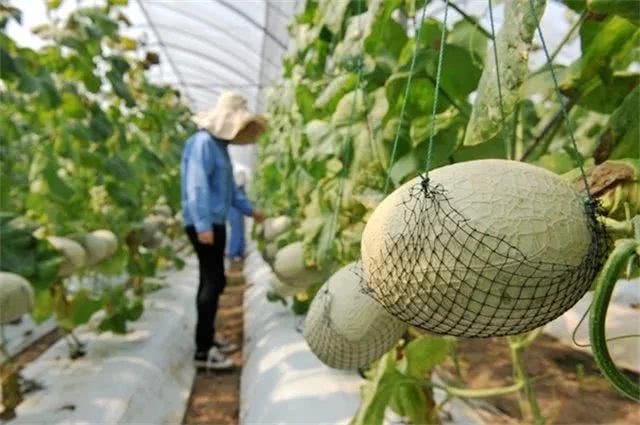
There are as many as 180 or more varieties of Hami melon. The rind can be green or yellow, and some have a netted pattern on the surface while others do not. Its flesh is mainly orange-red and green. Some of the more prized varieties include Xizhou Mi, Black Eyebrows (with black stripes on the rind like eyebrows), Huangdanzi, Hongxincui, Huangjinlong, and Jiashi melon. When a Hami melon is freshly picked, the flesh is relatively crisp and juicy; after being stored for a period of time, it becomes soft, tender, and delicious, with a rich fragrance filling the air. It is said that the aroma of Hami melon can be divided into milky, fruity, and wine-like notes. It stands out among melons and is called the "king of melons."
Today, Hami melons can be grown not only in Hami, but also in places across the country with suitable climates. Some fruit farmers have developed Hami melon planting bases into pick-your-own orchards, making full use of people's curiosity about Hami melons and achieving good economic returns. Dear readers, do you like this sweet-as-honey "king of melons"?
Text/Hemu Report, Images/Internet
If you like Hemu's articles, you are welcome to follow