A full ranking of the nine great immortal herbs, and you might already have one of them
When it comes to immortal herbs, perhaps everyone only knows about things like He Shou Wu and lingzhi. Among them, there are nine great immortal herbs in Chinese history, and it is said that these nine great immortal herbs can truly bring the dead back to life. Today, what I want to share is an article about the ranking of China's nine great immortal herbs. Let's take a look together. The "nine great immortal herbs" name comes from the Taoist classic "Daozang" from the Kaiyuan era of the Tang Dynasty. The Taoist classic "Daozang" lists Dendrobium officinale, Tianshan snow lotus, 3-liang ginseng, 120-year He Shou Wu, 60-year Poria cocos, deep-mountain lingzhi, sea pearl, Chinese cordyceps, and others as China's nine great "immortal herbs."
01
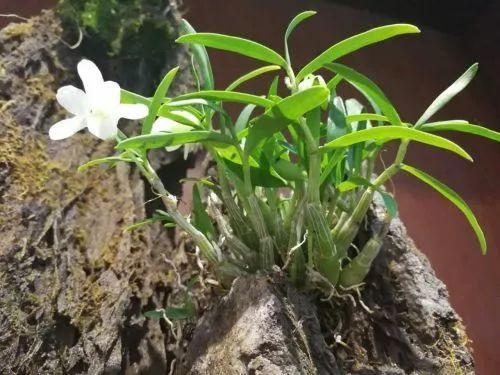
Dendrobium officinale
The biological habits of Dendrobium officinale are mysterious and unfathomable. It grows in the shaded places of cliffs and precipices, and ancient people often collected it by hanging ropes down cliff faces or shooting arrows. Dendrobium officinale is exposed year-round to the spiritual energy of heaven and earth and absorbs the essence of the sun and moon, making it a supreme health tonic. More than 1,000 years ago, during the Kaiyuan era of the Tang Dynasty, the Taoist medical classic "Daozang" ranked Dendrobium officinale first among China's nine great immortal herbs.
Dendrobium officinale (black-joint grass) is currently the species with the highest economic value among plants in the Dendrobium genus. Its uses are mainly medicinal and as a health product. Products made from it include "Tiepi Fengdou," with an international market price of 1,300-3,600 US dollars per kilogram ("dragon-head phoenix-tail type" Tiepi Fengdou), Tiepi Fengdou crystals (a health drink), Tiepi Fengdou capsules, and Yangyin Yiqi capsules.
Medicinally, Dendrobium officinale has the effects of promoting body fluid production, quenching thirst, relieving pain, and eliminating edema. It mainly treats conditions such as yin deficiency with fever, dim vision, weak stomach, hoarseness, diabetes, acute and chronic pharyngitis, chronic bronchitis, tuberculosis, chronic liver disease, chronic atrophic gastritis, low immune function, and fatigue syndrome. It has special therapeutic effects on vocal cord fatigue and restoring a beautiful voice, and has important value for development and cultivation.
02
Tianshan snow lotus
Tianshan snow lotus, also known as "snow lotus flower," is called "Tagyilis" in the local Uyghur language. It is a perennial herbaceous plant in the Asteraceae family, genus Saussurea. It is a rare and precious Chinese herbal medicine unique to Xinjiang; it grows on cliff faces and in ice-polished rock crevices at an altitude of about 4,000 m in the Tianshan Mountains; the climate there is extremely cold, with snow that does not melt all year round, and ordinary plants simply cannot survive, yet snow lotus can stand proudly against frost and snow and grow tenaciously in severe cold of dozens of degrees below zero and in an oxygen-poor environment with thin air.
This unique survival habit and distinctive growing environment make it naturally rare and create its unique pharmacological effects and magical medicinal value - snow lotus roots, stems, and leaves are rich in alkaloids, flavonoids, volatile oils, lactones, steroids, polysaccharides, and reducing substances, while its flower buds are even richer in trace elements and amino acids, with effects such as activating blood and unblocking collaterals, dispelling cold and removing dampness, and nourishing yin and strengthening yang, and can treat all cold syndromes. People revere snow lotus as the "king of a hundred herbs" and the "finest of medicines."
03
Ginseng
Ginseng prefers shady, humid, and cool climates and has strong cold resistance. It is a Tertiary relict plant and also a precious Chinese medicinal material. It is famous at home and abroad as the first of the "Three Treasures of the Northeast" and has a long history of medicinal use in China. In the Ming Dynasty, Li Shizhen recorded in "Compendium of Materia Medica": "Ginseng can treat all deficiency syndromes in men and women, spontaneous sweating and dizziness, headache and nausea, blockage syndromes, chronic diarrhea and long-standing dysentery, frequent urination, strangury and fatigue, internal injury and stroke, heatstroke and paralysis and fistula, vomiting blood, coughing blood, bleeding below, bloody strangury, flooding and spotting, and various diseases before and after childbirth."
In modern traditional Chinese medicine, ginseng is commonly used to tonify qi and rescue from collapse, nourish blood and restore the pulse, nourish the heart and calm the spirit, promote body fluid production and quench thirst, tonify the lungs and relieve asthma, strengthen the spleen and stop diarrhea, and expel toxin and heal sores. It is said that 3-liang ginseng has the effect of bringing the dead back to life.
04
Century-old He Shou Wu
It tonifies the liver and kidneys, benefits essence and blood, and strengthens tendons and bones. He Shou Wu can improve signs of aging in older adults, such as white hair, tooth loss, and age spots. It can promote the improvement of human immunity and inhibit the deposition of "lipofuscin," which can make people age, in the body's organs.
He Shou Wu can also dilate the coronary arteries of the heart, lower blood lipids, and promote the production of red blood cells, so it has preventive effects on coronary heart disease, hyperlipidemia, anemia in older adults, brain decline, and signs of premature aging. It is even said that 120-year He Shou Wu has the effect of restoring youth.
05
60-year Poria cocos
Poria cocos is a fungal plant parasitic on pine roots. Its shape resembles a sweet potato, with a dark brown outer skin and a white or pink interior. It is used in traditional Chinese medicine and has diuretic and sedative effects.
Functions and indications: drains dampness and promotes urination, benefits the spleen and harmonizes the stomach, and calms the heart and soothes the spirit. Treats difficult urination, edema and distention, phlegm-fluid cough and counterflow, vomiting and retching, diarrhea, spermatorrhea, strangury and turbidity, palpitations, and forgetfulness.
06
Deep-mountain lingzhi
Since ancient times, lingzhi has been regarded as a symbol of auspiciousness, wealth, beauty, and longevity. It is known as the "immortal herb" and "auspicious herb." Traditional Chinese medicine has long regarded it as a precious Chinese herbal medicine for nourishing and strengthening the body and supporting the vital foundation. Folk legend says lingzhi has the effects of bringing the dead back to life and granting immortality.
The "Shennong Bencao Jing" from the Eastern Han period and the "Compendium of Materia Medica" by the famous Ming Dynasty physician and pharmacologist Li Shizhen both contain detailed and extremely affirmative records of lingzhi's effects. Modern medicine proves that lingzhi has a bidirectional regulatory effect on the human body. The diseases it treats involve the cardiovascular and cerebrovascular, digestive, nervous, endocrine, respiratory, and motor systems, and it has especially significant preventive and therapeutic effects on tumors, liver lesions, insomnia, and aging.
Modern pharmacology and clinical practice have further confirmed the pharmacological effects of lingzhi and confirmed that lingzhi polysaccharides are the main components by which lingzhi supports the vital foundation, nourishes and strengthens the body, and prolongs life.
07
Sea pearl
Pearl is an organic gemstone and has been regarded by people as a rare treasure since ancient times. According to research in geology and archaeology, pearls already existed on Earth 200 million years ago. China is one of the earliest countries in the world to use pearls.
As early as more than 4,000 years ago, pearls were treasures in China's imperial court. The "Mingyi Bielu" from the Wei and Jin periods listed pearls as an important medicinal material for treating diseases and clarified the medicinal effects of pearls. In "Rihua Zi Bencao," it is recorded that pearls "calm the heart and brighten the eyes." "Bencao Yanyi" says: "Removes fright and heat in children." "Bencao Huiyan" says: "Calms the heart, stabilizes the will, soothes the soul, resolves toxin accumulation, transforms malignant sores, and closes internal ulcerations." In "Huainanzi" by Liu An of the Han Dynasty more than 2,000 years ago, it is recorded: "The pearl of the bright moon is the disease of the snail and mussel, and it is my benefit."
08
Chinese cordyceps
Chinese cordyceps, also known as winter worm summer grass or cordyceps, is a composite of the stroma and larval corpse of the fungus Cordyceps sinensis in the family Clavicipitaceae parasitizing the larvae of insects in the family Hepialidae.
Chinese cordyceps mainly grows in high-altitude forest meadows or grasslands; due to soil conditions, Chinese cordyceps growing in forest meadows is mainly dark yellow-brown in color, while Chinese cordyceps growing on grasslands is mainly yellow-brown; the former is mostly produced in Sichuan, Yunnan, and Gansu, while the latter is mostly produced in Tibet, China and Qinghai.
Chinese cordyceps is a traditional precious tonic Chinese medicinal material and, together with natural ginseng and deer antler velvet, is listed as one of the three great tonics. Its medicinal nature is mild, and it can be eaten in all four seasons. It is suitable for the old, the young, the sick, the weak, and the deficient, and has broader medicinal value than other types of tonics.
09
Cistanche
Also known as Dayun, it is mainly produced in Alxa League of the Inner Mongolia Autonomous Region. Traditional Chinese medicine calls it earth essence or golden bamboo shoot. It is an extremely precious Chinese medicinal material and has long been known as the "desert ginseng." Historically, it was used by various countries of the Western Regions as a precious tribute to the imperial court. Cistanche has a long history of medicinal use. It is sweet and warm in nature, salty and moist in quality, and has the characteristics of tonifying yang without dryness, warming and unblocking kidney yang and tonifying kidney deficiency; and tonifying yin without cloying, moistening the intestines and unblocking the abdomen to treat constipation. Precisely because its tonifying nature is gentle, it has the name Cistanche (congrong, suggesting "unhurried").
In recent years, the medical field has used modern scientific methods to conduct laboratory analysis of Cistanche. The results show that Cistanche contains trace alkaloids and crystalline neutral substances, and indeed has the effects of treating cold pain in the waist and knees, female infertility, neurasthenia, and hearing loss. It also has the effect of lowering blood pressure and can be used as a hemostatic medicine for cystitis, bladder bleeding, and kidney bleeding.
Knowledge supplement:
What is immortal herb: Immortal herb, also known as fairy grass and grass jelly herb, is an annual herbaceous perennial-root plant. One planting can provide benefits for many years. It can reach 100 cm in height; leaves are opposite, and it blooms in late autumn. It grows along ditches and in clumps of grass in dry sandy areas.
The verticillaster inflorescences are arranged in a terminal raceme-like form, 2-8 cm long; the corolla is white or slightly red, 3-3.5 mm long, with a broad upper lip bearing 4 teeth, the middle 2 teeth inconspicuous, and a boat-shaped lower lip. It has the functions of clearing summer heat, relieving fever, and promoting urination.
The dietary therapy value of immortal herb
Mainly treats heatstroke, heat toxin, wasting-thirst, hypertension, kidney disease, diabetes, joint and muscle pain, gonorrhea, acute rheumatic arthritis, colds, jaundice, acute nephritis, diarrhea, dysentery, and others.
The effects and actions of immortal herb
Family: Lamiaceae Labiatae
Scientific name: Mesona Procumbens Hemslev (Mesona Chinensis BenTH)
Aliases: immortal herb uncle, fairy grass, fairy jelly, grass jelly herb.
Morphological characteristics: annual or overwintering herbaceous plant. Stems square, brown or purplish red, hairy. Leaves opposite, each leaf ovate-oblong, with serrate margins and short petioles. Blooms pale purple flowers in autumn, with verticillasters arranged in racemes, terminal or axillary. Achenes tiny, obovate.
Harvest period: collect the whole plant in summer and autumn, wash clean, and dry in the sun.
Used part: whole plant.
Nature, flavor, and meridian entry: sweet and bland in flavor, cool in nature. Enters the spleen and kidney meridians.
Effects: clears summer heat and relieves fever, clears heat and drains dampness.
Actions: wasting-thirst, hypertension, heatstroke, colds, muscle pain, joint pain, kidney disease, heat toxin in the viscera, venereal disease.
Usage and dosage: 18.8-112.5 grams, decocted in water for oral use.
Cautions for use: do not use for those with wind-cold colds.
Growth habits: grows naturally in plains and at the foot of mountains, mostly cultivated as a raw material for green herb tea.
Application of Kampo formulas:
1. Hypertension
Kampo formula: immortal herb 75.0 grams, water celery 75.0 grams, bitter melon root 75.0 grams, rock sugar 37.5 grams.
Usage: decoct 8 bowls of water down to 3 bowls, add rock sugar and stew until dissolved, then take in 3 divided doses.
Kampo formula: immortal herb 75.0 grams, Shi Yao 75.0 grams, Han Ke Cao 18.8 grams.
Usage: 6 bowls of water, decoct down to 2 bowls, take in 2 divided doses.
2. Hundred-herb tea
Kampo formula: immortal herb 37.5 grams, Huanghua Mi Cai 37.5 grams, Phoenix-tail grass 37.5 grams, Shibi Huang 18.8 grams, Pao Zai Cao 18.8 grams, appropriate amount of rock sugar (or add 37.5 grams of nine-layer tower)
Usage: decoct 10 bowls of water down to 5 bowls, remove the residue, add rock sugar and dissolve, then put in the refrigerator and drink cold as green herb tea.
Kampo formula: immortal herb 37.5 grams, Huanghua Mi Cai 37.5 grams, Xianfeng grass 37.5 grams, large seven-layer tower 37.5 grams, Phoenix-tail grass 18.8 grams, mulberry twig 18.8 grams.
Usage: 8 bowls of water, after bringing to a boil, simmer over low heat for 1 hour, remove the residue, add rock sugar and dissolve, wait until cool, put in the refrigerator to chill, and drink as green herb tea.
3. Wasting-thirst, hypertension, obesity
Kampo formula: immortal herb 37.5 grams, Xianfeng grass 37.5 grams, stevia 6-10 leaves
Usage: 5 bowls of water, decoct down to 2 bowls, take in 2 divided doses.
4. Asthma in older adults
Kampo formula: immortal herb 30.0 grams, mulberry leaf 11.3 grams, loquat leaf 11.3 grams, Achyranthes bidentata 18.8 grams, red chicken-dung vine 18.8 grams, Jianweifeng 18.8 grams.
Usage: 3 bowls of water, decoct down to 1 bowl; decoct the residue with 2.5 bowls of water down to 8 fen; take once after breakfast and once after dinner.