This flower blooms from spring to autumn, survives wherever you toss it, is pretty and easy to grow, and can be planted in both the north and the south.
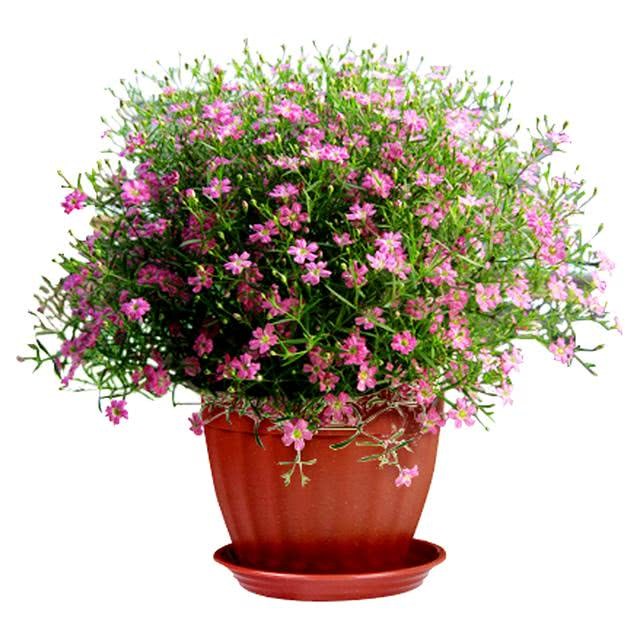
When it comes to flowers that are both beautiful and easy to grow, baby's breath should not be overlooked. The flower language of baby's breath - longing, purity, dreams, true love. It is a favorite of those with elegant tastes.
Baby's breath blooms continuously from spring to autumn; though the flowers are tiny, the flowers and leaves set each other off, like twinkling stars all over the sky, elegant and quietly refined, with a distinctive charm, and that is how it got the name "baby's breath" (Gypsophila paniculata).
Notes on sowing baby's breath
1. First water the peat soil until damp, then sow. When watering, water thoroughly; do not just wet the surface.
2. Keep it away from light, and cover with soil (just enough to cover the seeds). Pay attention to planting depth: if too deep, the seeds will struggle to germinate; if too shallow, the seeds are exposed to light too early and also germinate poorly.
3. Cover with plastic wrap, and poke some small holes in the wrap with a toothpick.
4. Place it in a shaded, light-blocked spot, and be sure to keep it ventilated.
Care after sowing baby's breath: about 20--35 days after planting, side shoots begin to sprout from the lower part of the plant. At this point, you can keep the lower 3--4 pairs of leaves and pinch off the main growing tip to let the side branches grow so as to achieve high yields; generally keep 6--8 side branches per plant. For most varieties, it takes 70--90 days from pinching to flowering.
Like other herbaceous flowers, baby's breath seedlings grown from seed have a relatively high demand for fertilizer and water, but they are most afraid of random fertilizing, concentrated fertilizer, and one-sided application of nitrogen, phosphorus, or potassium fertilizer. You should follow the two fertilizing principles of applying dilute fertilizer frequently, using small amounts but more often, with complete nutrition, and alternating between dry and wet - when dry, dry it out thoroughly; do not water when it is not dry, and water thoroughly when you do water. Also, after fertilizing, keep the leaves and flowers dry at night. After planting out, apply fertilizer in stages: mainly nitrogen fertilizer in the early stage, and mainly phosphorus and potassium fertilizer in the later stage.