Grow home orchids well with these 4 points: leaves two fingers wide and flowers bursting full to the brim of the pot
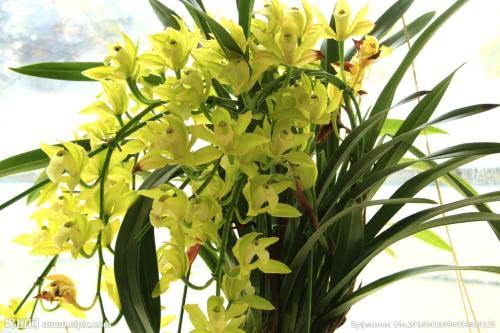
Orchid leaves are delicate and elegant, carrying a quality of simple quietness and understated noble purity. The flowers are light and subtly fragrant, full of scholarly refinement, and have very high ornamental value, making them deeply loved by many flower growers.
Growing orchids requires care and patience. Today Huajianke will introduce 4 small tips for growing orchids, so their leaves grow vigorously to two fingers wide and the flowers burst full to the brim of the pot.
1. Fertilizing
Orchids are quite sensitive to fertilizer. Applying too much causes excessive vegetative growth with no flowers, while applying too little leads to poor growth, so you need to apply "just the right amount." During the growth period, when new leaf buds emerge, apply mainly nitrogen fertilizer with phosphorus and potassium fertilizer as a supplement. Once the new shoots have grown a certain length, switch to a compound fertilizer, such as diluted cake fertilizer liquid. During the flowering period, focus mainly on phosphorus and potassium fertilizer, and apply little or no nitrogen fertilizer. About every 20 days, spray a 0.1% potassium dihydrogen phosphate solution on the leaves to encourage bud formation and flowering.
Note that when fertilizing, it is best to do it in the evening, but the next morning you should water thoroughly once.
2. Watering
Orchid potting soil should be "eight parts dry, two parts moist." Being on the drier side is more favorable for its growth and flowering. When it is relatively dry, you can spray more water on the leaves and around them to lower the temperature and increase humidity.
For water, it is best to use rainwater, spring water or mineral water. Before use, let it sit for more than 4 hours so that pollutants in the water settle out. If using tap water, first let it stand for 2-3 days to let harmful gases such as chlorine evaporate, then take the upper layer of water for watering.
3. Light
Light is an important factor for growth and the formation of flower buds. Orchids prefer shade, but they must not stay in a shaded place for a long time, otherwise they will not grow and will bloom little. In late April, you should begin simple shading for them, using reed blinds and the like, with a shading rate of about 50%. Extending light exposure is more favorable for flowering. Every half a month, rotate the pot once so that the orchid receives light on all four sides, which helps balanced growth.
4. Pruning
Orchids should be pruned from time to time. During the growth period, prune off old leaves and damaged leaves to promote the growth of new shoots. After the flowers fade, prune promptly as well to avoid excessive consumption of nutrients. After flowering, they enter a brief dormancy, which allows them to store nutrients better.
That is all for orchid care. If you have other additions, you can share them with everyone in the comment section below. To learn more about flower-growing knowledge, you can follow Huajianke!