In summer, give gardenias some shade and they will bloom more than usual
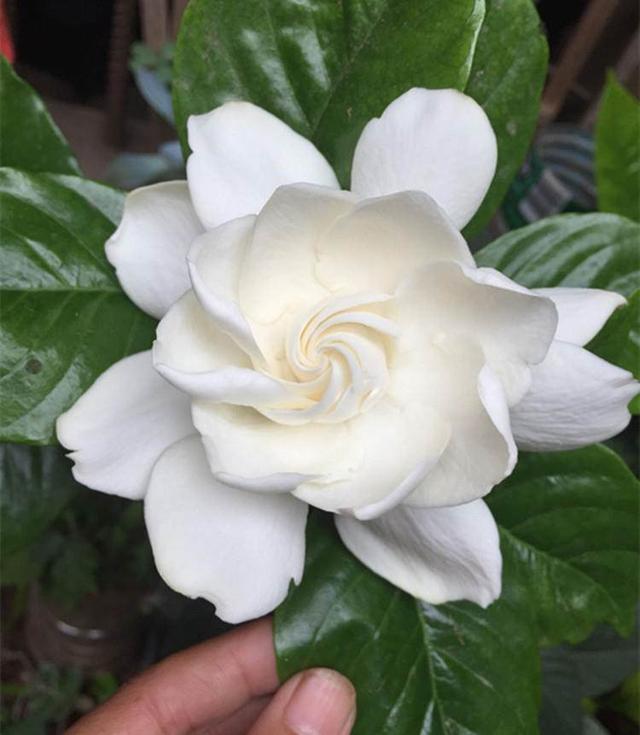
Summer is the peak blooming season for gardenias, but because summer temperatures are high, gardenias cannot be exposed to direct strong light during their blooming period. Therefore, gardeners need to give gardenias some "shade," and this way, gardenias will bloom even more than usual.
The reason gardenias need some "shade" is that their place of origin has a hot and humid climate with plenty of cloud cover, so the light is not very intense. Therefore, potted gardenias kept at home only need partial light during their blooming period.
Generally, summer sunlight is abundant. When gardenias are placed on an outdoor balcony or in a courtyard, they must be covered above with a light-permeable reed screen or bamboo screen to create diffused light. Under diffused light, gardenia flowers are purer white in color, the blooming period lasts longer, and the fragrance is also stronger and longer-lasting.
If gardenias are exposed to direct sunlight for a long time, the white flowers will turn yellow and the blooms will fade early and quickly, and the fragrance will not last. So gardeners should, according to the characteristics of gardenias, give them some "shade" in summer, that is, provide shading treatment, to benefit their growth and development. To fill the room with gardenia fragrance, move the plant indoors as soon as the flower buds begin to open, and place it in a bright, well-ventilated spot.
In addition, moving gardenias indoors during their blooming period can extend the flowering period, because at the turn of spring and summer, indoor temperatures are generally lower than outside and evaporation is also less. Gardeners should be careful to water appropriately; at the same time, after the flowers fade, replenish nutrients for the gardenia right away. Use a general-purpose organic nutrient solution for flowers, dilute it 500 times and water it in, then move the plant back outside to receive sunlight for care.
When caring for gardenias in summer, besides paying attention to giving them some "shade," watering is also very important. Watering potted gardenias is generally determined by the season, the temperature, the dryness or moisture of the potting soil, and whether the plant is growing or dormant, which together determine the frequency and amount of watering.
For gardenias kept indoors, if the temperature is not high, water once or twice a week according to how dry or moist the potting soil is. In the hot, dry summer, be sure to water; if you are negligent and fail to water in time, in mild cases the plant will wilt and its leaves will turn yellow, and in severe cases the plant will drop its leaves and dry up. So in the hot, dry weather of midsummer, you must take careful care, paying attention to timely watering, to prevent gardenias from suffering drought due to lack of water, which affects normal plant growth.
In addition, before watering each day, gardeners should also check whether it is sunny or cloudy, windy or windless, indoors or outdoors, and whether there is direct sunlight or diffused light, and these different situations must be treated separately. During the actual watering process, if the potting soil is completely dry, the water often flows out quickly from the drainage hole at the bottom of the pot. You should water once more until the potting soil is completely soaked through.
Also, to increase air humidity, in summer the dust on gardenia leaves and branches should be rinsed off to enhance leaf photosynthesis, keep the plant tidy and attractive, and prevent the spread of pests and diseases. You should also spray and wash the gardenia leaves with water at irregular intervals.