Roses, whether grown in pots or in the ground, will keep blooming if you stick to pruning
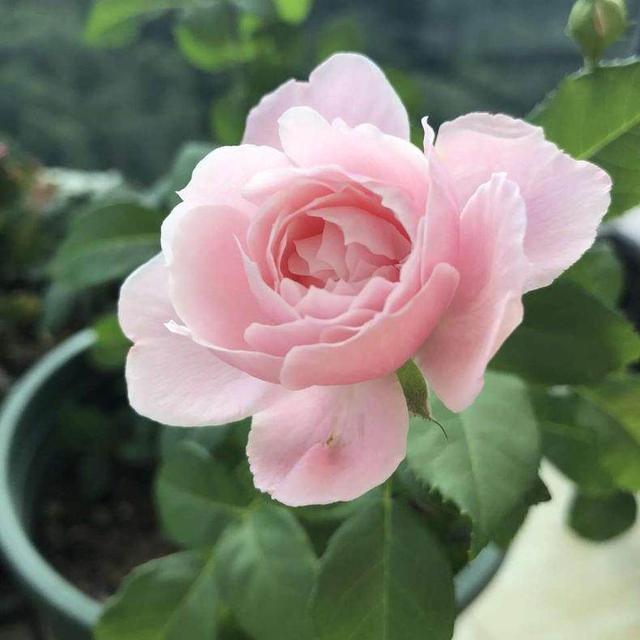
Fellow flower lovers all dream of having a small yard, growing a few flowers, tending them every day, and ideally having a pooper-scooper and a husky too - simply perfect. But reality is harsh: once you start growing roses, you're busy beyond belief with all sorts of tasks. Still, then again, when growing roses, whether in pots or in the ground, fellow flower lovers, as long as pruning is "constant," roses will keep blooming.
Fragrant Jewel - in winter I didn't prune it at all, not a single cut, and in spring I only trimmed off the dried tips. This variety has small leaves, short internodes, and blooms heavily in clusters; thin branches can bloom too. Why not prune, or why can this be considered light pruning? Its plant shape is evenly distributed, and the number of branches is abundant, so there are many options: no pruning, light pruning, or moderate pruning. The editor was lazy and didn't prune.
At this point a problem arises: a large number of dense buds will sprout, so promptly remove excessively dense buds and leaves. Gradually, as flower buds extend, blind buds and useless branches become more obvious, so get to work with the haircut and pruning - cut off all the unwanted ones. In addition, fertilize promptly, once every 7 days. If you prune frequently, you can't be lazy with fertilizing either. Generally use an organic nutrient solution specially for roses; dilute 500 times and water the roots with it.
Previously I saw a neighbor's roses; the ones they pruned had already started sprouting. The editor strongly advises absolutely not doing this. After the last wave of autumn flowers, you can cut only the spent flowers; do not prune the branches, and even more so do not cut severely. If the temperature isn't low enough, they will still sprout. Leave the branches so nutrients can flow back. Generally, pruning follows a pattern and is closely tied to the season; it's not something you do just because you feel like it.
Blue Storm - this variety, like Beatrice and Catalina, has a neat plant shape, large multi-headed flowers, and strong growth; just cut straight across, no need for much technique.
Pruning of blind buds and thin, weak, old, and useless branches: these unneeded ones can be cut off completely, don't leave half of them. The base needs ventilation and light to reduce pests and diseases, and sunlight exposure also makes it easy to produce new shoots.
When pruning, remember not to cut too far from the bud point, and don't cut the branches too short, otherwise you can easily ruin the cut. The branches should be balanced overall, otherwise growth will lean to one side. When it's about to go dormant, don't prune.
No matter what variety, when pruning be sure to pay attention: it's best to disinfect the scissors; wiping them with alcohol is also fine. If your scissors are only used for cutting roses, no problem, but if you've used them to cut all sorts of things, then pay attention. Although it's not a hard requirement, disinfecting is always good.
If you haven't disinfected, just put the plant on the balcony to sunbathe. Ultraviolet light is a great disinfectant, but be careful not to knock it off the balcony. After pruning, don't let the wounds get rained on, to avoid infection.
That's all for today's update. This brings the pruning series for common varieties to an end, but there are other series of premium content continuously updated. The editor looks forward to your company!