Orchids require careful observation through 4 stages from sprouting to blooming
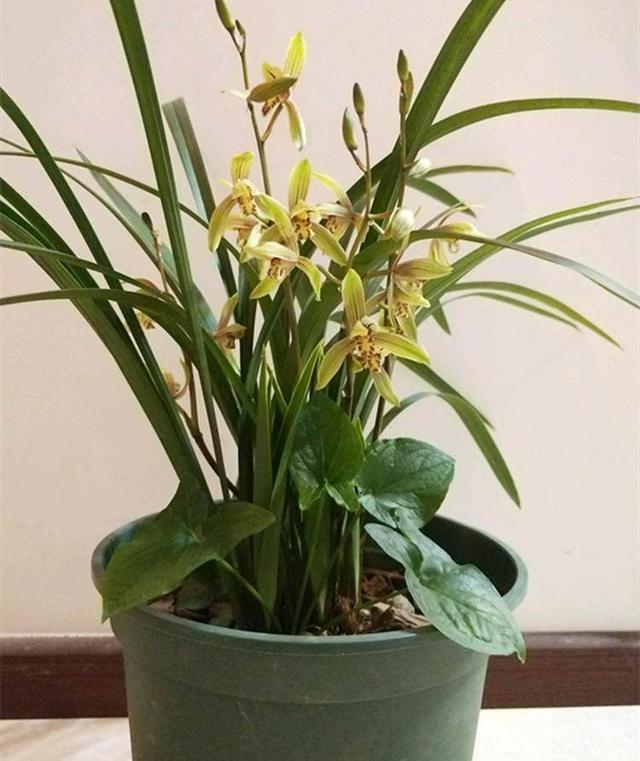
Orchids have an elegant image, and from leaves, buds, and flowers to the whole plant, they all have high ornamental value. Therefore, the main key to growing orchids lies in understanding their growth and development patterns. From sprouting, leaf growth, growth, flowering, and dormancy, all must be understood, and careful observation must be carried out at each stage.
Generally in early March, when the temperature is 13-17°C, spring orchids (Cymbidium goeringii) bloom; in late May, when the temperature is about 23°C, new buds begin to grow, lasting until August; after late August, when the temperature is around 32°C, flower buds emerge and grow until November, when the temperature is about 18°C. From late November to February of the following year is the relative dormancy period of the flower buds, when they no longer grow, until they bloom in March. Therefore, the following stages require careful observation by orchid growers.
1. Flower bud growth period: from August to March of the following year, with a dormancy period of more than 2 months in between; the main growth period is in spring;
2. The growth of leaf buds and new pseudobulbs mainly occurs in summer, with a small amount in autumn, and winter is the dormancy period. Cymbidium faberi is slightly later than Cymbidium goeringii: flower buds begin to grow in late March, and the full bloom period is in mid-to-late April; from early July to the end of September is the growth period for new buds and new leaves; flower bud differentiation occurs in early March, unlike Cymbidium goeringii, which differentiates in September to October, and after the flower buds emerge there is no relative dormancy period; from winter to the Beginning of Spring is the dormancy period for Cymbidium faberi.
3. Orchid growth in general areas is 1-2 weeks later than in the lower reaches of the Yangtze River, or more; if orchids are cultivated in a greenhouse, due to the higher temperature, the growing season may even be earlier than in the lower reaches of the Yangtze River.
4. The new buds and new leaves of Cymbidium ensifolium, Cymbidium sinense, and Cymbidium kanran all grow in spring and summer; after the flower buds emerge, none of them has a relative dormancy period. Among epiphytic orchids, Cymbidium hookerianum blooms in winter and spring, and Cymbidium iridioides blooms in autumn and winter, but their vegetative growth, that is, the growth of new buds and new leaves, occurs from late spring to summer; generally, they undergo a brief dormancy after flowering.
Understanding these basic patterns of orchid growth and development at these stages helps orchid growers control water and fertilizer management during the orchid dormancy period.
The fertilizers generally applied to orchids can be divided into 2 types: base fertilizer and liquid fertilizer. Base fertilizer is a small amount of fermented pig and sheep manure, crushed bean cake, hoof and bone fragments, etc. mixed into the soil. In fact, when growing orchids, base fertilizer is used very little; generally, liquid fertilizer, also called water fertilizer, is used more often.
For liquid fertilizer, it is recommended to use an organic nutrient solution specially formulated for orchids, made from sugarcane residue through full fermentation. When using it, take the liquid, dilute it with water at 500 times, and apply it when the leaf buds have grown to 4-5 cm and the potting soil is slightly dry, once every half month. Stop fertilizing during the plum rain season, and from July to September it can be applied once every 10 days.
For orchid fertilization, mainly use dilute liquid fertilizer: "It is better to apply frequently and lightly, and avoid sudden heavy applications." The number of applications can be more or less, but the amount should be light; apply it to the root zone with a watering can that pours evenly, to prevent contamination of the leaf surface. The best time to fertilize is during the peak growth period, generally starting in early May, applying dilute fertilizer once every 2-3 weeks until the end of September, with good results.
Cymbidium goeringii can be given a somewhat stronger concentration, while autumn orchids should be given a lighter one. Before flowering, during the dog days, and during the winter dormancy period from December to February of the following year, fertilization is not suitable. In early September, apply dilute fertilizer once to Cymbidium goeringii; in late September, apply strong fertilizer once to autumn orchids.