What to do when pothos leaves turn yellow and wilt in summer? Learn these few tricks and it recovers in 3 days
As soon as summer arrives, pothos leaves turn yellow and wilt. Learn these few tricks and it will be back to full health in 3 days!
Recently the temperature has kept rising, and even people feel listless, let alone delicate flowers. I wonder how the flowers at your home are growing. Recently quite a few friends who grow flowers have told me that their Chinese roses, money trees, kalanchoes and gardenias have all started to wilt, which is really distressing. Today Huahua will teach everyone how to avoid and solve this problem!
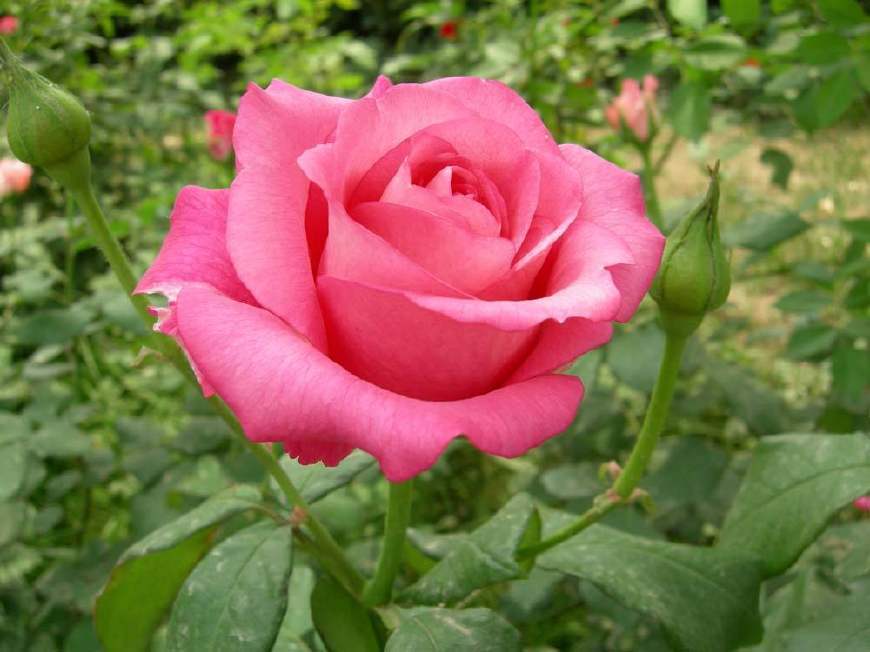
Chinese rose. When summer first begins, the new branches and tender leaves of the Chinese rose start to wilt a little. There are 3 main reasons: 1. Waterlogged roots. Watering too much at once, or rain being too heavy without promptly clearing the standing water in the pot, means the roots cannot breathe and rot, and the leaves cannot absorb enough nutrients, so they wilt and drop. Solution: give the flower a different environment, that is, change the pot and the soil. First take the flower out of the pot, being careful to protect the roots and stems, clear away the soil and the rotted roots and stems, then soak the roots and stems in carbendazim or diluted potassium permanganate to disinfect and sterilise. Then dry the roots and stems in a shady place, transplant into a new pot, and fill in a prepared nutrient soil. Note that at this time you should water thoroughly, place it in a ventilated spot to adapt for a few days, and then the flower can be cared for normally. 2. Branches and leaves too dense. Solution: first, give the flower a larger living environment; after watering and ventilating to let it adapt as described, care for it normally; second, cut off the excess branches and leaves to give the flower enough space, then mist the leaf surface with water at suitable times each day. 3. Stem sawfly damage. Solution: promptly dispose of the diseased branches and leaves, prepare 25% imidacloprid or diluted abamectin and spray it on the affected parts; after three or four consecutive applications the situation will improve.
Money tree. The money tree is very easy to care for; when problems appear it is usually a matter of how much you water, too much and the roots suffocate and rot, too little and it easily dries out. Solution: this plant cannot be watered every day, you must get the balance right. If you do not know the specific timing, you can regularly feel the soil in the pot, and when there is still moisture, do not water. To avoid the leaves becoming too dry, you can mist water around the flower pot with a spray bottle to maintain air humidity, twice a week is enough.
Kalanchoe. Kalanchoe does not like water and prefers dry conditions, likes light, and is relatively easy to grow. The most common problem is flower buds dropping, usually because there is not enough sunlight or because overwatering has caused standing water! 1. Insufficient light. First check whether the roots have rotted; if not, it is usually lack of light causing the wilting and dropping. Solution: place it in a spot with plenty of light, such as a south-facing balcony, but avoid direct sun at midday when the sun is strongest. You can also use a spray bottle around the leaves to keep them moist; when spraying, be careful to keep a certain distance from the flower buds. 2. Standing water and root rot. Solution: replace with a new flower pot and soil. Here there are 2 points to note: 1. Do not rush to repot a newly bought flower, as the roots are quite fragile at this time; you can wait a while before repotting; 2. When changing the soil, do not press the soil down firmly, leave space for the roots to breathe; after repotting, do not expose it to strong sunlight, you can first put it in a sheltered spot on the balcony for a few days.
Gardenia. Gardenia leaves transpire quickly, especially large-leaf gardenia, which needs a highly humid environment to stay fresh and bright; once it leaves this environment it easily wilts. Solution: mist water around the flower pot twice a day, morning and evening, to maintain humidity; be careful to prune overly dense branches and leaves to maintain ventilation. The watering frequency for gardenia can be kept at once a day, but the soil must have good aeration and ventilation to avoid too much standing water and waterlogged roots.
Pothos. To grow pothos, keep it in a cool environment and avoid direct strong light. Another point is to check whether watering is appropriate; although pothos likes water, if conditions are unsuitable it will still wilt. Solution: 1. Pothos can be grown in pots or in water; here we only discuss potted plants; just keep the soil in the pot moist, with a watering frequency of once every five or six days being best, to avoid standing water. 2. Pothos likes shade; be careful not to place it in direct sunlight, you can put it in a bright indoor spot. 3. Be careful to maintain ventilation; when the leaves grow too long, do not be reluctant to cut them, prune promptly.
Jasmine. Jasmine is fragrant and its flowers can also be used to make tea, so many people like to grow jasmine. Jasmine needs light; the better the light, the more splendid the flowers. But in the high-temperature environment of summer, it very easily develops wilting leaves, and at this time you must pay special attention to whether there is root rot! Solution: 1. When jasmine first arrives at your home, it likewise needs time to adapt to the new environment; at this time you must be ruthless and cut off the poorly growing flower branches to avoid insufficient nutrients; 2. If root rot appears, it is usually due to too much standing water or improper fertilising, so you will need to repot, but repotting also depends on timing, and you absolutely must not repot when it is right in the flowering period, as it very easily damages the roots, causing the leaves to wilt and the flowers to drop; 3. The newly changed soil must remain breathable; when repotting, be careful that the roots are spread out and not bunched together. Then place the flower in a well-ventilated spot, avoid sunlight, and remove the withered branches and leaves; after 10-15 days it will grow well. Finally, Xiaotu reminds everyone here that no matter what kind of flower it is, whether it likes water or tolerates drought, the common point is to maintain ventilation; once the air circulates, your flowers will grow better and better. Also pay a bit more attention to some details, and the flowers in your home will surely all be fine.