How can purple ginseng be planted to increase the survival rate?
How can the survival rate of purple ginseng be increased?
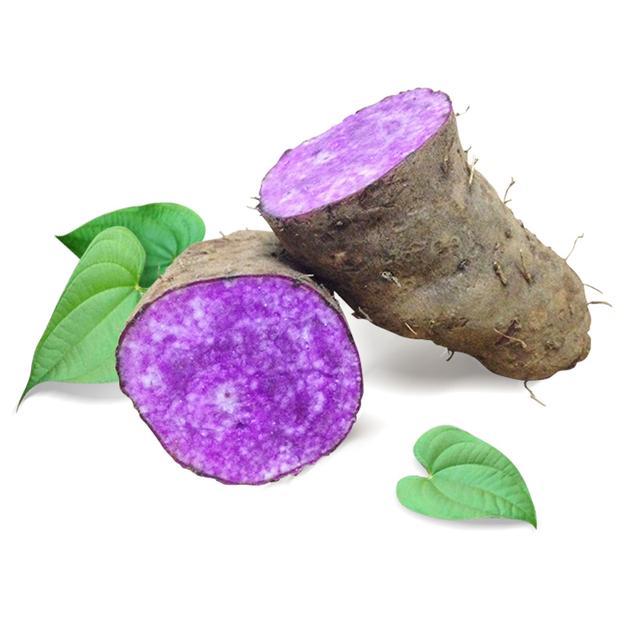
Purple yam is also called "purple ginseng". Its enlarged tuberous roots or cylindrical roots are used for food. Purple yam is rich in anthocyanins and has a wide range of uses. It can be served as a dish on the dining table and can also be used as a health-care medicinal material. Regular consumption of purple yam can lower blood pressure and blood sugar, resist aging and prolong life, strengthen the brain and improve intelligence, and enhance human immunity. As a new variety of purple yam, Xunong Purple Yam cannot, like ordinary white yam, purify and rejuvenate its excellent traits by producing its own yam beans through reproduction. At present, purple yam planting all uses tuber piece propagation, and its propagation coefficient is only 10-15 times, which greatly limits the propagation and promotion of purple yam, and the survival rate and survival quality of the cultivated purple yam seedlings are relatively poor.
1. Tuber planting of purple ginseng:On April 6-10, select Xunong Purple Yam tubers weighing 60 g/piece, soak them in rooting powder No. 5 solution at a concentration of 600 ppm for 80 s, with the tubers completely immersed 3 cm below the liquid surface. After taking them out, dry the surface, and plant the purple ginseng tubers on a seedling bed. The seedling bed is composed of fine soil or nutrient soil mixed with farmyard manure, and the overall soil moisture is suitable. Plant the purple yam tubers with the head up and the tail down. The planting space for each tuber segment is 20 x 20 cm 2 . After planting, cover with soil 3-5 cm thick. During planting, evenly spray 200-300 ml of water, and thereafter evenly spray the seedling bed with 150-200 ml of water every 7 days until the end of April;
2. Preparation of purple ginseng seedlings:On May 10-25, spray the planted seedling bed with paclobutrazol powder at 6 g/mu, once every 5 days, for 3 consecutive sprays. After the purple ginseng seedlings grow to 20-25 cm, cut them close to the ground. In the same way, regularly spray paclobutrazol powder. When the seedlings reach a suitable length, cut the seedlings, and repeatedly carry out spraying and cutting for 4-5 cycles;
3. Cutting propagation of purple ginseng seedlings[Jishan Huayao]:Screen and discard purple ginseng seedlings that have no unfolded leaves, are weak and thin, or are damaged by insects. Plant the intact seedlings in a cutting shed spread with farmyard manure after the afternoon temperature is below 28°C. The cutting and planting space for each seedling is 25 x 25 cm 2 . After the seedlings are cut, spray the seedling branches and leaves with rooting powder No. 5 solution at 1.5 kg/mu. After an interval of 10 days, spray again with rooting powder No. 5 solution at 0.5 kg/mu. Coordinate temperature control by covering the cutting shed with plastic film and dry grass and by using spray cooling inside the shed, adjusting the daytime temperature to 25-30°C, the nighttime temperature to 22-25°C, and keeping humidity constant at 85-90%;
4. Growth of purple ginseng seedlings:On June 10-15, spray the leaves of the planted seedlings with paclobutrazol powder at 24 g/mu. After an interval of 10 days, spray the seedling leaves again with paclobutrazol powder at 50 g/mu to promote the root growth and development of purple ginseng. After June 20, every day after 10 a.m. and before 3 p.m., open the plastic film and dry grass covering the cutting shed to ensure that the purple ginseng seedlings can carry out sufficient photosynthesis. After September 20, remove the plastic film and dry grass on the shed to allow the seedlings to grow freely and normally. Between June 10 and September 20, through the plastic film and dry grass on the cutting shed and spray cooling inside the shed, coordinately maintain the temperature in the shed at 25-28°C and the humidity at 85-90%, to promote the growth and development of yam stems and leaves. On September 20-22, spray the purple ginseng with a solution composed of DA-6 and yun alcohol milk powder mixed at 1:1 at 25 kg/mu. After 5 days, spray again with a solution composed of DA-6 and yun alcohol milk powder mixed at 2:1 at 15 kg/mu to promote yam growth;
5. Harvest of purple ginseng:On October 15-30, after the purple ginseng matures, dig out the purple ginseng tubers, dry the surface, and store them indoors at a temperature of 10-15°C and suitable humidity.
Conclusion;
(1) By adopting cutting propagation of purple ginseng seedlings after cutting the seedlings, preserving heat and moisture, and spraying pesticide to promote seedling rooting and sprouting, the seedling production and the quality of seedling cultivation of purple ginseng are effectively ensured. No trellis materials are needed, significantly reducing the input cost of seedling site facilities; (2) The present invention reasonably screens the cut purple ginseng seedlings, changing the low efficiency caused by selecting and pruning strong seedlings during traditional seedling cultivation. By cutting first and then screening, it facilitates the growth and replacement of seedlings, helps select healthy and sturdy seedlings for cultivation, and ensures the later growth quality of purple ginseng; (3) Through tuber planting, the present invention reasonably designs the growth space for yam tubers. By covering the cutting shed with plastic film and dry grass and using spray cooling inside the shed, the temperature and humidity of the soil are adjusted to ensure that the tubers sprout and produce seedlings as quickly as possible. During the seedling growth stage, fertilizer is used reasonably, effectively increasing the propagation coefficient of purple ginseng. During the growth process of yam seedlings, by applying fertilizer multiple times and in appropriate amounts, continuous and effective fertilizer support is provided for seedling growth, ensuring the survival rate and survival quality of purple ginseng seedlings, and effectively promoting the propagation and promotion of purple ginseng. The propagation coefficient of seedling cultivation by this method is 35 times, and the rooting rate, survival rate, and tuber-setting rate are all above 83.6%.