Detailed Explanation of Cucumber Greenhouse Cultivation Techniques and Key Points of Vegetable Planting
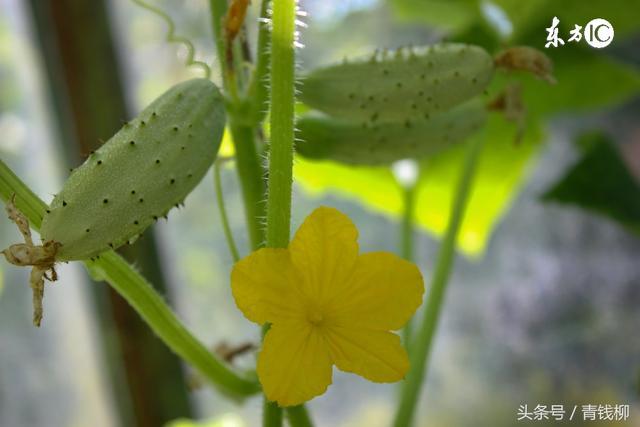
Cucumber Greenhouse Cultivation Techniques in Vegetable Cultivation Techniques
Cucumber is the vegetable type with the best economic returns in greenhouse cultivation. Generally, using greenhouses to cultivate early spring cucumbers can bring them to market 40-50 days earlier, with a yield of over ten thousand jin per mu. People summarize the management techniques for early spring cucumbers in greenhouses as "one water, two fertilizers, three air exchanges" - that is, using water to regulate the temperature and humidity inside the greenhouse; relying on fertilizer as the foundation, applying sufficient base fertilizer and timely topdressing; according to the cucumber's requirements for greenhouse temperature and humidity, ventilating and exchanging air promptly, thereby achieving early maturity and high yield of cucumbers. The key points of its cultivation techniques are as follows:
(1) Selecting suitable varieties
For greenhouse cultivation, early-maturing and cold-tolerant varieties such as Xiangchun No. 2, Xiangchun No. 3, Jinyan No. 4 and Jinlv No. 2 should be selected.
(2) Sowing early and cultivating strong seedlings
The sowing period is best in mid-to-early February, using a fermentation-heated electric heating hotbed for seedling cultivation. Sow the seeds after soaking and germination promotion evenly on the seedbed, cover the seeds with culture soil, then water thoroughly, and cover with plastic film. Before seedlings emerge, the greenhouse should not be ventilated. After seedlings emerge, remove the plastic film, ventilate to lower the temperature, and prevent seedlings from growing leggy. When seedlings reach the two-cotyledon-one-true-leaf stage, transplant them into nutritional paper pots, two plants per pot, water well to settle the soil, appropriately raise the greenhouse temperature, and after the seedling recovery period, ventilate to lower the temperature again.
(3) Timely transplanting and preventing low temperatures in the early stage
Cucumber seedlings can be transplanted when they are 40-50 days old and have 4-5 true leaves. In our province, the transplanting period is from late March to early April, and hardening off should be carried out one week before transplanting. After transplanting, if low temperatures occur, effective measures should be taken to protect against cold and ensure the transplanted seedlings are free from frost damage.
(4) Applying sufficient base fertilizer and rational close planting
For each standard greenhouse (4X20 sq m), before plowing, apply 1500 kg of barnyard manure, 15 kg of compound fertilizer, and 15 kg of rapeseed cake. Prepare the land and make beds, with a bed width of 1 m, double-row planting, plant spacing of about 40 cm, 2200 holes per mu, two plants per hole.
(5) Field management
1. Timely ventilation and air exchangeGenerally, do not ventilate for 5-7 days after transplanting. When entering the fruiting stage, prevent high temperatures. High temperatures inside the greenhouse make plants prone to leggy growth and reduce female flowers. Measures to control high temperatures are: first, ventilation and air exchange; second, irrigation to increase humidity. The principle of ventilation is: first small ventilation, then large ventilation; ventilate early on sunny days, ventilate late on cloudy days; ventilate heavily with south winds, ventilate lightly with north winds. In short, in the early stage of cucumber growth, prevent excessive ventilation; in the middle and late stages, avoid insufficient ventilation.
2. Scientific topdressingBefore and after cucumber harvest, topdressing and irrigation should begin. Topdressing is carried out in stages. The first topdressing is mainly organic fertilizer, generally applying 100 kg of rapeseed cake and 10 kg of superphosphate per mu. After that, topdressing is mainly quick-acting fertilizer, with chemical fertilizer and human manure/urine applied alternately. Usually once a week, the topdressing amount per mu is about 2500 kg of human manure/urine and 35 kg of chemical fertilizer.
3. Trellising, vine tying and pinchingAfter cucumber seedlings recover, supports should be set up. The supports for cucumber cultivation in plastic greenhouses mainly use plastic fiber straps. While setting up supports, vines should be tied promptly, tying vines 4-5 times consecutively. The regenerative ability of axillary buds on cucumber leaves is strong, so plant adjustment methods should be adopted to extend the fruiting period and promote more "returning melons" in the middle and lower parts. Generally speaking, for varieties that mainly bear fruit on the main vine, some tendrils should be removed promptly before harvest, and pinching can be done when the main vine reaches 20-25 nodes. For varieties with strong growth vigor and many side vines, all side vines below the root melon should be removed; other upper side vines should retain 1-2 leaves in front of the first female flower and be pinched promptly.
4. Pest and disease controlCucumber pests include cutworms and yellow squash beetles. Cutworms can be caught manually or sprayed with 800 times dilution of trichlorfon before the third instar. Yellow squash beetles can be sprayed with 800 times dilution of trichlorfon. Diseases include fusarium wilt, downy mildew and powdery mildew, etc. Control methods include: (1) drenching roots with 1000 times dilution of dexon; (2) spraying with 150-250 ppm agricultural streptomycin; (3) prevention with half-strength Bordeaux mixture.