You do not have to spend money on soil for succulents; mixing your own works just as well for healthy growth
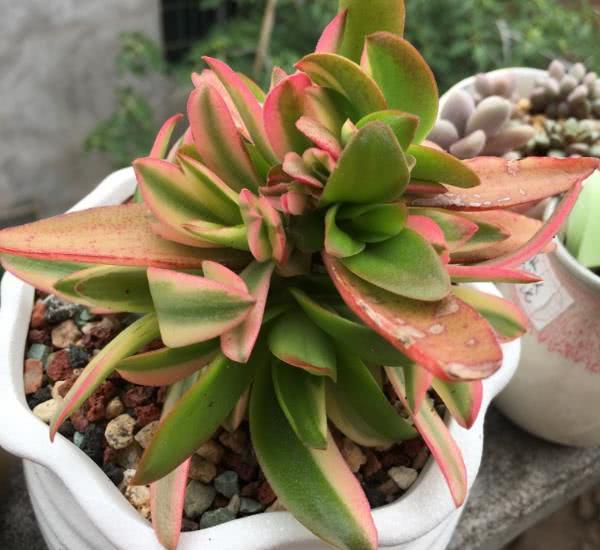
Because summers are always hard to get through, granular soil with better aeration and drainage has increasingly become the mainstream, and its proportion keeps rising. This is only a trend, but everyone will always want to pursue the soil mix that suits their own succulents best. The text below does not give a formula, but it does give a methodology. In mixing media, besides matching the characteristics of the plant species, the proportions also need to be adjusted according to the growing environment and care habits.
The simple soil-mixing media are two things everyone can find everywhere: coal cinders and sand. Among the several factors that affect succulent growth, the biggest variable should be the soil. Because in nature, affected by light, temperature, wind and moisture, and sometimes even by the succulent species and the material of the pot, the soil-mixing media will all be different.
Mix according to different growth stages. Succulent soil mix: 2 parts garden soil, 1 part leaf mold, 4 parts coarse sand, 1 part lightweight material, half a part rice husk ash (suitable for growing ordinary terrestrial types), such as vermiculite; mix according to different species. For terrestrial types with higher requirements for soil drainage and aeration and with underdeveloped root systems, coconut coir, etc.
No matter what kind of medium is used to mix the soil, the important thing is to follow aeration. Only when the soil is loose and not prone to clumping will there be good aeration. Use soil that is itself very loose, for example: humus soil and black charcoal soil; you can add coal cinders or volcanic rock, which have many fine pores that can enhance aeration. Artificially add relatively loose media, for example: wood shavings and rotten leaves.
We should pay attention to pest prevention in ordinary times, especially for succulents that have not been repotted for a long time, as the soil is very prone to breeding insects. When repotting succulents, flower lovers can change the soil at the same time. Soil used for a long time is easily compacted after prolonged watering and washing. Succulent lovers can remix the soil according to the growth of the succulent root system, so that the succulents grow in a more suitable environment.
Peat soil is the type of soil with the highest organic matter content. Rotten wood shavings and vegetation contain large amounts of organic matter during decomposition, and there is also organic matter produced by the decomposition of the corpses and droppings of some animals and plants. The most important thing in caring for succulents is to grow the roots. The simplest method is to use sand. Coarse sand drains water, relying on the gaps between the sand grains to drain water, but it does not solve the problem of gaps in the soil, so fine sand must be used, fine sand with a diameter of 1-3mm, to fill the gaps in the soil, so that the succulent root system has a certain resistance as it grows, and only then can the roots be strengthened.
This is a gathering place for succulent lovers, sharing succulent care tips; you are welcome to follow and exchange ideas.