What to do if your peace lily won't bloom? It's most likely that your care routine is wrong
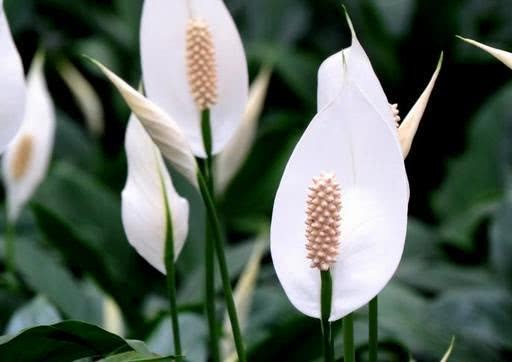
The peace lily's flower is white, a single curved white spathe surrounding a pale yellow (though other colors occur too) spadix; the yellow-white blooms paired with green leaves give a clean and elegant impression. But what many people regret is that many growers who keep a peace lily at home only ever see its leaves and never get to see its flowers.
The peace lily still grows quite fast; generally, after one year of planting it can fill an entire flower pot. The peace lily's flowering period is concentrated in summer, usually blooming from May to August, and the flowering period can last more than a month. So those friends who wonder why they still haven't seen a bloom, don't worry, you need patience, and this period is exactly the season when the peace lily blooms.
It doesn't follow that the flowers will come just because the flowering season has arrived. We first need to understand some of the peace lily's habits. It rather likes an environment that is well ventilated and also gets plenty of sunlight, so if you have always kept it in a dark, poorly ventilated room, that is very unfavorable for its growth, and it will be very hard for it to bloom!
As for watering, spring and summer are the seasons of growth and flowering, so it should be watered more; in autumn the climate is dry, so it can also be watered a moderate amount more; while in winter growth is slow, so water slightly less. Summer has high evaporation, so after the soil has been given enough water (do not let it become waterlogged), you can additionally mist the leaves to supply more moisture.
The peace lily likes fertilizer, and if you want it to bloom, fertilizing is a very important step. When mixing the soil you can use leaf mold and peat soil together, then add perlite to increase air permeability, and finally mix in organic fertilizer or plant ash to add nutrients. Once the root system has grown stable, you can fertilize in all three seasons of spring, summer and autumn.
For fertilizing you can choose liquid fertilizer, applying once every 10-15 days during the growing season; or choose a compound fertilizer, applying once about every 15 days; you can also apply a moderate amount of potassium fertilizer, which helps leaf growth; or sprinkle a small amount of plant ash on the soil surface, which also adds nutrients. In late spring and early summer you can spray a little gibberellic acid, which can promote flowering. Usually remember to loosen the soil more often, which both helps the roots absorb nutrients and increases air permeability.