Detailed Explanation of Chemical Flower and Fruit Thinning Methods for Apples
How to chemically thin flowers and fruits of apples?
1 Types and characteristics of flower thinning agents
1.1 Lime sulfur
Self-made: the emulsifiable concentrate concentration of lime sulfur boiled by fruit growers is 0.5-1 degree Baume; the concentration of commercial 45% crystalline lime sulfur is 150-200 times dilution. Spray the first application at the early full bloom stage (i.e., when 75%-85% of the king flowers are open), and spray the second application at the full bloom stage (i.e., when 75% of the flowers on the whole tree are open).
Effect: It has the effect of burning pollen and stigmas and inhibiting pollen germination.
Disadvantage: Lime sulfur has adverse effects on bees and products in the orchard.
1.2 Organic calcium compounds
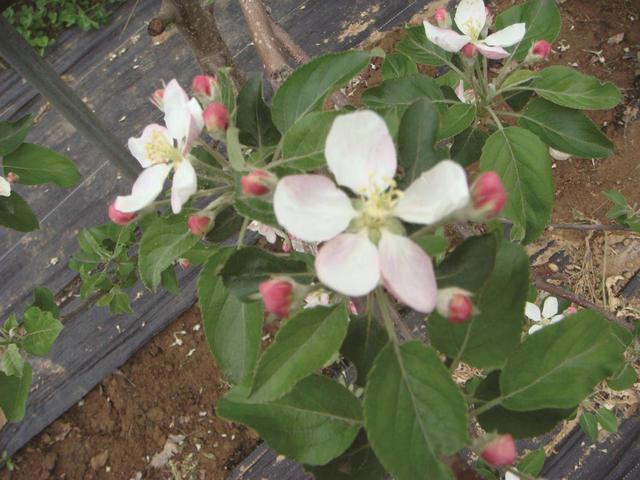
Calcium is one of the essential mineral elements for fruit trees. It is often applied in the form of calcium fertilizer supplements to improve apple quality, storage tolerance and tree stress resistance. In recent years, various calcium compounds have been tested for flower thinning on Fuji and other cultivars, and different degrees of flower thinning effects have been confirmed. This agent is non-toxic and harmless, causes no pollution to the environment, has low cost and good effect, and can be used for organic cultivation. For the application dose, spray the first application at the early full bloom stage (i.e., when 75%-85% of the king flowers are open), and spray the second application at the full bloom stage (i.e., when 75% of the flowers on the whole tree are open) (Figure 1). Each application at 150-200 times dilution, mainly for flower thinning.
1.3 Plant oils
Such as olive oil, etc. When used on the Red Star apple cultivar, it can thin flowers without increasing fruit russeting. The application dose is 30-50 grams/liter. During application, the sprayer must be shaken continuously to mix the oil and water evenly.
Figure 1 Flower opening status of king flowers on a single tree
2 Types and characteristics of fruit thinning agents
2.1 Carbaryl
It was originally a highly effective and low-toxicity carbamate insecticide, with good effects on controlling fruit borers in orchards. It was registered in the United States in 1958. Its fruit thinning effect was discovered in 1960, and the effect is mild and stable. It was once the best fruit thinning agent in the United States. However, research in the United States did not solve the problem of how to retain king fruits and thin lateral flowers and axillary fruits. Researchers in China and Japan believe that the effective spraying period is 1-4 weeks after full bloom, with the best effect when sprayed 2-3 weeks after full bloom, that is, spray the first application 10 days after full bloom (when the king fruit diameter is about 0.6 cm), and spray the second application 20 days after full bloom (when the king fruit diameter is 0.9-1.1 cm). The suitable concentration is 2.0-2.5 grams/liter. Fruit russeting, deformed fruits and phytotoxicity are not likely to occur. At present, this agent is widely used in China and Japan as a relatively good fruit thinning agent. [Jishan Huayao]
Mechanism of action: It has a systemic action. After entering the vascular bundles in the tree, it interferes with the transport of nutrients and hormones in young fruits, hinders the transport of nutrients, and causes some young fruits to abscise due to lack of nutrients needed for development. This interference first occurs in fruits with relatively weak growth, causing fruit drop.
Advantages: Relatively safe, low toxicity to humans and livestock, not easy to accumulate in the body, no adverse effects on fruits, a relatively wide effective spraying period and suitable concentration range, and it also controls pests while thinning fruits.
2.2 Naphthaleneacetic acid, sodium naphthaleneacetate and similar substances
The mechanism of action is that they are synthetic auxin-type plant growth regulators. Because they interfere with the metabolism and transport of some hormones in the tree, they promote the formation of ethylene and cause fruit drop. The suitable concentration of naphthaleneacetic acid is 10-20 mg/kg; the suitable concentration of sodium naphthaleneacetate is 30-40 mg/kg. Spray the first application 10 days after full bloom (when the king fruit diameter is about 0.8 cm), and spray the second application 25 days after full bloom. For cultivars with many axillary flower buds, an additional application can be made at the late full bloom stage (i.e., when more than 95% of the flowers on the whole tree are open).
Advantages: Stronger fruit thinning effect.
Disadvantages: Unstable flower and fruit thinning, likely to cause serious aftereffects such as upward leaf epinasty, deformities and inhibition of fruit growth.
2.3 Ethephon
Thinning mechanism: It can inhibit pollen tube elongation, generate ethylene through its own decomposition, promote the formation of cells in the abscission layer of the young fruit pedicel, and cause fruit abscission. The general concentration is 0.3%-0.5 grams/liter, and it can be sprayed either before full bloom or about 10 days after petal fall.
Advantages: Ethephon can thin both flowers and fruits, and is suitable for cultivars with high fruit set rates, severe alternate bearing and difficult thinning.
Disadvantages: At high concentrations, the fruit thinning effect is stronger. In high-temperature weather, there is a risk of excessive thinning.
3 Application methods and precautions
3.1 Conduct trials and demonstrations first
When using chemical flower and fruit thinning for the first time, conduct a small-area demonstration.
3.2 Choose a good sprayer
Determine the amount of spray liquid per mu: Before spraying, rinse the sprayer with clean water and check the sprayer pressure and whether the nozzle atomization effect is good. For a knapsack sprayer, use a long wand, spray from top to bottom and from inside to outside, aim the nozzle at flowers or young fruits and spray at a spacing of about 25 cm. The amount of spray liquid per mu should be controlled at 75-100 kg.
3.3 Watch the weather
It is suitable to spray under sunny or cloudy weather conditions, and the suitable temperature is 20-28°C; if the daytime temperature during the flowering period is continuously below 10°C or above 30°C, or during strong winds, it is recommended not to carry out chemical flower thinning.
3.4 Watch the amount of flowers and fruits
If the amount of flowers is small, chemical flower and fruit thinning may not be needed; if the tree vigor is strong and the amount of flowers is large in the current year, and it belongs to an on-year or normal-year orchard for apple production, chemical flower and fruit thinning can be used.
3.5 Watch the cultivar
Different cultivars have different sensitivities to chemical flower and fruit thinning agents. For cultivars such as Gala, Golden Delicious, Wanglin and United States No. 8, the opening intervals between king flowers and lateral flowers are relatively long, and lower concentrations easily thin lateral flowers, so the concentration can be appropriately lowered; while for Fuji series cultivars, the opening intervals between king flowers and lateral flowers are relatively short, so the application concentration should be appropriately increased, and attention should also be paid to mastering the spraying period.
3.6 Watch the pollinizer tree arrangement
For orchards without dedicated pollinizer trees or pollinizer cultivars arranged, chemical flower thinning should not be used. For orchards with pollinizer trees arranged at a ratio of 1:6-8, chemical flower thinning agents cannot be used on the pollinizer trees, but chemical fruit thinning agents can be used. For orchards with pollinizer trees arranged in equal amounts, chemical flower and fruit thinning agents can all be used.
3.7 Use chemicals strictly
The spray liquid should be prepared and used immediately. Except that calcium preparations such as lime sulfur cannot be mixed and sprayed with other pesticides, other chemical flower and fruit thinning agents can be mixed with each other, and the suitable concentration is the same as when thinning flowers or fruits alone; however, they cannot be mixed with other pesticides or foliar fertilizers, and the dosage of flower and fruit thinning agents must not be increased arbitrarily. The number of times flower and fruit thinning chemicals are used in the orchard should be handled flexibly. It is better to thin too little than to thin too much. Users are required to decide the fruit retention amount according to the target yield of their own orchard, and after each application, check the effect before deciding the time of the next application.
3.8 Chemical flower and fruit thinning should be combined with manual flower and fruit thinning
After chemical flower and fruit thinning, manual fruit setting should be carried out according to the fruit set situation and expected yield for a better effect (Figure 2).
Figure 2 Effect of chemical flower and fruit thinning on Fuji cultivar